The best ceramide serum for mature skin is the CeraVe Retinol Serum— the only pick here whose second mechanism has real evidence behind it for lines and texture, with the barrier support in the same bottle. If your skin is too reactive for a retinoid right now, the barrier-first answer is the AMPLE:N Ceramide Shot Ampoule, which names three ceramide types and the cholesterol beside them. The budget pick is The Ordinary Hyaluronic Acid 2% + B5, and it is on this page honestly: it does one job, cheaply, and it does not pretend to do the other one.
Mature skin makes fewer of its own barrier lipids, which is a large part of why it feels drier and more fragile with age — the same lipid-ratio research that guides barrier repair also shows recovery is slower in older skin. That is the honest case for ceramides at this stage of life, and it is a real one. But it is only half the brief. Nobody searches for a mature-skin serum because their barrier recovery is slow; they search because of lines, slackness or uneven tone. So a serum that is only ceramides answers half the question, and a serum that is only an active answers the other half while making the first half worse.
How this page is ranked, and why that order looks odd
Every other serum page on this site ranks ceramide content first. The dry-skin page ranks on disclosed types and richness; the sensitive-skin page screens four classes of irritant before ceramides are scored at all. This page deliberately inverts that. The ranking criterion, applied in this order:
- What is the second mechanism, and how good is the evidence for it? A retinoid outranks an antioxidant, which outranks a humectant, because that is the order the published evidence sits in for texture and fine lines. We are not going to pretend a hyaluronic acid serum competes with a retinoid on wrinkles.
- What does that mechanism cost in tolerance? This is where mature skin differs from younger skin, and it is the reason the retinoid does not win by a mile. Thin, lipid-poor skin has less margin for an active that irritates, and the retinization research is clear that supporting the barrier is what makes a retinoid usable rather than abandoned. A serum that carries both is worth more than two bottles.
- Then, as the tie-breaker: what does the listing disclose about the lipids? Named ceramide types beat “ceramide complex,” and a ceramide listed next to cholesterol beats a ceramide on its own. This is the axis that lifts the AMPLE:N ampoule to second place with no anti-aging active in it whatsoever.
- Last: cost per use. Not sticker price. A capsule strip and a 3.38 fl oz bottle are not comparable by the number on the shelf, and we compute cost-per-ounce live on every pick rather than asserting it.
One thing this page will not do is tell you a ceramide serum firms skin. Ceramides repair and cushion; they do not resurface or lift. Do ceramides help wrinkles answers that directly, and the short version is that the improvement is real but it is the improvement you get from a skin barrier that holds water — not collagen remodeling.
The five second mechanisms, ranked honestly
Every pick on this page pairs ceramides with one of five things. Here is what each one is actually for, so you can choose by the problem rather than by the bottle.
- An encapsulated retinoid— fine lines and surface texture. The strongest mechanism here and the least comfortable. Encapsulation slows the release, which is the single most useful thing a drugstore retinoid can do for tolerance. Avoid in pregnancy and while breastfeeding. The best ceramide creams to use with retinol is the cream half of this routine.
- Vitamin C at a stated concentration— uneven tone, sun-related pigmentation and the marks left behind by anything that inflamed. Lower risk than a retinoid, lower ceiling, and an acidic formula that can sting reactive skin.
- Niacinamide— tone, barrier support and oil balance in one well-tolerated ingredient. Its barrier evidence is good, its line-smoothing evidence is modest, and a minority of people flush on it.
- Urea and squalane— the flaky, crepey surface texture that reads as age from a distance and is mostly dryness up close. The fastest visible change of anything on this page, and the least durable: it is a surface effect, not a structural one. Crepey skin below the neck is the same argument at body scale.
- Nothing — just a longer disclosed lipid list. The right answer more often than the category admits, and the correct first purchase if your skin is currently tight, stinging or flaking. You cannot run actives on a barrier in deficit; you can only fail at it expensively.
Specs, side by side
| Pick | Second mechanism | What it costs you | Size | Ceramides disclosed |
|---|
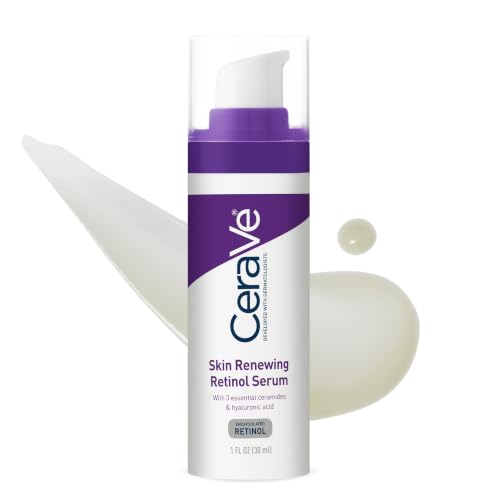
| CeraVe Retinol Serum | Encapsulated retinol + niacinamide — top pick | A two-to-six-week adjustment; not for a flaring barrier or pregnancy | 1 oz | Ceramides (types not disclosed) |
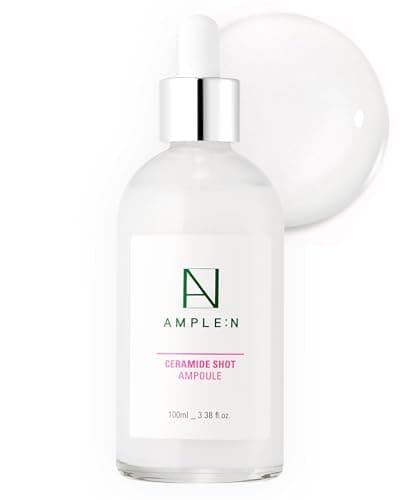
| AMPLE:N Ceramide Shot Ampoule | None — the barrier-first pick | No anti-aging active at all; a faint milky film | 3.38 fl oz | NP, NS, EOP + cholesterol |
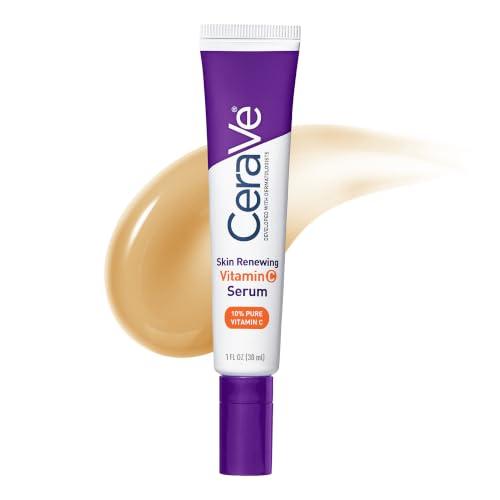
| CeraVe Skin Brightening Vitamin C Serum | 10% pure vitamin C | Acidic and can sting; oxidizes, so buy small | 1 oz | Ceramides (types not disclosed) |
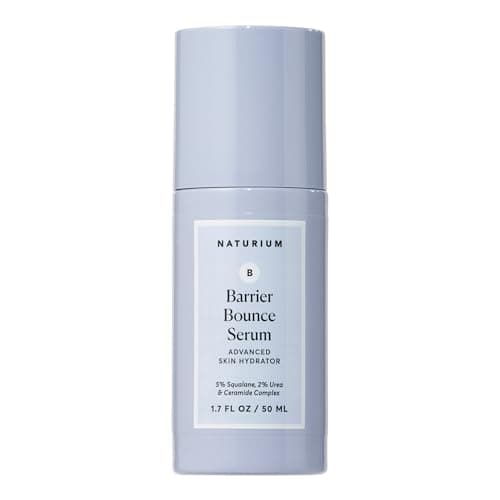
| Naturium Barrier Bounce Serum | 5% squalane + 2% urea | A dewy film some will read as greasy; a surface effect | 1.7 fl oz | Ceramide complex (types not disclosed) |
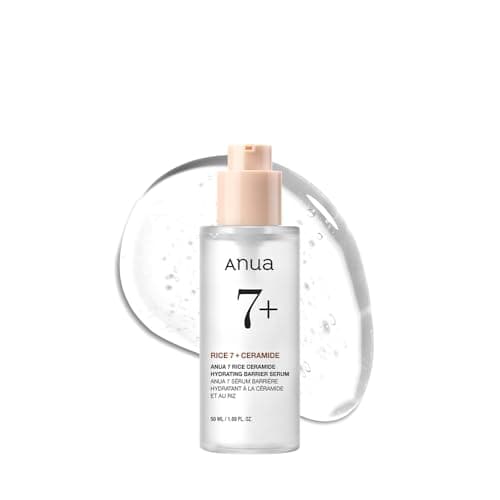
| Anua Rice Ceramide 7 | 3% niacinamide + arbutin | More actives than reactive skin may want in a barrier step | 1.69 fl oz | Ceramides + rice complex (types not disclosed) |
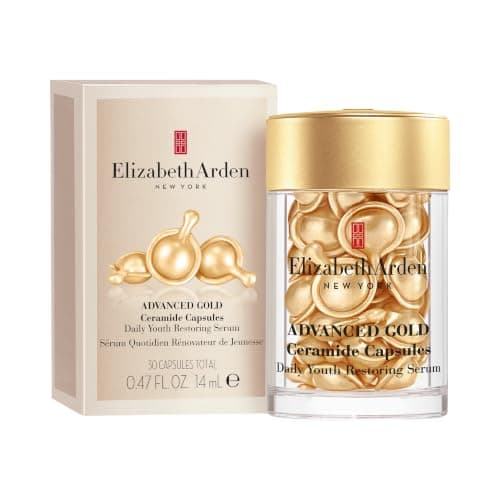
| Elizabeth Arden Advanced Gold Ceramide Capsules | Single-dose format, anti-aging framing | Fragrance in the formula; by far the highest cost per use | 30 capsules | Barrier lipid complex (types not disclosed) |
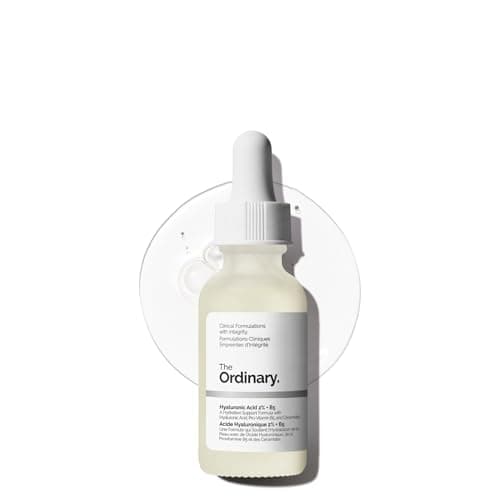
| The Ordinary Hyaluronic Acid 2% + B5 | Hydration only — budget pick | Does nothing for lines; needs an occlusive over it | 1 fl oz | Ceramides (types not disclosed) |
The uncomfortable finding
Writing this page produced a result worth printing rather than smoothing over: in this category, ceramide disclosure and anti-aging positioning are inversely related. The one pick whose listing names three ceramide types and the cholesterol beside them is a Korean barrier ampoule with no anti-aging claim on it at all. The pick with the most anti-aging framing — gold capsules, firmness language, premium price — discloses no ceramide types and carries fragrance. Every serum in between names “ceramides” and stops.
That is not a scandal, it is a marketing pattern: brands selling a barrier product compete on the ingredient list, and brands selling a youth story compete on the story. But it does mean the obvious shopping heuristic — buy the one that says mature skin on it — points you at the thinnest disclosure on the shelf. Read how to read a ceramide ingredient label and ceramide types explained, then decide which half of the brief you are buying.
The ones we left off, and why
- Dr.Jart+ Ceramidin Serum. A good serum that names its ceramide type, and left off here for the same reason it is off the sensitive-skin page: its published ingredient list carries denatured alcohol plus geranium, bergamot and sage oils. Mature, lipid-poor skin has the least margin for that combination. It is ranked second on the Korean ceramide serum page, where the criterion is type disclosure.
- Cetaphil Ceramide Serum and CeraVe Hyaluronic Acid Serum.Both excellent, both fragrance-free, and both pure barrier-and-hydration serums with no second mechanism — which on this page would put them exactly where The Ordinary already sits, for more money. They lead the sensitive-skin page and the dry-skin page respectively.
- Eye serums and eye creams. The eye area is thinner, moves more and takes a different formula, so it gets its own pages rather than a paragraph here: the best ceramide eye serums and the best ceramide eye creams.
- Capsule and booster serums with no stated size. Two products that belong on this page by concept are still absent because their listings disclose no volume or capsule count, so we cannot compute cost per use or tell you how long a bottle lasts. We would rather leave a gap than publish a number we invented.
Pick in ten seconds
- Fine lines and texture, barrier currently fine — CeraVe Retinol Serum. Start twice a week, not nightly.
- Skin tight, stinging or flaking right now — AMPLE:N Ceramide Shot Ampoule. Three disclosed ceramide types plus cholesterol, in a bottle three times a normal ampoule.
- Uneven tone and sun-related marks — CeraVe Skin Brightening Vitamin C Serum, under sunscreen, in the morning.
- Crepey, flaky surface texture — Naturium Barrier Bounce. The fastest visible change here, and the most superficial.
- You want one well-tolerated do-everything bottle — Anua Rice Ceramide 7, the lightest finish of the picks that still claim real barrier support.
- You want the hygiene of single doses and the firmness story — Elizabeth Arden Advanced Gold Ceramide Capsules. Know that you are paying for the capsule and the brand as well as the lipids, and that the formula carries fragrance.
- You want to spend as little as possible to find out whether a serum step helps at all — The Ordinary Hyaluronic Acid 2% + B5, our budget pick. Put a ceramide cream over it or it will do nothing in dry air.
- You only want to buy one product — buy the cream, not the serum. The best ceramide creams for aging skin is the right page, and for most readers the right purchase.
How to build a mature-skin routine around one of these
Barrier first, active second — in that order, not at the same time
This is the whole thing. A retinoid on lipid-poor skin flakes, stings and gets abandoned in week three, and the reader concludes retinoids do not work for them. The sequence that works is boring: get the barrier comfortable for two to four weeks on a plain ceramide cream, then introduce one active twice a week, then build. Using ceramides and retinol together has the schedule, and how to repair a skin barrier has the first stage.
One active. Not three
Three of the picks here are actives — a retinoid, a vitamin C, a niacinamide-and-arbutin serum — and the temptation is to buy two of them because they address different complaints. Do not. Three actives is reliably where tolerance breaks, and on mature skin it breaks sooner. The ingredient pairing chart shows which combinations are worth the risk, and how to simplify your routine is the page to read if you already own five bottles.
A serum does not replace the cream
None of these is a moisturizer. Every one of them needs an occlusive step over the top, and on mature skin that step is doing more of the work than the serum is. The best ceramide moisturizers for aging skin ranks the daytime half and do you need both a serum and a moisturizer answers the question directly. If the budget is one product, it is the cream. And if the lotion you have been layering is a CeraVe PM that never felt like enough on its own — a fair complaint about a product built to be weightless — CeraVe PM alternatives ranks the heavier swaps.
Do not forget the neck
Neck and chest skin is thinner than facial skin, gets less product and shows age earlier, and most people stop at the jaw out of habit. Whatever you buy here, take it down. The best ceramide creams for your neck and chest covers the dedicated options.
Set the clock honestly
Barrier comfort improves in days to weeks. Tone improves over a couple of months. Texture and fine lines from a retinoid take three months at minimum and that is with daily use you will not manage at first. How long ceramides take to work sets the barrier timeline, and anything promising faster than that on lines is selling you hydration and calling it renewal.
What to skip
- Premium serums that will not name a ceramide type or a concentration. At the top of this category the price buys the story. Make it buy a disclosed ingredient list instead.
- Fragranced formulas, unless you have specifically established you tolerate them. Mature skin is drier and thinner and reacts more, and fragrance-free and unscented are not the same claim.
- Collagen serums bought to replace collagen. Topical collagen is a large molecule that hydrates the surface; it does not join the collagen in your dermis. Ceramides versus collagen is the honest comparison.
- Starting a retinoid in the same week you start anything else. You will not know what caused the reaction, and you will blame the wrong bottle.