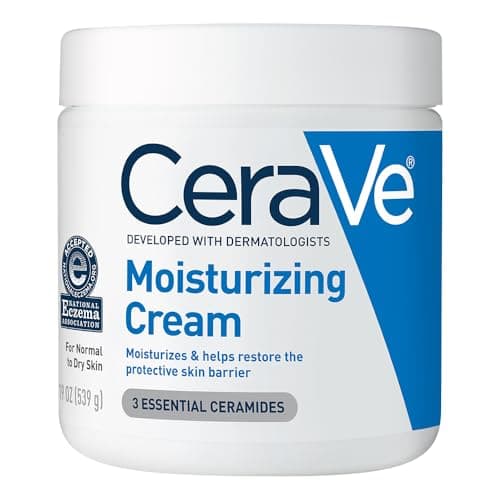
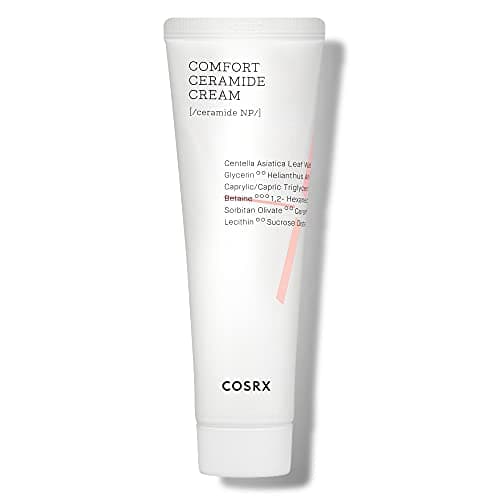
These two are not competitors; they are the two halves of one routine, and the order matters more than the choice. Salicylic acid is a beta hydroxy acid: oil-soluble, so it gets into pores, loosens the plug and dissolves the bonds holding dead cells on the surface. Ceramides are the barrier lipids that exfoliating a little too enthusiastically strips out. So the answer to “which one do I need” depends entirely on how your skin feels right now: if it is tight, stinging or flaking, you need the ceramides and the acid will make things worse. If it is comfortable but rough, bumpy or congested, the acid is what will change what you see — and a ceramide product alongside it is how you keep that gain.
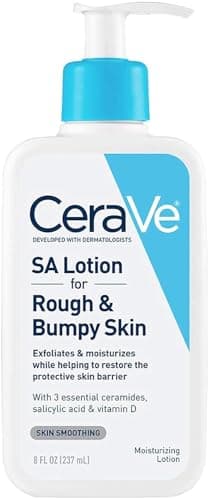
There is one genuinely useful shortcut here, which is why this page ranks three products rather than explaining and walking away. CeraVe makes a lotion that contains both: salicylic plus lactic acid with the brand's three-ceramide blend in the same bottle. For keratosis pilaris on arms and thighs it is close to the whole answer, and it is why our keratosis pilaris page leads with it too.
What each one does
Salicylic acid is keratolytic: it breaks down the bonds between dead surface cells and, because it is oil-soluble, it works inside the pore rather than only on top of it. That is why it is the standard ingredient for blackheads, congestion and the rough, bumpy texture DermNet describes under keratosis pilaris. It removes; it adds nothing back.
Ceramidesare the lipids that live between those cells and hold water in. Cleveland Clinic's overview of what ceramides do is the plain version. They do not exfoliate, do not clear pores and will not smooth a bumpy arm on their own. What they do is make the skin that acid works on resilient enough to take it.
Which to buy first
- Ceramides first if your skin currently stings, flakes, feels tight after cleansing or looks red in patches. Those are the barrier signals listed on signs of a damaged skin barrier, and acid on that skin is the classic over-exfoliation spiral. The repair route is how to repair over-exfoliated skin.
- Salicylic acid first if your skin is comfortable and the complaint is texture, blackheads or bumpy arms. Ceramides will not fix any of those, and we are not going to suggest they might.
- Both in one bottle if the target is keratosis pilaris or rough body skin. The CeraVe SA lotion is built exactly for that and it is the most efficient version of this comparison.
How to run both without stripping your skin
- Start the acid at two or three nights a week, not nightly. Frequency is where almost everyone goes wrong.
- Apply it to clean, dry skin and let it absorb.
- Follow with a plain ceramide moisturizer — same treat-then-protect order used for every active, as laid out in where ceramides go in your routine.
- On the nights you skip the acid, use the ceramide product alone. That is the repair window, and skipping it is why people plateau.
- Sunscreen in the morning, without negotiation. Exfoliated skin is more sun-sensitive.
The broader version of this, covering glycolic and lactic acid as well, is in ceramides and exfoliating acids.
Signs you have the balance wrong
Shine that looks tight rather than oily. A stinging reaction to products that used to be fine. Flaking that appears after moisturizing rather than before. New sensitivity to fragrance. Those mean the acid is ahead of the repair, and the fix is to drop the acid frequency rather than to add a stronger moisturizer on top. The symptom-by-symptom version is in why skin feels dry after moisturizing.
Body and face are different problems
This matchup resolves differently depending on where you are applying it, and most pages treat it as one question. On the body— rough upper arms, thighs, bumpy skin — the combined acid-plus-ceramide lotion is close to the complete answer, and the skin there is thick enough to tolerate daily use far better than a face does. On the face, the calculus changes: facial skin is thinner, more reactive and usually already receiving at least one other active, so the acid and the ceramide step are better bought separately, at frequencies you control independently. Buying a combined face product means you cannot dial the acid down on a bad week without also dropping the repair half, which is exactly backwards. There is also a seasonal dimension: the same frequency that suited you in August is often too much in January, when low indoor humidity is already pulling water out of your skin. The winter adjustment is in how to winterize your skincare routine, and the body-specific picks are on the ceramide body lotion hub.
Salicylic acid and acne-prone skin
If acne rather than texture is the reason you are here, the same logic applies with a sharper edge: acne actives are barrier-disrupting by design, and the dryness that follows is the most common reason people quit them. A thin ceramide layer over the top is the standard answer, ranked on best ceramide serums for acne-prone skin. Whether the ceramide half helps the acne itself is covered on do ceramides help with acne.
The verdict
They are not alternatives, and anybody framing them as a choice is selling one of them. If your skin is uncomfortable, ceramides, and the acid can wait two weeks. If your skin is comfortable and rough, salicylic acid, with a ceramide moisturizer behind it. If the target is bumpy arms or thighs, buy the one lotion that does both and stop reading — it is the rare case where the combination product genuinely beats assembling your own.