How we ranked these
Every pick is scored on the same five axes we use across the site — ceramide profile, barrier support, suitability, formulation, and value — and in the eye category the first and last do most of the work. We have no lab. The ceramide types quoted on each card are what the brand itself publishes in its ingredient list, the prices are pulled live, and the cost-per-ounce is computed from today's price rather than typed in once and left to rot. Our full method is on how we review.
1. Which ceramides are actually disclosed
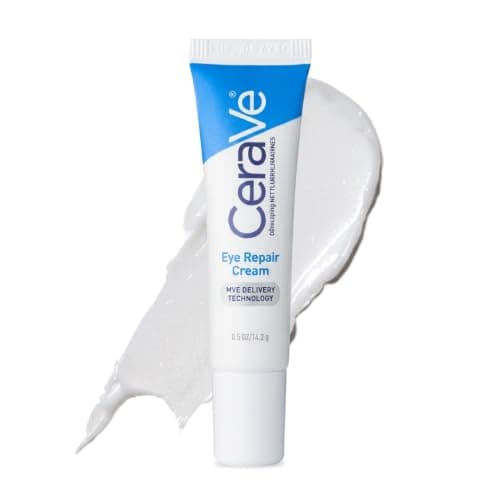
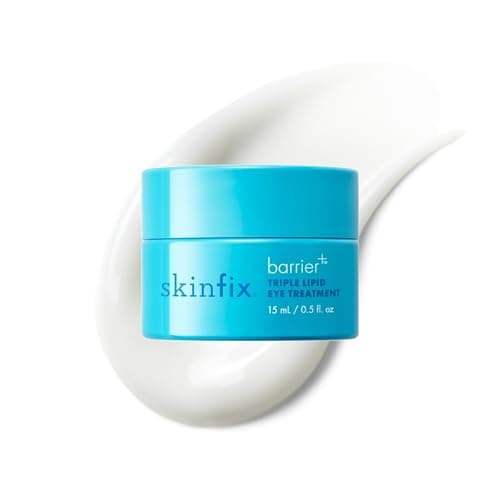
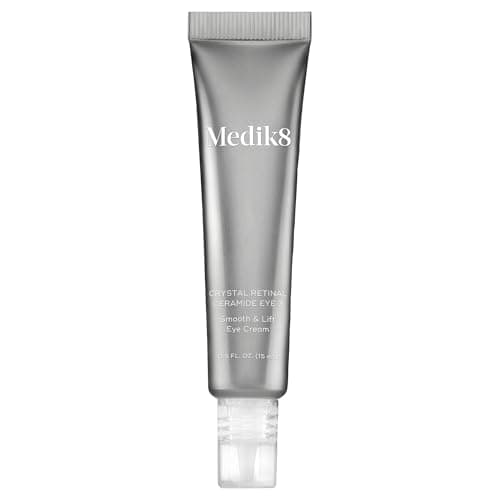
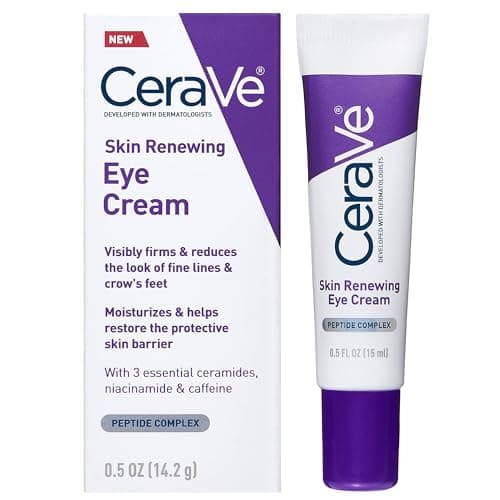
“Contains ceramides” is not a specification. Ceramide NP (ceramide 3), ceramide AP (6-II), and ceramide EOP (1) are the three that show up in the formulas worth buying, and a product that lists all three is doing more than one that lists ceramide NP alone. Of the six picks here, only three publish the full set: both CeraVe eye creams and the Skinfix treatment. BYOMA, First Aid Beauty, and Medik8 each disclose a single ceramide. That is not a disqualification — one ceramide in a well-built emollient base is still a decent cream — but it should change what you are willing to pay. If the ceramide names mean nothing to you yet, ceramide types explained is the short version.
2. Whether the cholesterol and fatty acids came too
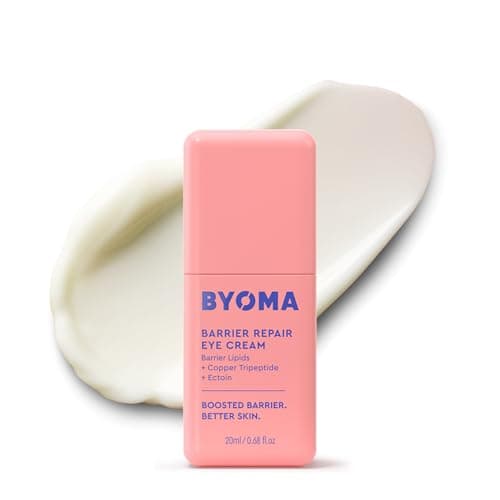
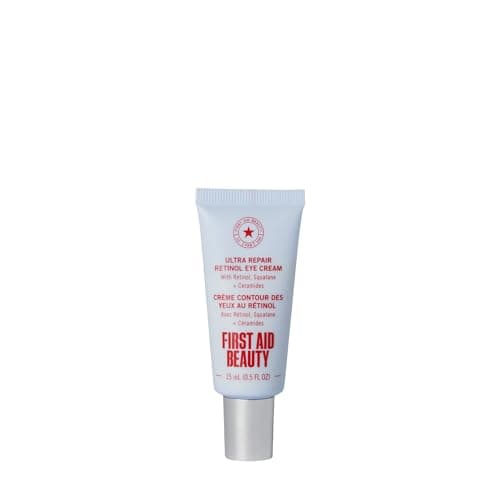
Ceramides are not a standalone active. Your barrier builds its lipid layers from ceramides, cholesterol, and free fatty acids together, and the classic lipid-ratio work found that getting the proportions right is what speeds barrier recovery — an incomplete mixture can perform worse than none. This is the single most useful thing to look for on an eye-cream ingredient list, and it is where the field thins out fast. The CeraVe Skin Renewing eye cream lists cholesterol. Skinfix states a 3% complex of ceramides, sterols, and fatty acids outright. First Aid Beauty includes cholesterol plus linoleic and palmitic acid. BYOMA's published list for its eye cream has neither cholesterol nor phytosphingosine. The mechanism, if you want it in full, is in how ceramides repair the skin barrier.
3. Fragrance-free, and honestly so
Fragrance is the most common cause of cosmetic contact allergy, and eyelid skin is where you will notice it first — a fragranced eye cream that your cheeks tolerate can leave your lids pink and tight. Every pick on this page has no fragrance in its published ingredient list, which was a hard filter rather than a preference; it ruled out several well-known ceramide eye creams, including one premium Korean cream that lists parfum and a synthetic dye. Note that fragrance-free is not the same as botanical-free: the Medik8 cream contains carrot seed oil and honeysuckle extract, which reactive eyes sometimes object to anyway. The distinction is spelled out in fragrance-free vs unscented.
4. Cost-per-ounce, because eye creams are sold in thimbles
The standard eye tube is 0.5 oz / 15 ml, and at that size price differences get hidden. A premium half-ounce treatment and a drugstore half-ounce cream look like the same purchase on a shelf and are nowhere near the same purchase per ounce — the spread between the cheapest and priciest picks here is roughly five-fold. We compute the per-ounce figure live on every card so the gap is visible rather than something you have to work out. BYOMA is the outlier in the useful direction — 20 ml instead of 15 ml at a drugstore price. And since you only need a rice-grain amount per eye, even the small tubes last months, which is exactly why overpaying here stings: you are paying a premium on something you use a third of a gram of at a time.
5. Texture, because it has to live under concealer
An eye cream that creases makeup gets abandoned, which makes texture a real criterion rather than a vanity one. The lightest pick here is the CeraVe Eye Repair Cream, which is the easiest to wear under concealer. The Skinfix and Medik8 creams are the richest and belong at night if you wear makeup. The rule that solves most creasing: one rice-grain per eye, patted along the orbital bone rather than rubbed into the lash line, and given a minute to absorb before anything goes on top. Same logic as wearing a ceramide moisturizer under makeup.
What a ceramide eye cream can and cannot do
It can keep the thinnest skin on your body from getting dry, tight, and crepey-looking, and it can calm the fine, dehydrated crinkling that shows up under the eyes first. Those are real, visible wins. What it cannot do is change your anatomy. Dark circles that come from pigmentation or from blood vessels sitting close to the surface under thin skin do not respond to ceramides, and neither do under-eye hollows or herniated fat pads — those are structural. Caffeine, which three of these picks include, can temporarily reduce the look of puffiness by constricting vessels; it is a cosmetic, short-term effect, not treatment. Niacinamide has better evidence behind it for stratum corneum hydration and barrier structure, which is why we count it as a plus rather than a gimmick. Anyone promising to erase your dark circles with a cream is selling you something.
The eye creams we checked and left out
Three products that get recommended constantly in this category did not make the page, and the reason in each case is the ingredient list:
- La Roche-Posay Toleriane Dermallergo Eye Cream— a good, gentle, well-tolerated eye cream for sensitive skin, built on squalane and niacinamide. Its published ingredient list contains no ceramide, so it does not belong in a ceramide roundup.
- Naturium Multi-Peptide Eye Cream— a genuinely good peptide cream at a fair price, and frequently suggested when people ask for a ceramide eye cream. Its published list is peptides, jojoba, squalane, and fatty acids, with no ceramide in it.
- Cooling de-puffing eye gels— several ceramide-branded eye gels add menthyl lactate or similar cooling agents. The cooling is pleasant and the de-puffing is temporary, but putting a counter-irritant on eyelid skin is a poor trade if your barrier is the thing that needs help.
None of those are bad products. They are simply not ceramide products, and a roundup that quietly included them would be a worse page.
How to use an eye cream so it earns its keep
Apply it to clean, slightly damp skin, after any serum and before your face moisturizer and sunscreen. One rice-grain per eye is the whole dose. Dot it along the orbital bone — the ridge you can feel under the eye and out toward the temple — and pat rather than drag; product migrates inward on its own as the day goes on, which is why starting at the lash line leads to stinging and watering. If you are adding a retinoid eye cream, start two nights a week and build up, and put your plain ceramide cream on the nights in between. Stinging that fades in a minute is usually dryness; stinging that keeps going, or redness and flaking on the lids, means stop and let the barrier recover. The broader repair protocol is in how to build a barrier-repair routine, and the sequencing with other actives is in how to use ceramides with retinol.
The honest verdict on spending
Of the six, the technically best formula is the Skinfix treatment and the best buy is the CeraVe Skin Renewing eye cream, and the gap between them is far smaller than the gap between their prices. If you want a dedicated eye cream, start at the drugstore end: both CeraVe picks are fragrance-free, disclose three ceramides, and cost less than a single premium tube. Move up only for a specific reason — a genuinely compromised eye-area barrier that wants the full 3% lipid complex, or a retinoid you have decided to add. And if you would rather not add a product at all, keep using the ceramide cream you already own around your eyes. That is a legitimate answer, and it is free.