Guide
Guide
Ceramide Types Explained
NP, AP and EOP versus the old 1/3/6-II numbers, mapped to INCI names and roles in one table.
Hub 05 · Ceramides 101
The barrier-science library that makes every product page make sense — what ceramides are, the types that matter, and how to actually use them. No lab coat, just the receipts.
Every roundup on this site leans on the same handful of facts: what ceramides do, why the types are numbered the way they are, and why the barrier wants them alongside cholesterol and fatty acids rather than alone. This hub is where those facts live in full, written in plain English and cited to sources you can check — dermatology references and manufacturer spec sheets, not other people’s roundups.
Start with what ceramides are if you want the whole picture in one read. If you already know the basics and want the part everyone skips, the ceramide types explained lays out NP, AP, and EOP (and the old 1, 3, 6-II numbering) in a clean table — the reference we built because no competitor publishes it as one. From there, how ceramides repair the skin barrier is the mechanism, and where ceramides go in your routine is the practical bit: which step, in what order, with what.
We also keep the honest-answer guides here — the questions people actually type, answered directly instead of buried under 800 words of preamble. Do ceramides clog pores? What lotions actually have ceramides? Those get their own pages, each one linking back into the product hubs so you can act on the answer.
A few of those answers are the ones readers most often arrive without. On whether to start at all: when you should start using ceramides, whether all moisturizers have ceramides and what a healthy skin barrier actually feels like. On whether yours will recover: can a damaged skin barrier heal on its own. On the product not behaving: why your ceramide moisturizer is not working and why it feels greasy.
Then there are the specific-situation pages, which exist because the general advice stops being right: ceramides during pregnancy, ceramides for chapped lips, the neck and chest, whether ceramides help redness, whether body lotion is fine on your face, whether you need a ceramide toner and whether sheet masks help a dry barrier. Each one has a short answer at the top and the reasoning underneath.
A note on how we write these: we did not run any lab studies, and we do not pretend to. What we do is read the primary sources, compile them, and cite them, so you can trace every claim to something real. That is the whole method, and it is on how we review in full.
Start here
The cornerstone primer: what ceramides are, what they do for your skin barrier, and how to actually use them.
Read the guide →
Everything in this hub
Guide
NP, AP and EOP versus the old 1/3/6-II numbers, mapped to INCI names and roles in one table.
Guide
How ceramides cut water loss and rebuild the barrier — and why cholesterol and fatty acids matter too.
Guide
A step-by-step AM and PM order for where ceramides go and how to layer them with actives.
Guide
How to read a label and prove a product really contains ceramides, plus where to buy the good ones.
Guide
A straight yes-or-no on ceramides and clogged pores, then the caveats that actually matter.
Guide
The science on ceramides for eczema-prone skin, and the full label checklist beyond ceramides.
Guide
A step-by-step routine to repair a damaged skin barrier — the signs, what to stop, which ceramides to use, and how long it really takes.
Guide
Moisturizer pilling explained — why the little rolls form, how to layer to prevent it, and why it isn't a sign of a bad ceramide product.
Guide
Breaking out from a new moisturizer? How to tell a breakout from purging or fungal acne, and why ceramides don't clog pores.
Guide
That tight, squeaky-clean feeling after washing is a warning sign — here's what causes it and how ceramides fix it.
Guide
Do ceramides reduce wrinkles? They soften the look of fine lines by repairing the barrier, but they aren't a renewal active — here's the honest breakdown.
Guide
The real, evidence-honest benefits of ceramides for skin — barrier repair, hydration, soothing, and supporting actives — plus what they can't do.
Guide
How to adjust your ceramide routine for the seasons — richer creams for winter, lighter lotions for summer, without losing barrier repair.
Guide
The nine tells of a compromised barrier, how to read them as a pattern, and the simplify-then-rebuild recovery move.
Guide
Why twice a day is the sweet spot, how frequency shifts by skin type, and why skipping moisturizer because you are oily backfires.
Guide
You cannot harm skin with too many ceramides, but past a point they stop helping. Where the real over-layering risk actually lives.
Guide
The two clocks ceramides run on, an honest week-by-week timeline, and the factors that make barrier repair faster or slower.
Guide
Why deposited ceramides do little in a rinse-off wash, what a barrier-friendly cleanser is really for, and when one is worth buying.
Guide
Vitamin C first and thin, ceramide moisturizer to seal, sunscreen last. Why the pairing is fully compatible and how the ceramide layer buffers the tingle.
Guide
Ceramide moisturizer under SPF, sunscreen last, nothing on top. Use a lighter daytime lotion to avoid pilling and support the barrier that UV wears down.
Guide
Slug over a ceramide moisturizer to pair structural barrier repair with an overnight seal. Great for very dry skin; approach with care if you are acne-prone.
Guide
Ceramides are the skin's own barrier lipids and widely viewed as gentle. General information only; always confirm your full routine with your OB-GYN or doctor.
Guide
Yes. CeraVe is built on ceramides 1, 3, and 6-II (NP, AP, EOP) with MVE slow-release delivery, and the trio runs across its creams and lotions.
Guide
Why hyaluronic acid goes on damp skin first and a ceramide moisturizer seals it in, and how skipping the seal can leave skin drier than before.
Guide
Why ceramides and niacinamide are complementary rather than competing, how to layer them, and where the do-they-cancel-out worry comes from.
Guide
Why retinol strains the barrier, how a ceramide moisturizer buffers the dryness and flaking, and the sandwich timing that makes retinol easier to tolerate.
Guide
The damp-skin layering technique step by step, why applying to damp skin traps more water, and who benefits most from the sandwich.
Guide
The four reasons moisturizer does not stick — a leaking barrier, dehydration, a humectant with no seal, or too-light a formula — and the ceramide fix.
Guide
In a pinch, fine. Every day, not ideal: body lotions run heavier, are often fragranced, and are rarely tested non-comedogenic, so on facial skin they can clog and irritate.
Guide
Three steps: gentle non-foaming cleanser, ceramide moisturizer, daily sunscreen. Subtract every active first, let the barrier heal, then reintroduce one product at a time.
Guide
Yes, they expire. Read the period-after-opening symbol, keep products away from heat, light, and air, favor pumps or tubes over jars, and toss anything that smells, separates, or changes color.
Guide
Not inherently. A gentle oil-then-low-foam cleanse at night can be kinder than one harsh wash. The risk is over-washing, high-pH foaming, and doing it in the morning too.
Guide
TEWL is water constantly evaporating up through the skin. A healthy barrier keeps it slow; high TEWL is the signature of a compromised barrier. Ceramides and the lipid matrix slow it.
Guide
Find ceramides on the INCI list, decode NP/AP/EOP names versus old 1/3/6-II numbers, spot cholesterol and fatty acids as the supporting trio, and read ingredient position as a rough hint only.
Guide
Not the same. Unscented can still contain masking fragrance added to cover a base smell; fragrance-free means no fragrance added. It matters for reactive skin, and the INCI list is how you verify.
Guide
No. A plain ceramide moisturizer should not sting. Stinging usually means a compromised barrier reacting, or an added ingredient like fragrance or an active. Patch test, simplify, and stop if it persists.
Guide
Yes. Oily skin still has a lipid barrier that over-cleansing and acne actives can strip, and sebum is not the same as barrier ceramides. Choose a light, oil-free ceramide formula.
Guide
Usually yes: most modern ceramides are synthetic or plant-derived and vegan-friendly. But ceramides can be animal-sourced, and vegan and cruelty-free are separate claims worth checking.
Guide
Benzoyl peroxide is drying and irritating; a ceramide moisturizer buffers the dryness and flaking so the routine is easier to tolerate. Layering order, start low-and-slow, keep it fragrance-free.
Guide
Recurring damage is usually behavioral: over-exfoliating, too many actives, harsh cleansers, hot water, over-washing, and chasing new products. The fix is to simplify, space out actives, and stay consistent.
Guide
The barrier is healing when tightness and stinging ease, flaking and redness calm, and products stop reacting. The changes are gradual, and the biggest mistake is declaring victory early.
Guide
Yes, skin is self-repairing and a mild barrier heals on its own once you stop damaging it. The catch is that most people keep re-injuring it. Support it with gentleness and ceramides, and see a dermatologist if it will not settle.
Guide
Dehydrated skin is short on water, not oil, so it needs humectants to draw water in and ceramides to seal it so it stays. A ceramide moisturizer over a hydrating layer beats a humectant serum alone.
Guide
Ceramides belong in both AM and PM routines, but the job shifts: lighter and protective by day, finishing under sunscreen; richer and repairing at night. Actives mostly move to PM; sunscreen is the AM non-negotiable.
Guide
For the face, roughly a nickel-to-quarter-sized amount, adjusted to your skin and the season. Use enough to cover comfortably without a greasy film. More product is not more repair, and skin only absorbs so much.
Guide
A practical checklist: which ceramides are disclosed, whether cholesterol and fatty acids join them, the right texture for your skin type, fragrance-free where possible, and cost-per-ounce for value.
Guide
Exfoliating acids can strip the barrier; a ceramide moisturizer replenishes what they remove so exfoliation does not tip into damage. Apply the acid first, seal with ceramides, keep frequency modest, and watch for over-exfoliation.
Guide
Ceramides do not cause true purging, which is tied to cell-turnover actives like retinoids and acids. If a ceramide product breaks you out, it is usually the texture or another ingredient. How to tell purging from a reaction.
Guide
Patch testing catches a reaction before it reaches your whole face. Apply a small amount to a discreet spot, repeat daily for several days, and watch for redness, itching, or bumps. Especially worth it for sensitive skin and any product with new ingredients.
Guide
Hard water and the extra soap needed to lather in it can leave skin tight and dry after washing. Ceramides help by resealing the barrier afterward. Practical fixes: gentle cleanser, lukewarm water, moisturize right after washing.
Guide
A mildly compromised barrier often feels better within a couple of weeks of a gentle ceramide routine; a badly damaged one can take a month or more. What sets the timeline and the milestones to watch.
Guide
Flaking is the barrier shedding faster than it should because it has lost the lipids that hold surface cells together. Ceramides restock them so skin stops peeling - and scrubbing the flakes makes it worse.
Guide
A day in the sun dries and stresses the barrier; a ceramide moisturizer helps reseal it afterward. A gentle after-sun routine - and the honest note that a real sunburn is a matter for a doctor.
Guide
Shaving exfoliates and stresses the barrier, which is why skin feels tight, red, or bumpy after. A ceramide moisturizer reseals it so shaving does not leave skin raw - and gentle technique does the rest.
Guide
A ceramide moisturizer makes a good makeup base - it hydrates and smooths so foundation sits better - but rushing or over-applying causes pilling. How to layer it under makeup so nothing rolls or separates.
Guide
Ceramide moisturizer first, face oil last: oils seal but cannot be sealed over. Why the order matters, when a face oil actually helps a ceramide routine, and when it is an extra step you do not need.
Guide
Skin often gets drier and more reactive around menopause as it holds less water. A ceramide routine helps by resealing the barrier - practical barrier care, with the honest note that hormone concerns need a doctor.
Guide
Staying hydrated is good for you, but drinking more water does not seal a leaky skin barrier. Dry skin is usually a topical barrier problem that ceramides fix - here is what actually helps, and what does not.
Guide
Dry indoor air pulls water out of skin, so adding humidity genuinely helps and dermatologists recommend it - but a humidifier supports a ceramide routine rather than replacing it. How to use one well.
Guide
Azelaic acid is gentler than many actives, but any active can dry or sting a compromised barrier. A ceramide moisturizer buffers it so you can use it comfortably - how to layer, pace, and keep the barrier supported.
Guide
For most people a ceramide moisturizer alone is enough; a ceramide serum is an optional layering step, not a requirement. When adding both makes sense, when it is redundant, and how to layer them.
Guide
For most people a gentle, fragrance-free ceramide moisturizer is fine around the eyes, and a separate eye cream is optional. How to apply it safely on delicate skin, and when to be cautious or ask a doctor.
Guide
If your ceramide moisturizer is not working, the usual reasons are time, too little product, a barrier too damaged for moisturizer alone, the wrong formula, or a condition that needs a dermatologist. The practical fix for each.
Guide
Chlorine and salt water strip the skin barrier, leaving it tight, dry, and reactive. How ceramides help you rinse, reseal, and protect skin before and after swimming.
Guide
Ceramides can calm barrier-driven redness - a compromised barrier reacts and flushes, and sealing it with ceramides and soothing ingredients settles that. Persistent redness, rosacea, or a rash stays a job for a dermatologist.
Guide
Over-exfoliated skin is a stripped barrier. Stop all actives and scrubs immediately, simplify to a gentle cleanser and ceramide moisturizer, protect with SPF, be patient, and reintroduce exfoliation slowly. The recovery plan.
Guide
Localized dry, flaky patches on an otherwise normal face are spots of barrier weakness from over-cleansing, weather, or actives. A ceramide moisturizer reseals them - here is the technique, and when a stubborn patch needs a dermatologist.
Guide
A healthy skin barrier feels comfortable - not tight, not flaky, not stingy - tolerates products well, and looks even. The positive baseline to aim for, contrasted with damage signs, and how ceramides help maintain it.
Guide
Lips have a thin, easily damaged barrier, so a plain occlusive balm is usually the front-line fix and ceramides add barrier support. What causes chapping, and when cracking or soreness needs a doctor.
Guide
The neck and decolletage are thinner-skinned, often neglected, and show dryness and crepiness early. Extend your ceramide routine down - honestly, ceramides support and hydrate rather than treat deep lines.
Guide
There is no age at which ceramides switch on. The trigger is barrier need - tightness, dryness, reactivity, using actives - not a birthday. Ceramides suit teens through mature skin; how the emphasis shifts.
Guide
A greasy finish usually means too much product, a too-rich texture for your skin, applying to dry skin, or a layering-order problem - not that ceramides are wrong for you. How to troubleshoot the finish.
Guide
Cleanser, ceramide moisturizer, and daytime SPF is a complete routine. Why paring back helps a struggling barrier, how to reintroduce extras slowly, and the case for fewer, better products.
Guide
Many moisturizers have no ceramides at all. How to check whether yours does by reading the INCI list, when ceramides specifically matter, and why not every hydrating product is barrier-repairing.
Guide
Hot water and long showers strip the skin's barrier lipids and dry it out. The fix is lukewarm water, shorter showers, a gentle cleanser, and moisturizing on damp skin to seal - ceramides restock what hot water strips.
Guide
Makeup wipes rely on rubbing plus surfactants and preservatives left on the skin without rinsing, which over time can stress a barrier. Why they are a convenience tool, not a great daily cleanse, and gentler alternatives.
Guide
Sheet masks are mostly a big dose of humectant hydration that feels great briefly, but the water evaporates unless you seal it - and they do not rebuild barrier lipids. Use one for a hydration boost, then lock it in with ceramides.
Guide
The scalp has a barrier too, and simple dryness and light flaking often ease with gentle, barrier-supporting care and not over-washing. But persistent flaking, itch, redness, or greasy scale is a doctor's call, not a moisturizer's.
Guide
Air conditioning and forced-air heating lower indoor humidity, which speeds up water loss and leaves skin tight and dry. Fixes: a humidifier for ambient moisture and a ceramide moisturizer to seal - not a barrier replacement.
Guide
Harsh, high-foaming body washes with stripping surfactants can leave body skin tight, dry, and itchy by over-cleaning barrier lipids. Fixes: gentle fragrance-free washes, shorter cooler showers, and a ceramide body lotion after.
Guide
Wind plus cold, dry air strips the barrier and leaves skin red, raw, chapped, and tight. How to protect against windburn with a barrier moisturizer, soothe and repair it with ceramides, and tell it from a real sunburn.
Guide
A toner is optional, not required. Old astringent, alcohol toners can strip and are best skipped; a modern hydrating toner is a fine early humectant step but does not replace a ceramide moisturizer, which is what seals.
Guide
The full application order for a skincare routine, AM and PM. Thin to thick decides almost everything; cleanser first and sunscreen last are the only fixed points. Includes where the ceramide step goes.
Guide
About a minute between layers - long enough that the previous product is no longer wet. It is a mechanical rule that prevents pilling, not a chemical one. Moisturizer is the exception: that goes on damp skin.
Guide
A plain-English map of what layers with what: the safe pairs, the ones to split between morning and night, and the stacks that are mostly an irritation risk. Every row links through to the full answer.
Guide
Yes - these two work well together, and niacinamide often makes retinol easier to tolerate. Apply niacinamide first, retinol second, ceramide moisturizer over the top. The caveat is dosing, not chemistry.
Guide
Yes - vitamin C serum first, sunscreen last, with a minute in between. Sunscreen must be the final step because it needs an even film on top. The pilling fix is patience, not a different product.
Guide
Yes - the 'they cancel out' claim comes from old lab conditions, not from modern formulas used normally. Apply thinnest first, wait a moment, and separate them into morning and night only if your skin says so.
Guide
Possible, but rarely wise on the same night. Retinol and glycolic or lactic acid stack irritation fast. Alternate nights, keep a ceramide moisturizer in the routine, and know the signs of over-exfoliation.
Guide
Yes, with care. A common acne pairing that stacks dryness fast. Separate them by time of day or alternate nights, buffer with a ceramide lotion, and audit your products - many people use both without realizing.
Guide
Yes. Cold outdoor air holds little moisture and heated indoor air holds less still, so winter dries skin from both sides. The fix is a richer ceramide layer, gentler washing and moisture in the air.
Guide
The practical winter swap list: richer moisturizer or simply more of it, gentler washing, fewer actives, and moisture in the air. Most of the changes cost nothing - and SPF is not one of the cutbacks.
Guide
Indoor humidity in the 40-50% range is the usual comfort recommendation, and heated rooms often fall well under it. Measure first with a cheap hygrometer, then decide whether a humidifier is worth it.
Guide
The winter habits that backfire: hotter showers, scrubbing off the flakes, dropping sunscreen, replacing the whole routine at once, and treating a humidifier as a substitute for moisturizer.
Guide
The five ways skincare gifts go wrong - actives, fragrance, gadgets, mystery bundles and sample-size everything - and the safer alternative for each. Written for the buyer rather than the brand.
Guide
Ceramides are not an acne treatment. What they reliably do is make retinoids, benzoyl peroxide and salicylic acid tolerable - which is why dermatology routines pair them. The honest scope, plus picks for breakout-prone skin.
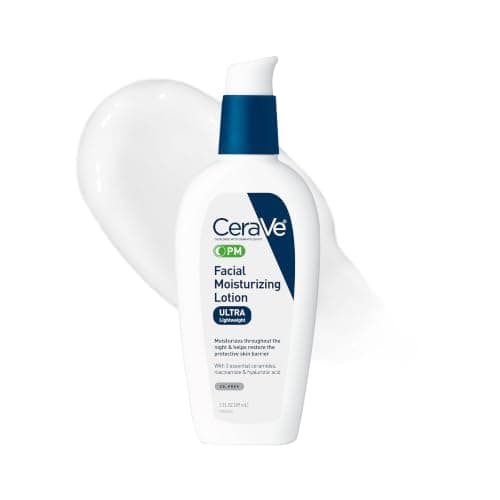
Top pick · CeraVe PM Facial Moisturizing Lotion
$13.62View on Amazon#ad · $4.54/oz · price may change
Guide
Ceramides do not fade pigment. What a repaired barrier does is make vitamin C, retinoids and acids tolerable, and reduce the inflammation that drives post-acne marking in the first place. Plus the ceramide picks that also carry niacinamide.
Top pick · CeraVe PM Facial Moisturizing Lotion
$13.62View on Amazon#ad · $4.54/oz · price may change
Guide
Ceramides make skin look fuller by reducing water loss, not by adding volume - a real effect with a real ceiling. What that looks like, how long it takes, and the richer registry picks that do it best.
Guide
An honest accounting of what a skincare routine does to how you age: sunscreen carries the evidence, barrier care changes comfort and appearance now, and most of the rest is optional. Plus the three-product routine worth running.
Guide
Why a plain ceramide moisturizer is among the least controversial products in a nursing routine, which ingredients beside it actually warrant a conversation with your doctor, and the three fragrance-free picks we would use.
Guide
Why barrier care matters more in deeper skin tones: ceramides do not lighten skin, but preventing irritation is the most reliable way to avoid the post-inflammatory hyperpigmentation that outlasts the breakout that caused it.
Top pick · CeraVe PM Facial Moisturizing Lotion
$13.62View on Amazon#ad · $4.54/oz · price may change
Guide
What the randomised trials on oral ceramides and plant phytoceramides actually measured, why the evidence is thinner than the supplement aisle implies, and the topical products we would buy with the same money.
Guide
Ceramides are lipids, not humectants - they slow water leaving rather than pulling water in. The three moisturizer ingredient classes explained, and how to tell whether your formula is missing one.
Guide
What the jump from a drugstore tub to a premium jar actually buys - deeper disclosed lipid lists, texture, smaller sizes - and the four questions that decide whether it is worth it for you, with picks at each tier.