Hub 05 · Ceramides 101
The Best Humidity Level for Skin
Around 40 to 50 percent is the range usually recommended for indoor comfort, and heated winter rooms routinely sit far below it. Measure before you buy anything - a cheap hygrometer settles the question.
#ad Ceramide Club is reader-supported. If you buy through our links we may earn a commission, at no cost to you — it never changes our verdict. How this works.
The range usually recommended for indoor comfort is around 40 to 50 percent relative humidity, and heated rooms in winter routinely sit well below it. That is the number worth knowing, but the more useful advice is the step before it: measure your room before you buy anything. A hygrometer costs a few dollars and tells you whether your bedroom is genuinely dry or whether your skin problem is coming from somewhere else entirely — a stripping cleanser, hot showers, a retinoid schedule that has crept up. Buying a humidifier to solve a problem you have not measured is exactly the kind of purchase this site exists to talk you out of.
Whether a humidifier helps at all is answered in do humidifiers help dry skin. Why winter air gets this dry in the first place is in does cold weather damage your skin barrier.
Measure first
Put a hygrometer in the room you sleep in and read it in the morning, not the afternoon — overnight is when the heating has been running longest and when you have had eight uninterrupted hours of exposure. If the reading sits comfortably in the 40s, dry air is probably not your main problem and the money is better spent elsewhere. If it is down in the twenties, you have found something real, and a humidifier is a reasonable response.
What raising it actually does
Less dry air means a shallower gradient pulling water out of your skin, which is the process described in what transepidermal water loss is. It does not add water to your skin; it slows the rate at which the room takes it. That is a genuine help and a modest one, which is why it belongs alongside a ceramide moisturizer rather than instead of one. The American Academy of Dermatology's dry-skin guidance lists humidifier use alongside gentle washing and moisturizing for the same reason: they address different halves of the same problem.
Do not overshoot
Higher is not better. Pushing indoor humidity well past the recommended range causes condensation on cold windows and walls and encourages mould and dust mites, which is a worse problem than dry skin and a harder one to undo. If you run a humidifier, run it to a target rather than flat out, and keep watching the hygrometer — the same tool that told you to buy it tells you when to turn it down.
Which room matters
The bedroom, almost always. It is where you spend the most consecutive hours, the heating has been running the longest by morning, and there is no competing source of moisture the way there is in a kitchen or bathroom. One humidifier in the room you sleep in beats a whole-house strategy for most people, and it is far cheaper to try.
What it cannot do
It cannot repair a barrier. If your skin is dry because the lipids described in Cleveland Clinic's overview of what ceramides do are depleted, ambient moisture will not restock them — that is a job for a ceramide cream on damp skin, twice a day, over weeks. Nor will it fix hot showers, a harsh cleanser or an over-ambitious active routine. A humidifier is environmental support, and it works best on skin that is otherwise being looked after. Ranked creams are in our ceramide moisturizer roundup.
The honest limit
Comfort ranges are general guidance, not a medical target, and this page is not health advice about your home or your lungs. If skin stays dry, itchy, cracked or inflamed at a sensible humidity with a consistent moisturizing routine, that is a dermatologist question rather than an appliance question.
Also worth having · under $40
The small stuff that makes this easier
This page tells you to measure the room before buying an appliance. A hygrometer is the tool that does that, and a face towel is what gets you to damp-skin moisturizing, which matters more than the humidity does.
None of it repairs a barrier — the moisturizer does that. These are cheap conveniences that make the routine easier to actually keep up.
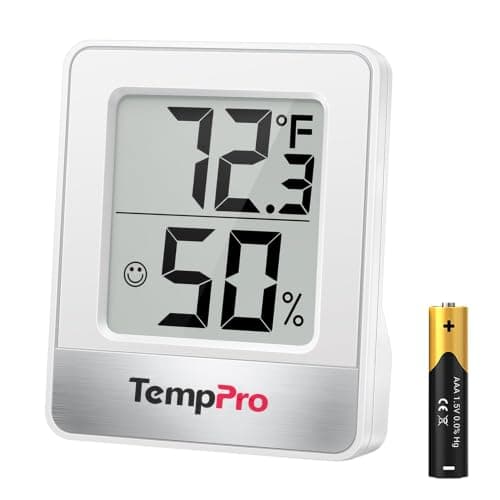
TempPro TP49 Digital Hygrometer
Single unit
We compute cost-per-ounce rather than calling something expensive, and this is the same idea applied to your room: a $9 readout tells you whether the air is actually dry before you buy a humidifier to fix it.
$9.99View on Amazon#ad · price as of October 23, 2026, and it may change
SINLAND Microfiber Face Towels, 12 x 12 in
6 pack
A small, soft, dedicated face cloth makes it easy to blot dry and leave skin slightly damp, which is the state a ceramide moisturizer wants to go on to.
One caveat. Blot, do not scrub. Dragging a cloth across the face is mechanical stress the barrier does not need.
$11.99View on Amazon#ad · price as of October 23, 2026, and it may change
Amazon links, so we may earn a commission at no cost to you — see the affiliate disclosure. We were not given any of these, and nothing here changed which products won this page.
Frequently asked
Questions people actually ask
What humidity level is best for skin?
Around 40 to 50 percent is the range generally recommended for indoor comfort. Heated rooms in winter often sit well below that, which is why skin feels tighter in January than it does in June.
How do I know if my room is too dry?
Measure it. A cheap hygrometer in the bedroom, read in the morning, tells you in a day what guesswork will not. If the number is fine, your dry skin is coming from your routine or your showers rather than the air.
Can a humidifier replace moisturizer?
No. It slows how fast the room pulls water out of your skin; it does not restock the barrier lipids that hold water in. Use both — they work on opposite sides of the same problem.
Keep reading
Related on Ceramide Club
- Do humidifiers help dry skin?Whether the appliance is worth buying at all.
- Does cold weather damage your skin barrier?Why winter air gets this dry indoors.
- How to winterize your skincare routineThe rest of the seasonal swap list.
- Does air conditioning dry out your skin?The same physics, in the opposite season.
Show your work