Skip to content
Ceramide Club

Hub 05 · Ceramides 101

Are Ceramides Humectants?

No. Ceramides are lipids - structural material that slows water loss. Humectants are a different class that attracts water in. A good moisturizer contains both, and knowing which is which tells you what is missing from yours.

By Stephen V.Updated October 17, 2026

#ad Ceramide Club is reader-supported. If you buy through our links we may earn a commission, at no cost to you — it never changes our verdict. How this works.

No — ceramides are not humectants. They are lipids: fatty molecules that make up part of the mortar holding the outermost skin cells together. A humectant is something else entirely, a water-attracting ingredient like glycerin or hyaluronic acid that pulls moisture into the stratum corneum. Ceramides do the opposite half of the job: they help the barrier hold on to water it already has. The distinction is not pedantry. It is the reason a pure ceramide product can leave dry skin feeling unchanged, and the reason a pure hyaluronic acid serum can leave it feeling tighter than before.

The three classes, briefly

Moisturizer ingredients divide into three functional groups, set out in the StatPearls review of moisturizers:

  • Humectantsattract and bind water — glycerin, hyaluronic acid, urea, propylene glycol, panthenol, honey. They raise hydration in the stratum corneum, drawing water from deeper layers and, in humid air, from the environment.
  • Emollientsfill the gaps between skin cells and make the surface feel smooth — squalane, plant oils, fatty alcohols, esters. This is mostly a sensory and smoothing role.
  • Occlusivesform a layer that physically slows evaporation — petrolatum, dimethicone, beeswax, mineral oil.

Ceramides sit slightly outside that trio, which is why the question keeps coming up. They are not drawing water in, so they are not humectants. They are not simply sitting on top as a seal, so calling them occlusives is wrong too. They are structural: lipids that the skin itself uses to build the permeability barrier, alongside cholesterol and free fatty acids. Applying them is less like greasing a surface and more like supplying bricks. The research on optimal stratum corneum lipid ratios is the clearest statement of why that matters: barrier recovery depended on applying the three lipid classes in sensible proportions, and an incomplete or unbalanced mixture performed worse than a balanced one.

Why it matters for what you buy

Because the two mechanisms fail in different ways, and your symptom tells you which one you are short of.

Dehydrated skin— tight, dull, fine lines that appear by evening — is short of water, and humectants address it quickly. That is why a glycerin- or hyaluronic-acid-forward product feels like it works within minutes. Ceramides for dehydrated skin goes through the distinction.

A damaged barrier— stinging, flaking, products that suddenly burn — is short of lipids, and that is the ceramide case. It does not resolve in minutes; it resolves over weeks as the barrier rebuilds. Signs of a damaged skin barrier lists what to look for.

A humectant without anything to hold the water in is the classic failure mode. In dry air, hyaluronic acid can draw water up through the skin and let it evaporate, which is why a serum alone sometimes leaves skin feeling worse — the fix is a cream on top, not more serum. How to layer ceramides and hyaluronic acid has the order.

What to look for on the label

  • Both classes present. Glycerin high in the ingredient list plus a named ceramide is the combination that covers water in and water retained. Almost every good barrier cream does this; it is worth checking that yours does.
  • Named ceramide types, not “ceramide complex”. NP, AP, EOP and the numbered equivalents tell you something. A vague complex does not. How to read a ceramide ingredient label walks through it.
  • Cholesterol, ideally. The lipid research is about ratios, and cholesterol is the partner most formulas omit.
  • Format matched to climate. In dry winter air a humectant-heavy serum needs something over it; in humid summer air it may be enough on its own.

Three products that get the combination right, from a cheap tub to a layering serum:

The short answer

At a glance

#ProductCeramidesScorePrice
01
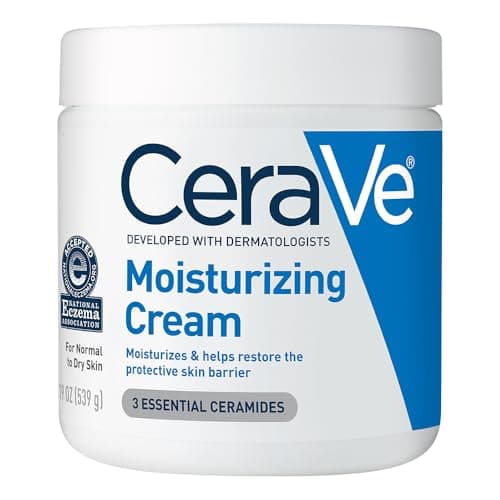
CeraVe CeraVe Moisturizing Cream

Most people, most of the time

CeraVe Moisturizing Cream

The default answer to "what ceramide cream should I buy" — three ceramides, a huge tub, and a cost-per-ounce nothing else here touches.

Ceramides 1, 3, 6-II
8.8
$18.96Amazon

$1.00/oz

02
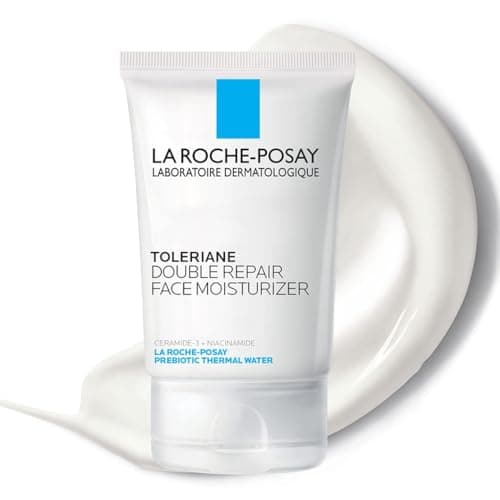
La Roche-Posay La Roche-Posay Toleriane Double Repair Face Moisturizer

Sensitive skin that reacts to everything

La Roche-Posay Toleriane Double Repair Face Moisturizer

The dermatologist-shelf default: ceramide-3, niacinamide, and prebiotic thermal water in an oil-free gel-cream that suits almost everyone.

Ceramide-3 (NP)
8.2
$24.99Amazon

$7.39/oz

03
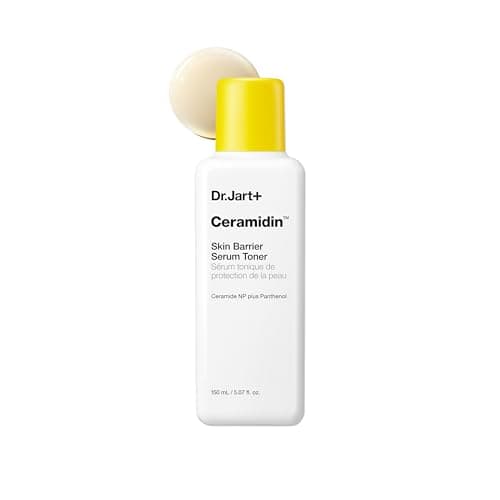
Dr.Jart+ Dr.Jart+ Ceramidin Serum

Layering ceramides without added weight

Dr.Jart+ Ceramidin Serum

A milky ceramide serum that layers under a cream without weight — one of the few true ceramide serums worth the shelf space.

Ceramide NP
7.0
$33.60Amazon

$6.63/oz

#ad · Live prices and cost-per-ounce from the Amazon Product API, as of October 23, 2026. Where we have no verified live price, we show none — a gap beats a number that has rotted.

In detail

The picks, in full

01
CeraVe CeraVe Moisturizing Cream

Most people, most of the time

CeraVe Moisturizing Cream

Ceramides: Ceramides 1, 3, 6-II

19 oz tubFragrance-freeCeramides 1·3·6-IIMVE delivery
8.8/10

The default answer to "what ceramide cream should I buy" — three ceramides, a huge tub, and a cost-per-ounce nothing else here touches.

Ceramide profile
9
Barrier support
9
Suitability
9
Formulation
7
Value
10

Pros

  • Lists three of the ceramides your barrier actually uses, plus cholesterol and phytosphingosine
  • The 19 oz tub makes the cost-per-ounce the lowest of any pick on the site
  • Fragrance-free, non-comedogenic, and boring in the best way — nothing in it fights reactive skin

Cons

  • The tub is unhygienic to finger-dip and too stiff to pump
  • Thick enough that oily skin will find it heavy for daytime under makeup

Don't buy this if…

…you want something that sinks in fast for daytime wear under makeup. This is a rich cream — reach for the Daily Moisturizing Lotion or a serum for mornings.

$18.96View on Amazon

≈ $1.00/oz

Price as of October 23, 2026. Prices change — Amazon's is the one that counts.

#ad · we may earn a commission from this link to CeraVe Moisturizing Cream

Read our full CeraVe Moisturizing Cream review →
02
La Roche-Posay La Roche-Posay Toleriane Double Repair Face Moisturizer

Sensitive skin that reacts to everything

La Roche-Posay Toleriane Double Repair Face Moisturizer

Ceramides: Ceramide-3 (NP)

3.38 ozNiacinamideCeramide-3Oil-free · fragrance-free
8.2/10

The dermatologist-shelf default: ceramide-3, niacinamide, and prebiotic thermal water in an oil-free gel-cream that suits almost everyone.

Ceramide profile
7
Barrier support
8
Suitability
10
Formulation
9
Value
7

Pros

  • Pairs ceramide-3 with niacinamide and glycerin — a genuinely well-rounded barrier formula
  • Oil-free gel-cream texture works across oily, normal, and mildly dry skin
  • Fragrance-free and among the best-tolerated moisturizers for reactive skin

Cons

  • Only lists a single ceramide type, where the CeraVes disclose three
  • Costs noticeably more per ounce than the drugstore three-ceramide picks

Don't buy this if…

…your skin is very dry and you want maximum cushion. The gel-cream is light — a richer barrier cream will serve deep dryness better.

$24.99View on Amazon

≈ $7.39/oz

Price as of October 23, 2026. Prices change — Amazon's is the one that counts.

#ad · we may earn a commission from this link to La Roche-Posay Toleriane Double Repair Face Moisturizer

Read our full La Roche-Posay Toleriane Double Repair Face Moisturizer review →
03
Dr.Jart+ Dr.Jart+ Ceramidin Serum

Layering ceramides without added weight

Dr.Jart+ Ceramidin Serum

Ceramides: Ceramide NP

5.07 ozCeramide NPMilky textureLayerable
7.0/10

A milky ceramide serum that layers under a cream without weight — one of the few true ceramide serums worth the shelf space.

Ceramide profile
7
Barrier support
6
Suitability
7
Formulation
8
Value
7

Pros

  • One of the few serum-format products built around a ceramide: ceramide NP with panthenol and glycerin
  • Milky, watery texture layers cleanly under a moisturizer or sunscreen
  • Generous bottle size for a serum, which helps the cost-per-ounce

Cons

  • A serum this light will not out-repair a proper ceramide cream on its own
  • Lists a single ceramide type; the five-ceramide complex is in the Ceramidin cream, not this serum
  • Contains denatured alcohol and small amounts of geranium, bergamot and sage oils, so patch test it if your skin is reactive
  • Premium price for what is, functionally, a hydrating layer

Don't buy this if…

…you have dry or compromised skin and want one product to fix it. A serum is a layering step — pair it with a cream, or skip straight to the cream if you only buy one thing.

$33.60View on Amazon

$42.0020% off≈ $6.63/oz

Price as of October 23, 2026. Prices change — Amazon's is the one that counts.

#ad · we may earn a commission from this link to Dr.Jart+ Ceramidin Serum

Read our full Dr.Jart+ Ceramidin Serum review →

Common confusions worth clearing up

“Ceramides hydrate skin.” Loosely true, mechanically wrong. Ceramides raise hydration by reducing how much water escapes, not by adding or attracting any. If you measure stratum corneum hydration after using a ceramide cream it goes up, but the route is retention. The practical consequence is timing: humectants feel like they work today, ceramides show up over weeks.

“Hyaluronic acid is a ceramide alternative.” They are not substitutes in either direction. The full comparison is in ceramides vs hyaluronic acid, and ceramides vs glycerin covers the cheaper, better-evidenced humectant most formulas actually rely on.

“Urea is a humectant, so it is like glycerin.”Urea is a humectant and also a keratolytic — at the concentrations used in body creams it softens compacted keratin as well as holding water, which is why it is the pick for rough, scaly skin. Ceramides vs urea sets out when each one is the right tool.

“Panthenol is just a soothing ingredient.” Panthenol is a humectant with published evidence for improving barrier function and hydration, so it is doing more than one job in the formulas that include it.

So which does your skin need?

Both, nearly always, in one product. The shortest diagnostic: if your skin feels tight but tolerates everything you put on it, you are short of water, and a humectant-forward routine fixes it quickly. If your skin stings at products it used to like, flakes, and looks red, you are short of lipids, and that is a ceramide problem measured in weeks. How long it takes to repair a skin barrier sets the expectation, and Cleveland Clinic's summary of what ceramides do is a useful one-page sanity check.
How we picked

We do not run a testing lab

Everyone in this category claims a lab and a testing count. We do not have one, and we will not pretend to. What we do instead: read every INCI list and record the actual ceramide types each formula discloses, note whether it pairs them with cholesterol and fatty acids, and compute the cost-per-ounce from the live price — then score each product against a published rubric. The scores are judgments from that documented research, not measurements we took. Where a claim comes from the manufacturer, we say so and cite it in Sources.

Frequently asked

Questions people actually ask

Are ceramides occlusive?

Not in the usual sense. Occlusives like petrolatum sit on the surface and physically block evaporation. Ceramides are incorporated into the barrier structure itself, so they reduce water loss by making the barrier work better rather than by sealing it from outside. A cream can of course contain both.

Is glycerin or hyaluronic acid the better humectant?

Glycerin has the longer and better evidence base and costs almost nothing, which is why it appears high in the ingredient list of nearly every moisturizer worth buying. Hyaluronic acid is a good humectant with a better marketing department. Neither replaces the lipid half of the job.

Can a product be all three - humectant, emollient and occlusive?

Yes, and the good ones are. A typical barrier cream carries glycerin as the humectant, fatty alcohols and plant oils as emollients, dimethicone or petrolatum for occlusion, and ceramides as the structural lipid. That is what “well-formulated” usually means in this category.

Do I need a separate humectant serum if my cream has glycerin?

Usually not. If your cream already lists glycerin high up, an additional humectant serum is optional rather than necessary — more useful in dry climates or on dehydrated skin than as a default step. Our view on the extra step is in do you need both a ceramide serum and a moisturizer.

Keep reading

Show your work

Sources