Clears the whole screen
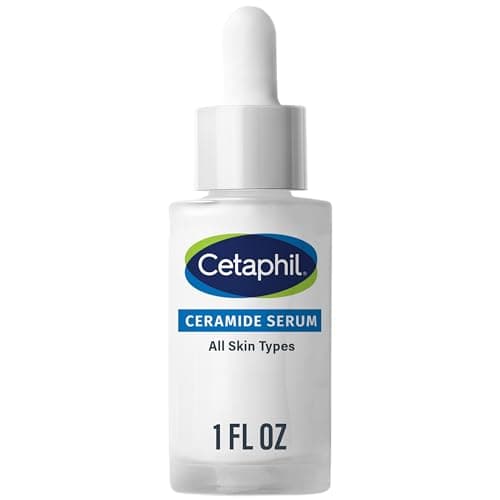
Cetaphil Ceramide Serum
1 ozCeramides + CICAHypoallergenicFragrance-free
The Cetaphil Ceramide Serumis the only pick here that passes all four stages of the screen without a caveat: fragrance-free rather than unscented, no denatured alcohol, a short formula rather than a botanical anthology, and no active riding along inside the barrier step. It pairs its ceramides with centella, which is the calming ingredient with the most published work behind it. The honest cost: it does not name which ceramides it contains, and its Amazon stock has repeatedly run thin — so if it is unavailable, the CeraVe Hyaluronic Acid Serum is the next pick and the one that actually names its three ceramide types.
“For sensitive skin” is the least regulated phrase in skincare, so this page treats it as a test rather than a claim. Every serum below was screened in four stages, in this order: fragrance, denatured alcohol, botanical and essential-oil load, and actives riding along inside a product sold as a soothing step. Ceramide content and cost-per-ounce — the two things that normally decide our rankings — were scored only after a product had passed. That is why this order looks nothing like our dry-skin serum ranking, and why the serum most often recommended for a damaged barrier is not on this page at all.
Worth being precise about what we mean by sensitive, because two different problems arrive at the same page. Reactive skin stings, flushes or itches in response to specific ingredients, and the fix is avoidance: screen the label, patch test, keep the routine short. Compromised skinreacts to almost everything because the barrier itself is leaking — that is not an allergy, it is a barrier in deficit, and the fix is lipids and time. The research on ceramide abnormalities in atopic dermatitis is the clearest version of why the second group reacts to things the first group tolerates, and the work on the skin barrier in rosacea makes the same point for flushing-prone skin. If everything has started stinging recently, read is it normal for a ceramide moisturizer to sting before you buy anything else.
The four-stage screen, in order
- Fragrance — and the word used for it. Fragrance is the most common cause of contact reactions in skincare, and the label language is slippery: unscented can mean a masking fragrance was added to cover a raw-material smell, while fragrance-free means none was added at all. They are not the same claim, and we have a whole page on the difference. Essential oils count as fragrance here, whatever the marketing says about them being natural.
- Denatured alcohol. Alcohol denat high in an ingredient list gives a serum that lovely fast, dry-touch finish and is a poor idea on a barrier that is already losing water. It is not poison and plenty of people tolerate it, but it is the second thing to look for and it is why one very well-reviewed ceramide serum is not on this page.
- Botanical and ferment load.Every plant extract is another molecule your skin has to meet. A formula with twenty of them is not inherently bad — some are genuinely soothing — but it is harder to troubleshoot, because when it stings you have twenty suspects. For reactive skin, fewer ingredients is a feature.
- Actives you did not sign up for.This is the one that catches people. Barrier serums increasingly carry niacinamide, arbutin, tranexamic acid or a low-dose acid, and a reader who bought a “soothing ceramide serum” can end up applying three actives twice a day. Niacinamide in particular is a useful ingredient that a minority of people flush from — there is good published work on niacinamide and stratum corneum structure and it still is not the right thing to meet unannounced. If you already know niacinamide is your trigger specifically, our niacinamide-free ceramide picks screen for that one ingredient across formats; this page screens for all four stages and keeps the serum format.
The four we left off, and why
Leaving a product out silently is the easy way to write this page. Here is what did not make it, so you can overrule us if you disagree:
- Dr.Jart+ Ceramidin Serum— a genuinely good serum that names its ceramide type, and the one product we hear about most from readers whose skin stung. Its published ingredient list carries denatured alcohol plus geranium, bergamot and sage oils. It fails stages two and three. It is ranked second on the Korean ceramide serum page, where the criterion is type disclosure rather than tolerance.
- AMPLE:N Ceramide Shot Ampoule— the best-disclosed ceramide content of any serum we rank (three named types plus cholesterol), and its listing says unscented rather than fragrance-free. That is stage one, and stage one is the whole point of this page, so it sits out. If your skin is dry rather than reactive, buy that one instead and ignore us.
- Naturium Barrier Bounce Serum— 5% squalane and 2% urea make it the richest serum we rank and an excellent product for flaky, very dry skin. Urea at that level can sting on a broken barrier, which is exactly the reader this page is for.
- Elizabeth Arden ceramide capsules— the single-dose format is genuinely the most hygienic way to apply anything, and the formula carries fragrance. Stage one again.
Pick in ten seconds
- You want the safest bet on the page — the Cetaphil Ceramide Serum. Clears all four stages; check stock before you plan a routine around it.
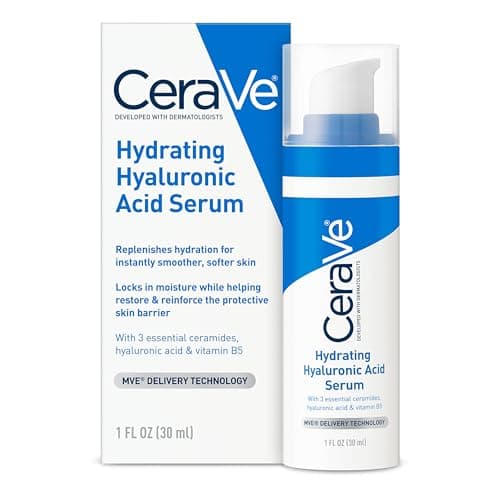
- You want named ceramides and easy availability — the CeraVe Hyaluronic Acid Serum. Three disclosed types, fragrance-free, in every drugstore.
- You want the shortest claim set and the lowest spend — the BIODANCE Hydro Cera-nol Serum for ceramide plus panthenol, or The Ordinary HA 2% + B5 if you want to spend as little as possible to find out whether a hydrating layer helps at all.
- Your skin is dry, reactive, and you want a complete line — the AESTURA Atobarrier365 serum. Built for this reader; contains niacinamide; priced like a line.
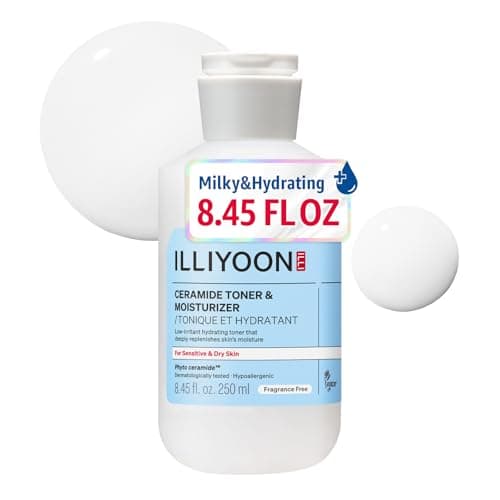
- Even a serum feels like too much right now — the Illiyoon Ceramide Ato milky toner. It is a toner, which we are labeling rather than hiding: a fragrance-free hydrating layer you can use by the handful while your skin calms down.
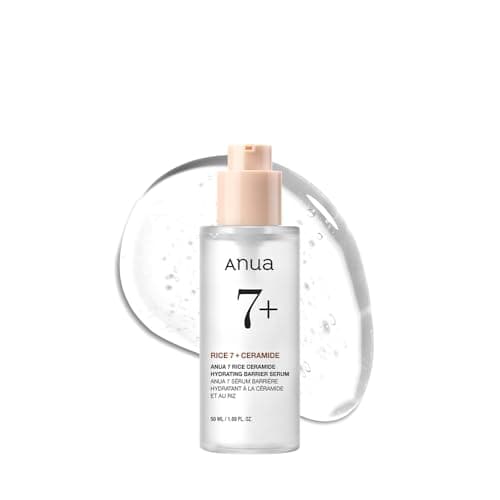
- You tolerate niacinamide and want the lightest finish — the Anua Rice Ceramide 7. Ranked last here purely on the active load: 3% niacinamide plus arbutin is a choice, and it should be yours.
- You need a cream, not a serum — the best ceramide creams for sensitive skin is the richer tier, and for a barrier in deficit it is the better first purchase.
The short answer
At a glance
| # | Product | Ceramides | Score | Price |
|---|
| 01 | Dry skin that is also sensitive Cetaphil Ceramide SerumCeramides with centella in a hypoallergenic, fragrance-free serum — the one to pick when dry skin is also reactive skin. | Ceramides (types not disclosed) + centella asiatica | | $13.99·Amazon $13.99/oz |
| 02 | Most dry skin, most of the time CeraVe Hyaluronic Acid SerumThe default ceramide serum for dry skin: three named ceramides and CeraVe's highest hyaluronic acid concentration, in a fragrance-free gel that layers under anything. | Ceramides 1, 3, 6-II | | $16.97·Amazon $16.97/oz |
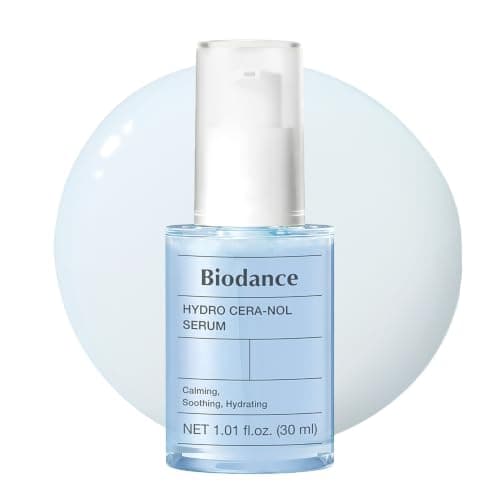
| 03 | A low-commitment first K-beauty barrier serum BIODANCE Hydro Cera-nol SerumCeramide with D-panthenol and hyaluronic acid in a one-ounce bottle — the cheapest way into this group, and the one with the least on its label. | Ceramide (type not disclosed) + D-panthenol | | $18.99·Amazon $18.80/oz |
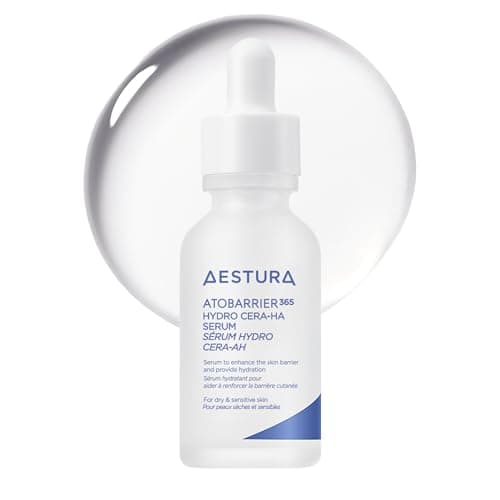
| 04 | A barrier-line serum for dry, reactive skin AESTURA Atobarrier365 Hydro Cera-HA SerumThe serum step of a Korean barrier line built for dry and sensitive skin — ceramides with hyaluronic acid and niacinamide, in the smallest bottle and at the highest price here. | Ceramides (types not disclosed) + hyaluronic acid | | $34.00·Amazon $33.66/oz |
| 05 | | Ceramides (types not disclosed) | | $9.90·Amazon $9.90/oz |
| 06 | | Ceramides (types not disclosed; Ceramide Ato line) | | $24.99·Amazon $2.96/oz |
| 07 | Dry skin that still gets oily by midday Anua Rice Ceramide 7 Hydrating Barrier SerumA K-beauty barrier serum built on rice-derived protein, ceramides and 3% niacinamide — the lightest finish of the picks that still claim real barrier support. | Ceramides + rice-derived RICERA 7+ complex | | $22.00·Amazon $13.02/oz |
#ad · Live prices and cost-per-ounce from the Amazon Product API, as of November 1, 2026. Where we have no verified live price, we show none — a gap beats a number that has rotted.
In detail
The picks, in full
Dry skin that is also sensitive
Cetaphil Ceramide Serum
Ceramides: Ceramides (types not disclosed) + centella asiatica
1 ozCeramides + CICAHypoallergenicFragrance-free
Ceramides with centella in a hypoallergenic, fragrance-free serum — the one to pick when dry skin is also reactive skin.
- Ceramide profile
- 6
- Barrier support
- 8
- Suitability
- 10
- Formulation
- 8
- Value
- 8
Pros
- +Pairs ceramides with centella asiatica, the calming ingredient reactive skin tolerates best
- +Hypoallergenic, fragrance-free, paraben-free and labeled non-pore-clogging — a short, dull, well-behaved formula
- +Cetaphil quotes clinical barrier-repair and hydration claims on the listing rather than leaving it at adjectives
Cons
- −Does not name which ceramide types are in it, which is a step back from the CeraVe disclosure
- −Stock has been thin on Amazon — the listing has repeatedly shown low unit counts, so check availability before you plan a routine around it
Don't buy this if…
…you want the deepest ceramide list on the page. This earns its place on tolerance and the centella pairing, not on ceramide count.
Most dry skin, most of the time
CeraVe Hyaluronic Acid Serum
Ceramides: Ceramides 1, 3, 6-II
1 ozCeramides 1·3·6-IIVitamin B5Fragrance-free
The default ceramide serum for dry skin: three named ceramides and CeraVe's highest hyaluronic acid concentration, in a fragrance-free gel that layers under anything.
- Ceramide profile
- 8
- Barrier support
- 7
- Suitability
- 9
- Formulation
- 8
- Value
- 8
Pros
- +Names the same three ceramides as the rest of the CeraVe range, so you are not guessing what the lipid content is
- +The listing calls it CeraVe's highest hyaluronic acid concentration, and the gel texture disappears under a cream or sunscreen
- +Fragrance-free, with MVE delivery and panthenol — nothing in it fights reactive skin
Cons
- −It is a hydrating layer, not a repair cream; on genuinely dry skin it needs a moisturizer over the top
- −One ounce is small next to the big-tub CeraVe creams, so the cost-per-ounce looks worse than the brand's usual value
Don't buy this if…
…you only want to buy one product. A serum this light will not hold moisture in on its own — put the money into a ceramide cream first and add this later.
A low-commitment first K-beauty barrier serum
BIODANCE Hydro Cera-nol Serum
Ceramides: Ceramide (type not disclosed) + D-panthenol
1.01 fl ozCeramide + D-panthenolHyaluronic acidDry / sensitive skin
Ceramide with D-panthenol and hyaluronic acid in a one-ounce bottle — the cheapest way into this group, and the one with the least on its label.
- Ceramide profile
- 5
- Barrier support
- 7
- Suitability
- 9
- Formulation
- 8
- Value
- 7
Pros
- +Panthenol is the strongest supporting ingredient a barrier serum can carry, and the published work behind it on hydration and barrier function is some of the oldest we cite
- +Short, hydration-first claim set — nothing on the listing about brightening, firming or glow
- +Entry-level price for the category, so trying it costs you very little
Cons
- −The listing names a ceramide without naming a type, and does not quantify it
- −One ounce is a six-to-eight week bottle if you use a serum twice a day
- −A hydrating serum, not a repair treatment: on genuinely damaged skin it needs a cream over it
Don't buy this if…
…you want the most disclosed lipid content you can buy. This is the sensible cheap option, and the AMPLE:N ampoule tells you far more about what is in it.
A barrier-line serum for dry, reactive skin
AESTURA Atobarrier365 Hydro Cera-HA Serum
Ceramides: Ceramides (types not disclosed) + hyaluronic acid
30 mlCeramides + HANiacinamideDry / sensitive skin
The serum step of a Korean barrier line built for dry and sensitive skin — ceramides with hyaluronic acid and niacinamide, in the smallest bottle and at the highest price here.
- Ceramide profile
- 6
- Barrier support
- 8
- Suitability
- 8
- Formulation
- 9
- Value
- 4
Pros
- +Sold as the serum tier of a barrier-repair line rather than a glow product, and the listing's claims stay on hydration and the barrier rather than brightening
- +Light, watery-gel finish that layers under a cream without pilling, which is the main thing a serum has to get right
- +Three mechanisms in one step: a lipid, a humectant and niacinamide
Cons
- −Does not name a single ceramide type, which is a real gap at this price
- −30 ml is the smallest bottle in the group and the cost-per-ounce is the worst of any K-beauty pick we rank
- −Contains niacinamide, so it is the wrong pick if that is the ingredient your skin objects to
Don't buy this if…
…value is the brief. This is a well-mannered serum sold at a premium, and the cheaper picks here deliver more disclosed lipid per dollar.
The lowest possible entry price
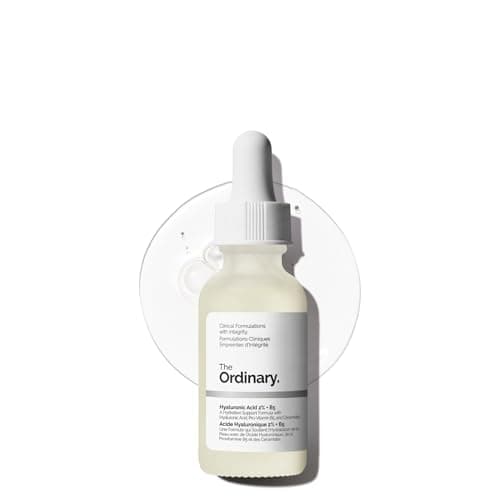
The Ordinary Hyaluronic Acid 2% + B5 (with Ceramides)
Ceramides: Ceramides (types not disclosed)
1 fl oz2% hyaluronic acidPro-vitamin B5Added ceramides
The cheapest way to get ceramides and five molecular weights of hyaluronic acid into a routine. A hydration step with a barrier bonus, priced like a hydration step.
- Ceramide profile
- 5
- Barrier support
- 6
- Suitability
- 8
- Formulation
- 7
- Value
- 10
Pros
- +Costs less than almost anything else on the site and still puts ceramides and panthenol on the skin
- +Five hyaluronic acid weights is a genuine formulation choice, not a marketing line — it is why the hydration does not sit only on the surface
- +Easy to slot into a routine you have already built without displacing anything
Cons
- −Ceramides are a supporting addition to a hyaluronic acid serum, not the headline — the types are not named and the concentration is not stated
- −Pure humectant serums can feel tacky, and on very dry skin in dry air they need an occlusive over the top or they do nothing
Don't buy this if…
…your skin is dry because the barrier is damaged rather than dehydrated. Water-binding is not the same as lipid replacement — read our dehydrated-versus-dry explainer before you spend here.
Cheap barrier hydration over a large area
Illiyoon Ceramide Ato Moisturizing Milky Toner
Ceramides: Ceramides (types not disclosed; Ceramide Ato line)
8.45 fl ozMilky essence-tonerFragrance-freeBarrier repair claims
The toner-essence end of the Ceramide Ato line: fragrance-free, milky, and sold by the half-pint rather than the ounce.
- Ceramide profile
- 5
- Barrier support
- 6
- Suitability
- 9
- Formulation
- 8
- Value
- 8
Pros
- +Fragrance-free, which is still unusual in a K-beauty toner and is the main reason it outranks glow-marketed bottles for reactive skin
- +Comes from the same Ceramide Ato line as the concentrate cream this site has ranked since launch, so the routine stays inside one well-behaved family
- +Milky rather than watery: it leaves something behind instead of flash-evaporating off dry skin
Cons
- −A toner is a dilute format by design — the ceramide per application is lower than any serum here and the listing does not quantify it
- −Costs more per ounce than the other fragrance-free milky toner we rank, for a similar job
- −Sold as a 2-in-1 toner and essence, which in practice means it is neither concentrated nor an exfoliating toner
Don't buy this if…
…you are buying one product to fix a damaged barrier. Volume is not concentration — put the money into the cream from the same line first.
Dry skin that still gets oily by midday
Anua Rice Ceramide 7 Hydrating Barrier Serum
Ceramides: Ceramides + rice-derived RICERA 7+ complex
1.69 fl oz3% niacinamideCeramides + panthenolFragrance-free
A K-beauty barrier serum built on rice-derived protein, ceramides and 3% niacinamide — the lightest finish of the picks that still claim real barrier support.
- Ceramide profile
- 6
- Barrier support
- 7
- Suitability
- 7
- Formulation
- 9
- Value
- 7
Pros
- +Combines ceramides with panthenol and 3% niacinamide, so the barrier support and the hydration come from three different mechanisms
- +Absorbs fast with an elastic, non-tacky finish — the listing pitches it as a makeup base and that is a fair description
- +Fragrance-free and non-comedogenic at a mid-range price for the bottle size
Cons
- −Niacinamide at 3% plus arbutin is more actives than some reactive skin wants in a barrier step
- −Ceramide types are not disclosed; the 7 in the name refers to the brand's rice complex, not seven ceramides
Don't buy this if…
…niacinamide does not agree with you, or you read the name as seven ceramide types — it is not. Our niacinamide-free picks are the better route in that case.
Why a serum is the harder format for sensitive skin
A serum is a thin, fast-penetrating vehicle, and that cuts both ways. The same formulation choices that make a serum feel elegant — a volatile solvent for the dry-touch finish, a higher share of water-soluble actives, a lighter emollient load — are the choices that give reactive skin the most to object to. A cream, by contrast, hides a multitude of sins behind occlusion: the StatPearls chapter on moisturizers is a good primer on why the humectant, emollient and occlusive balance changes how a formula behaves on damaged skin.
Which is the uncomfortable honest answer to “what ceramide serum should I buy for sensitive skin?”: if your barrier is actively compromised, a serum is the second purchase. A plain, fragrance-free ceramide cream is the first one, and the serum earns its place later, when you want to layer lipids under it without extra weight. We have made that case at length in do you need both a ceramide serum and a moisturizer and we are not going to pretend otherwise to sell a serum.
How to introduce one without a bad week
- Patch test, properly.Inner forearm or in front of the ear, twice a day, for five to seven days — not one dab the night before you need your skin to behave. The full method is here, and it is the single highest-value habit for anyone who reacts to things.
- One new product at a time, with a week between. Two at once means you cannot tell which one did it, and reactive skin always gets blamed on the newest bottle rather than the real culprit.
- Apply to damp, not wet, skin, then seal. Humectant-heavy serums pull water from wherever they can find it, and on dry skin in dry air that can be from your own stratum corneum. A cream over the top turns that from a problem into hydration.
- Expect stinging to mean something. Transient tingling on badly compromised skin can settle within a minute or two. Burning, flushing that lasts, or itching are stop signals, not toughening-up signals. Our page on ceramide products that sting draws the line.
- Give it four weeks before you judge.Barrier recovery is measured in weeks, not days — how long it takes to repair a skin barrier has realistic timelines, and how to tell if your barrier is healing lists the signs worth watching for.
What centella, panthenol and niacinamide actually bring
Three ingredients turn up repeatedly in this group, and they are worth separating from the marketing.
- Centella asiatica— the best-supported calming botanical here. The review of centella's pharmacological effects on skin covers the wound-healing and anti-inflammatory work behind it. It is in our top pick, and it is also why the extract-heavy K-beauty formulas are not automatically a bad idea — just harder to troubleshoot. Full comparison at ceramides vs centella.
- Panthenol (pro-vitamin B5)— the quiet workhorse. The classic study on topical dexpanthenol and epidermal barrier function is why we treat it as a genuine barrier ingredient rather than filler, and it appears in four of the seven picks.
- Niacinamide— genuinely useful for barrier lipid synthesis and genuinely a trigger for a minority. The dose matters: a trace in a formula is different from 3% plus arbutin. We flag it in the cons of every pick that carries it, and ceramides vs niacinamide explains why the two are so often paired.
Three things that are not the serum's fault
Before you spend again on a gentler bottle, rule these out — all three cause more reactivity than the average serum does.
- Your cleanser. If your face feels tight straight out of the shower, the serum is being asked to repair damage that is happening twenty minutes earlier. Skin tightness after cleansing is the page.
- Over-exfoliation.The most common cause of “suddenly everything stings” is an acid or a scrub used three times a week for a month. How to repair over-exfoliated skin is the recovery protocol, and it starts with stopping.
- Hot water and hard water.Both measurably strip lipids, and neither requires a product to fix — hot showers and hard water cover what actually helps.
What we would actually buy
The Cetaphil serum if it is in stock, the CeraVe HA serum if it is not — and in both cases a plain fragrance-free ceramide cream over the top, because that is the product doing most of the work. If money is tight, The Ordinary HA 2% + B5 plus a drugstore ceramide cream is a better-performing routine for reactive skin than any single premium serum on this page, and we would rather say that than rank the expensive one first.
If your skin is calm and you are here because you want the gentlest version of a good routine rather than because something is wrong, widen the shortlist: the Korean ceramide serum ranking sorts the same shelf by how much each label discloses, and the best ceramide moisturizers for sensitive skin is the lighter cream tier for daily wear. If redness rather than stinging is the complaint, the rosacea-prone cream ranking is the more specific page.
Also worth having · under $40
The small stuff that makes this easier
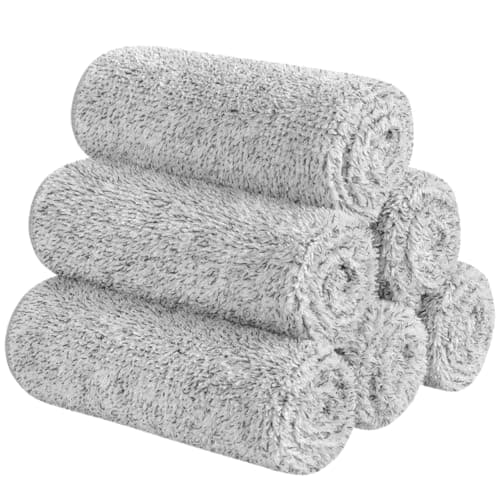
Two cheap things that reduce reactivity more reliably than switching serum: soft towels so you are patting rather than dragging a sore face dry, and a way to know whether your bedroom air is the reason your skin flares every winter.
None of it repairs a barrier — the moisturizer does that. These are cheap conveniences that make the routine easier to actually keep up.
SINLAND Microfiber Face Towels, 12 x 12 in
6 pack
A small, soft, dedicated face cloth makes it easy to blot dry and leave skin slightly damp, which is the state a ceramide moisturizer wants to go on to.
One caveat. Blot, do not scrub. Dragging a cloth across the face is mechanical stress the barrier does not need.
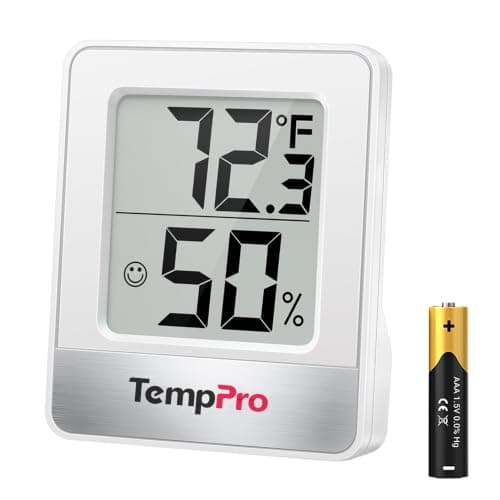
TempPro TP49 Digital Hygrometer
Single unit
We compute cost-per-ounce rather than calling something expensive, and this is the same idea applied to your room: a $9 readout tells you whether the air is actually dry before you buy a humidifier to fix it.
Amazon links, so we may earn a commission at no cost to you — see the affiliate disclosure. We were not given any of these, and nothing here changed which products won this page.
How we picked
We do not run a testing lab
Everyone in this category claims a lab and a testing count. We do not have one, and we will not pretend to. What we do instead: read every INCI list and record the actual ceramide types each formula discloses, note whether it pairs them with cholesterol and fatty acids, and compute the cost-per-ounce from the live price — then score each product against a published rubric. The scores are judgments from that documented research, not measurements we took. Where a claim comes from the manufacturer, we say so and cite it in Sources.
Keep reading
Related on Ceramide Club