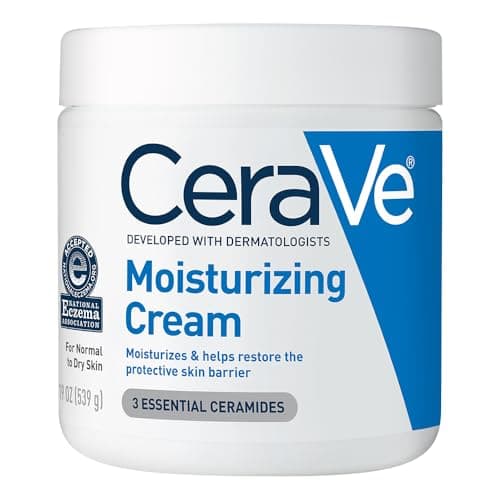
People treat CeraVe and Cetaphil as interchangeable drugstore twins, but on the one thing this site cares about — ceramides — they part ways. CeraVe is built around three essential ceramides. Cetaphil's famous classic moisturizers are gentle, well-tolerated, and genuinely good, but they are not, for the most part, ceramide products. So if barrier repair by way of ceramides is your goal, CeraVe is the straightforward pick — and that is the honest headline, not brand loyalty.
To be fair to Cetaphil: it is a fine brand with a deserved reputation for gentleness, and it does now sell a separate ceramide line. But its flagship classic cream — the one most people mean by “Cetaphil” — leans on humectants, an occlusive, and niacinamide rather than a disclosed ceramide blend. Here is the difference, laid out plainly.
| CeraVe (Moisturizing Cream) | Cetaphil (classic Moisturizing Cream) |
|---|
| Ceramides | Three essential ceramides (1, 3, 6-II), front and center. | Not ceramide-led; relies on glycerin, petrolatum, and niacinamide. |
| Barrier angle | Restocks the barrier's own lipids directly. | Hydrates and seals the surface; niacinamide supports the barrier indirectly. |
| Gentleness | Fragrance-free, non-comedogenic, well-tolerated. | Famously gentle and fragrance-free too. |
| Best for | Anyone who wants ceramides specifically. | A simple, gentle moisturizer where ceramides aren't the goal. |
Why CeraVe is the ceramide pick
The clue is in the name: CeraVe was built around ceramides, and its creams and lotions disclose three of the ceramides your barrier actually uses, delivered with a slow-release technology. If you have read that ceramides help repair a damaged barrier and you want a drugstore cream that actually contains them, CeraVe is the direct answer. We break down exactly which ceramides it uses in does CeraVe have ceramides, and the full write-up is in the CeraVe Moisturizing Cream review. That is why it is the only product featured on this page — it is the one that belongs in a ceramide ranking.
Where Cetaphil is still a good choice
None of this makes Cetaphil bad. Its classic cream is a gentle, fragrance-free, non-comedogenic moisturizer that combines humectants with an occlusive and niacinamide — and niacinamide is a well-documented barrier supporter that helps skin build its own lipids. If you want a plain, soothing moisturizer and ceramides are not specifically the point, Cetaphil is a reasonable pick. Cetaphil also sells a separate ceramide-specific range (a ceramide serum and a ceramide body lotion), so read the exact product name — the ceramide items are not the same as the classic cream. When in doubt, check the ingredient list, which is the only reliable test; our guide on which products actually contain ceramides shows how.
So which should you buy?
If your reason for buying is ceramides and barrier repair, buy CeraVe — it is built for exactly that and costs about the same. If you just want a gentle, no-frills moisturizer and are not chasing ceramides, either brand is fine, and Cetaphil is a perfectly good one. The mistake is assuming the two are identical: on ceramides, they are not. To see how CeraVe stacks up against the rest of the field, start with the best ceramide moisturizers.