Partly, and the honest version is narrower than either side of the argument claims. The people who say skincare is a scam are wrong about one product: daily sun protection has the strongest evidence in the field for how skin ages, and nothing you buy at any price substitutes for it. The people selling twelve-step routines are wrong about most of the rest. In between sits a barrier routine — a gentle cleanser and a ceramide moisturizer — which reliably changes how your skin looks and feels now, and has a much weaker claim on how it will look in thirty years. That is the whole answer; everything below is the detail.
It matters because “does skincare even do anything” is usually asked by someone deciding whether to bother at all. The answer that serves them is not a list of products. It is: do the one thing with the evidence, do the one thing that makes your skin comfortable, and treat the rest as optional spending you are free to enjoy or skip.
What a routine does and does not change
- Strong evidence: daily sun protection. Photodamage is the dominant modifiable driver of how visibly skin ages, and sunscreen is the intervention against it.
- Good evidence, present-tense:moisturizing an impaired barrier. It reduces water loss, flaking, tightness and sensitivity — see the reference on how moisturizers work. Skin that holds its water also looks smoother, which is a real cosmetic gain today rather than a prediction about later.
- Good evidence, long-term: retinoids, the one anti-aging active class with a serious track record. Not a product we sell, and worth saying so.
- Weak or no evidence: that a moisturizer prevents wrinkles. We are not going to claim it. The nuance is in do ceramides help wrinkles.
- Actively counterproductive:over-washing, over-exfoliating and collecting actives. Doing nothing beats doing too much — see how to repair over-exfoliated skin.
What to look for in the one moisturizer you buy
If you are building the minimum routine rather than a collection, the moisturizer should be chosen on four unglamorous things:
- Named barrier lipids, not a “complex”. A formula that publishes its ceramide types has told you something checkable; how to read a ceramide ingredient label shows you how to verify it in the aisle.
- Fragrance-free. The most common avoidable irritant, and nothing is lost by skipping it.
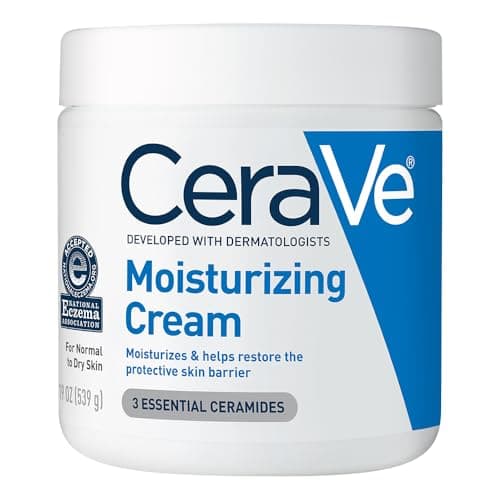
- Cost-per-ounce you can sustain for years. A routine you abandon in month three has no effect on anything. This is the entire argument for the big drugstore tub.
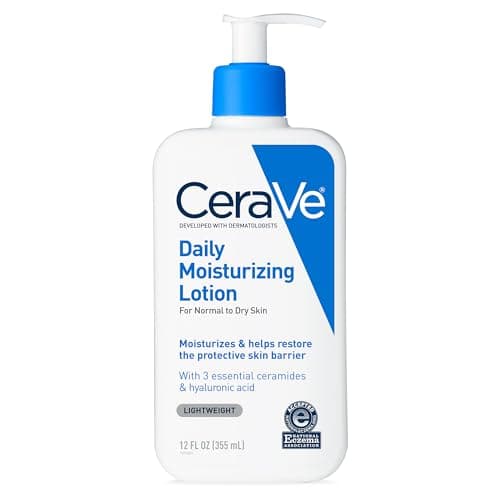
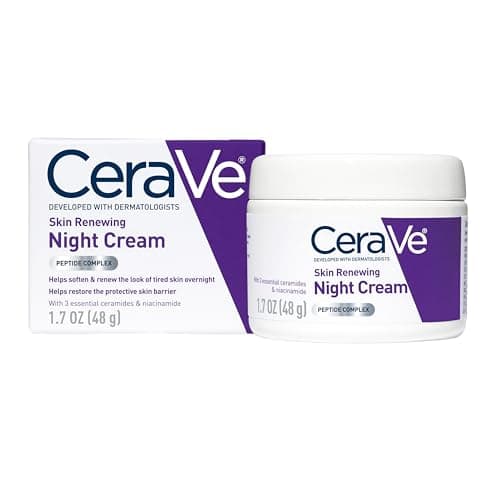
- A texture you will actually use twice a day— which is why the three picks below span a rich cream, a light lotion and a night cream rather than pretending one texture suits everyone.
The smallest routine worth running
- A gentle cleanser, at night.Not stripping, not twice-daily unless you wear makeup or heavy sunscreen. If your skin feels tight afterwards, the cleanser is wrong — see skin tightness after cleansing.
- A ceramide moisturizer, morning and night. Generously, on slightly damp skin.
- Sunscreen every morning. The one with the evidence. We do not sell it and it is still the most important item on this list.
That is three products and about ninety seconds a day. Everything beyond it — retinoids, vitamin C, acids, eye cream, toner — is a legitimate optional upgrade with its own tradeoffs, not a requirement. The build-up order, if you want to add things, is in how to build a barrier repair routine, and the subtraction version is how to simplify your skincare routine.
What people with visibly good skin are usually doing
Three things, consistently, for years: sun protection, not over-washing, and keeping the barrier comfortable. Not twelve steps. The reason a simple routine outperforms an elaborate one so often is that elaborate routines introduce more irritants, more opportunities for over-exfoliation and more reasons to quit. Genetics and cumulative sun exposure account for more of the variation between two people's skin than any product ever will, and pretending otherwise is how the industry sells the eleven products you do not need.
What the question is usually really asking
“Skincare versus no skincare” is almost never a question about whether moisturizer is chemically active. It is one of three other questions wearing that costume, and each has a different answer.
- “Am I being sold something I do not need?”Mostly yes, beyond three products. The industry's growth depends on the fourth through twelfth items, not the first three, and the first three are cheap.
- “Will I regret not starting earlier?” Only about sun protection. That is the one where the earlier-is-better claim holds up, and the one where the damage genuinely accumulates rather than resetting.
- “My skin is fine — is there any point?” If it is genuinely comfortable, the moisturizer is optional and you are free to skip it. Keep the sunscreen. Skin that is comfortable without a routine is not a problem in search of a product, and we are not going to invent one.
If you do nothing at all
Your skin does not fall apart. It keeps making its own barrier lipids and it manages. What typically shows up is the comfort side: tightness in winter, flaking, patches of roughness, and more reactivity — and over decades, the sun exposure you did not protect against, which is the part that is genuinely not recoverable. So the honest framing of “no skincare” is not that it ruins your skin, but that it leaves one high-value intervention on the table and makes the day-to-day worse than it needs to be.
The verdict
A routine changes how you age mainly through sunscreen, and changes how your skin looks and feels right now mainly through barrier care. Those are both worth having, and between them they cost less than one premium serum. If you want the ranked picks for the moisturizer slot across every budget, the moisturizer hub is the full list, and the cheapest defensible options are on the budget page.