Skip to content
Ceramide Club

Hub 06 · Compare

Ceramide Eye Serum vs Eye Cream

One of these formats has the better ceramide disclosure, the better value and the better case for most readers. The other has a genuine argument, and it is not the one the marketing makes.

By Stephen V.Updated November 1, 2026

#ad Ceramide Club is reader-supported. If you buy through our links we may earn a commission, at no cost to you — it never changes our verdict. How this works.

Buy the cream

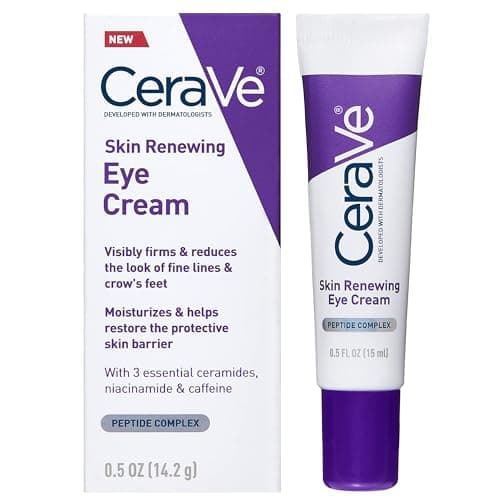
CeraVe CeraVe Skin Renewing Eye Cream

CeraVe Skin Renewing Eye Cream

8.6/10
0.5 oz tubeFragrance-freeCeramides NP·AP·EOPPeptides + caffeine

For the great majority of readers the answer to this comparison is the cream, and the CeraVe Skin Renewing Eye Creamis why: it names three ceramide types and the cholesterol beside them, it is fragrance-free, and it costs a fraction of any serum on this page. The eye serum format earns its money in exactly three situations — per-dose hygiene, a texture that will sit under concealer, and an active dosed for eyelid skin rather than face skin — and we go through all three below. If none of them describes you, the cream is not the compromise. It is the better product.

$15.12View on Amazon

≈ $30.24/oz

Price as of November 1, 2026. Prices change — Amazon's is the one that counts.

#ad · we may earn a commission from this link to CeraVe Skin Renewing Eye Cream

Why it wins ↓

The eye area is where skincare marketing is least constrained by the product, so it is worth being blunt about what separates these two formats. It is not the ingredients: ceramides do not behave differently because the bottle has a dropper. It is the vehicle — how much water, how much lipid, how much occlusion — plus three practical differences that genuinely matter around the eye: how precisely you can dose it, whether it sits still under makeup, and what it costs per application.

The reason any of this is a real question is anatomy. Eyelid skin is the thinnest on the body: the StatPearls chapter on eyelid anatomy describes a dermis and epidermis among the thinnest anywhere with very little subcutaneous fat beneath, which is why the area creases first, shows fluid first and reacts to actives first. That argues for care with what you put there. It does not, by itself, argue for a separate purchase — and the two formats answer the question differently.

What actually differs

  • Occlusion. A cream carries more emollient and more occlusive material, so it holds water in for longer. For an area whose main complaint is dryness and crepey texture, that is the mechanism doing the work. The StatPearls primer on moisturizers is the short version of why humectant-only formulas underperform in dry air.
  • Dose control.This is the serum's best argument and it is rarely the one you see advertised. The most common eye-product mistake is using far too much, and a single-dose capsule makes over-application almost impossible. A tube does not.
  • Hygiene. You are applying product within a centimeter of your eye with a fingertip. A sealed capsule removes the jar, the air and the accumulated contamination from that sequence. A tube is fine; a jar you finger-dip is the weakest option here.
  • Finish under makeup.Serums win. If concealer slides or cakes over your eye cream, the cream is the cause and a thinner vehicle is a real fix — not a marketing one.
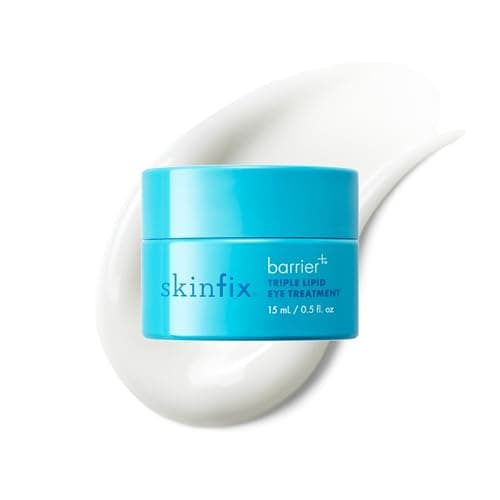
  • Ceramide disclosure. The creams win this decisively, and it is the most surprising finding. Both CeraVe eye creams and the Skinfix treatment name their ceramide types; the Skinfix listing goes as far as a disclosed 3% lipid complex with cholesterol and a fatty-acid ester. Every eye serumwe rank names a “ceramide complex” and stops. The lipid-ratio research on optimal topical stratum corneum lipid ratios is why we treat that difference as substantive rather than pedantic.
  • Cost per use.Not cost per jar. Eye products are sold in 0.5 oz tubes and 15 ml bottles, which makes every price look reasonable until you divide — and a sixty-capsule box is two months, which makes it a subscription in practice. The cost-per-ounce figures in the table above are computed from the live listing price and the listed size, refreshed daily.

The same brand, both formats

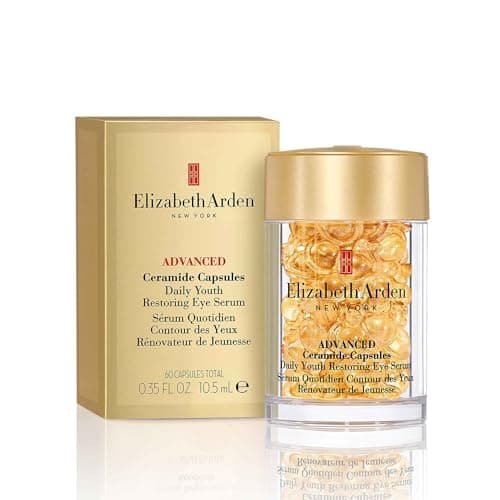
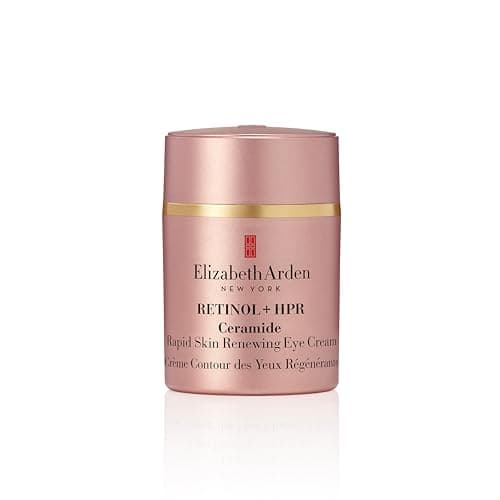
The cleanest way to see the trade is to hold the brand constant, which this page can do: Elizabeth Arden sells essentially the same ceramide story in both formats. The Advanced Ceramide Capsules Daily Eye Serum is sixty single-dose capsules with a serum texture and a barrier-lipid complex. The Retinol + HPR Ceramide Skin Renewing Eye Cream is a half-ounce cream with ceramides, peptides and two retinoid forms. Neither names a ceramide type. Both are expensive. Ranked beside each other, they make the honest point of this page: within a single brand, the format decides the hygiene, the texture and the dose — not how much lipid you are getting, and not how much it works.

Which to buy

  • Dryness, fine lines, crepey texture, nothing unusual— cream, and the CeraVe Skin Renewing Eye Cream is the value answer with the best disclosure at the price.
  • You want the most complete barrier formula regardless of price— cream: the Skinfix Triple Lipid Eye Treatment, with the caveat that it is the most expensive half-ounce in the category and carries 2% niacinamide.
  • Concealer slides over everything you own— serum. Thinner vehicle, less movement.
  • Per-dose hygiene matters to you— serum, specifically the capsules. It is the one argument the format wins outright.
  • You want an active dosed for eyelid skin— either, but read the label: the Elizabeth Arden cream is a retinoid product and the Beauty of Joseon serumis a retinal one. Both are retinoids near the eye, which is the most common route to a week of red, flaking lids. Patch test — here is the method.
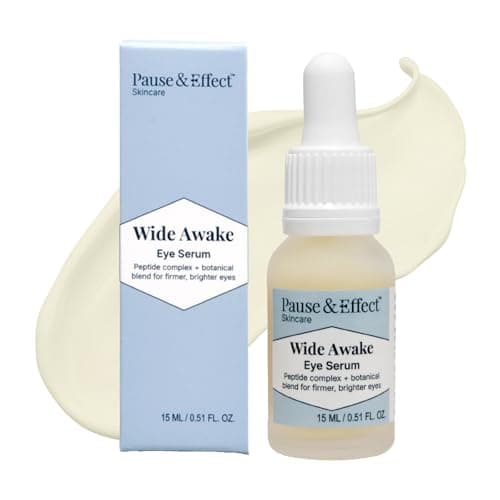
  • Menopausal skin and a peptide formula appeals — serum: the Pause & Effect Peptide and Ceramide Eye Serum, with the small-brand stock caveat in its cons. The wider routine question is covered in ceramides for menopausal skin.
  • You want the best eye serum for the money and do not need ceramides — the Beauty of Joseon serum, which discloses no ceramide at all. It is on this page because leaving it off would be the dishonest version of the comparison.
  • Neither — you want to use what you already own— a legitimate answer, and the next section.

The short answer

At a glance

#ProductCeramidesScorePrice
01
CeraVe CeraVe Skin Renewing Eye Cream

Almost anyone who wants a dedicated eye cream

CeraVe Skin Renewing Eye Cream

The only eye cream here that pairs the full three-ceramide set with cholesterol at a drugstore price. If you buy one ceramide eye cream, buy this one.

Ceramides NP, AP, EOP + cholesterol
8.6
$15.12Amazon

$30.24/oz

02
Elizabeth Arden Elizabeth Arden Advanced Ceramide Capsules Daily Eye Serum

A true eye-serum format with ceramides in it

Elizabeth Arden Advanced Ceramide Capsules Daily Eye Serum

The one dedicated ceramide eye serum that is actually built as a serum: sixty single-dose capsules, one per night, with nothing to contaminate between doses.

Ceramides (barrier lipid complex; types not disclosed)
6.4
$57.80Amazon
03
Elizabeth Arden Elizabeth Arden Retinol + HPR Ceramide Skin Renewing Eye Cream

Fine lines, if you already tolerate retinoids

Elizabeth Arden Retinol + HPR Ceramide Skin Renewing Eye Cream

Retinol plus HPR with ceramides and peptides — the premium actives route for the eye area, and the most expensive half-ounce on this page.

Ceramides (types not disclosed)
5.6
$68.00Amazon

$136.00/oz

04
Skinfix Skinfix Triple Lipid Eye Treatment

Dry, crepey under-eyes and a compromised eye-area barrier

Skinfix Triple Lipid Eye Treatment

The most complete barrier formula in the eye category — a disclosed 3% ceramide, sterol and fatty-acid complex. It is also the most expensive thing on this page by a wide margin.

Ceramides NP, AP, EOP + cholesterol + phytosteryl macadamiate
8.0
Check price →
05
Pause & Effect Pause & Effect Peptide and Ceramide Eye Serum

Menopausal skin, if the targeted formula appeals

Pause & Effect Peptide and Ceramide Eye Serum

A lightweight peptide-and-ceramide eye serum aimed squarely at menopausal skin, with Eyeliss, genistein and centella alongside the lipids.

Ceramides (types not disclosed)
6.2
$49.00Amazon

$96.08/oz

06
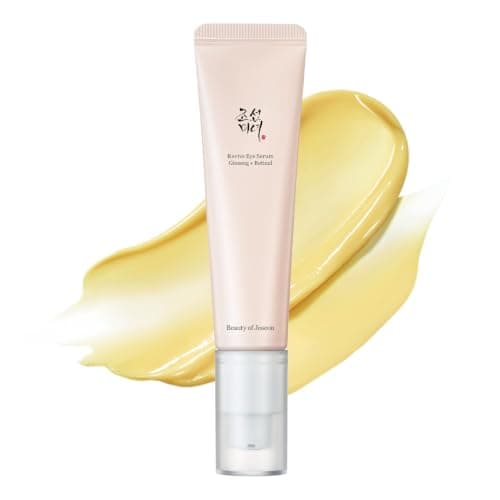
Beauty of Joseon Beauty of Joseon Revive Eye Serum

Eye-serum texture at a drugstore price

Beauty of Joseon Revive Eye Serum

No ceramides at all — retinal and niacinamide in a 30 ml bottle, and the best eye-serum texture per dollar on this page by a wide margin.

None disclosed — a retinal and niacinamide formula
6.0
$12.92Amazon

$12.79/oz

#ad · Live prices and cost-per-ounce from the Amazon Product API, as of November 1, 2026. Where we have no verified live price, we show none — a gap beats a number that has rotted.

In detail

The picks, in full

01
CeraVe CeraVe Skin Renewing Eye Cream

Almost anyone who wants a dedicated eye cream

CeraVe Skin Renewing Eye Cream

Ceramides: Ceramides NP, AP, EOP + cholesterol

0.5 oz tubeFragrance-freeCeramides NP·AP·EOPPeptides + caffeine
8.6/10

The only eye cream here that pairs the full three-ceramide set with cholesterol at a drugstore price. If you buy one ceramide eye cream, buy this one.

Ceramide profile
9
Barrier support
8
Suitability
9
Formulation
8
Value
9

Pros

  • Discloses all three CeraVe ceramides plus cholesterol — the lipid combination the barrier actually assembles. Most eye creams at any price list one ceramide
  • Fragrance-free and essential-oil-free, which matters more on eyelid skin than anywhere else on the face
  • Niacinamide, two Matrixyl peptides, and caffeine are real supporting actives rather than filler botanicals

Cons

  • Thicker than the Eye Repair Cream, so it can crease under concealer if you apply too much
  • The peptide and caffeine claims are about appearance, not structure — nothing here will erase a hollow or an inherited dark circle

Don't buy this if…

…you want a retinoid in the eye area. This is a barrier-and-hydration cream with peptides; for an actual retinoid, the First Aid Beauty or Medik8 picks are the ones doing that job.

$15.12View on Amazon

≈ $30.24/oz

Price as of November 1, 2026. Prices change — Amazon's is the one that counts.

#ad · we may earn a commission from this link to CeraVe Skin Renewing Eye Cream

02
Elizabeth Arden Elizabeth Arden Advanced Ceramide Capsules Daily Eye Serum

A true eye-serum format with ceramides in it

Elizabeth Arden Advanced Ceramide Capsules Daily Eye Serum

Ceramides: Ceramides (barrier lipid complex; types not disclosed)

60 single-dose capsulesCeramide complexSerum textureFirming claims
6.4/10

The one dedicated ceramide eye serum that is actually built as a serum: sixty single-dose capsules, one per night, with nothing to contaminate between doses.

Ceramide profile
6
Barrier support
7
Suitability
7
Formulation
9
Value
3

Pros

  • A capsule is a dose: no jar, no dipping, no air reaching the rest of the product, which matters more around the eye than anywhere else
  • Genuinely a serum rather than a repackaged cream — it sinks in fast enough to sit under concealer
  • The eye capsules are the oldest and best-known product in this brand's ceramide line, so they are easy to buy and easy to re-buy

Cons

  • Cost per dose is the highest of anything on this page, and sixty capsules is about two months of use
  • Ceramide types are not disclosed; the listing names a complex and leaves it there
  • The claims are cosmetic — brightening, smoothing, firming — not barrier-repair claims with published research behind them

Don't buy this if…

…you want the most ceramide per dollar around your eyes. A ceramide face cream dabbed on the orbital bone is cheaper and no less effective; what you pay for here is the format and the per-dose hygiene.

$57.80View on Amazon

$68.0015% off

Price as of November 1, 2026. Prices change — Amazon's is the one that counts.

#ad · we may earn a commission from this link to Elizabeth Arden Advanced Ceramide Capsules Daily Eye Serum

03
Elizabeth Arden Elizabeth Arden Retinol + HPR Ceramide Skin Renewing Eye Cream

Fine lines, if you already tolerate retinoids

Elizabeth Arden Retinol + HPR Ceramide Skin Renewing Eye Cream

Ceramides: Ceramides (types not disclosed)

0.5 ozRetinol + HPRCeramidesPeptides
5.6/10

Retinol plus HPR with ceramides and peptides — the premium actives route for the eye area, and the most expensive half-ounce on this page.

Ceramide profile
6
Barrier support
6
Suitability
5
Formulation
8
Value
3

Pros

  • Pairs two forms of vitamin A with ceramides in one formula, which is the right way to sell a retinoid to thin skin
  • Peptides and the ceramide complex give the formula something to do besides exfoliate
  • A retinoid built for the eye area is a real category rather than a marketing split — the skin there is thinner and tolerates less

Cons

  • The price per ounce is the highest of any eye product on the site, and half an ounce is not much product
  • A retinoid near the eye is among the most common causes of eyelid irritation in a skincare routine
  • Neither the retinol percentage nor the ceramide types are disclosed on the listing

Don't buy this if…

…you have never used a retinoid, or you are pregnant or breastfeeding. Start with a plain ceramide eye cream and a tolerated face retinoid before you put vitamin A this close to your eyes.

$68.00View on Amazon

$80.0015% off≈ $136.00/oz

Price as of November 1, 2026. Prices change — Amazon's is the one that counts.

#ad · we may earn a commission from this link to Elizabeth Arden Retinol + HPR Ceramide Skin Renewing Eye Cream

04
Skinfix Skinfix Triple Lipid Eye Treatment

Dry, crepey under-eyes and a compromised eye-area barrier

Skinfix Triple Lipid Eye Treatment

Ceramides: Ceramides NP, AP, EOP + cholesterol + phytosteryl macadamiate

0.5 fl ozFragrance-free3% triple-lipid complex2% niacinamide
8.0/10

The most complete barrier formula in the eye category — a disclosed 3% ceramide, sterol and fatty-acid complex. It is also the most expensive thing on this page by a wide margin.

Ceramide profile
10
Barrier support
9
Suitability
8
Formulation
9
Value
4

Pros

  • The only pick that discloses the complete ceramide-cholesterol-fatty-acid trio at a stated percentage, which is the lipid combination the barrier-recovery research points to
  • Fragrance-free and non-comedogenic, with 2% niacinamide and caffeine doing the visible-puffiness work
  • Cushiony enough to be the only thing on dry under-eyes overnight

Cons

  • Among the worst cost-per-ounce on this page — several times the CeraVe picks for a tube the same size
  • The rich texture can sit on top of skin if you over-apply, which shows under makeup

Don't buy this if…

…price matters to you at all. The formula is genuinely the best here, but the CeraVe Skin Renewing eye cream gets you the same three ceramides plus cholesterol for a small fraction of the money.

Check price on Amazon →

No buyable offer at the last price check (November 1, 2026). We show nothing rather than a stale number.

#ad · we may earn a commission from this link to Skinfix Triple Lipid Eye Treatment

05
Pause & Effect Pause & Effect Peptide and Ceramide Eye Serum

Menopausal skin, if the targeted formula appeals

Pause & Effect Peptide and Ceramide Eye Serum

Ceramides: Ceramides (types not disclosed)

15 mlEyeliss peptidesCeramidesGenistein + centella
6.2/10

A lightweight peptide-and-ceramide eye serum aimed squarely at menopausal skin, with Eyeliss, genistein and centella alongside the lipids.

Ceramide profile
6
Barrier support
6
Suitability
7
Formulation
8
Value
4

Pros

  • Names its peptide complex rather than writing peptides and hoping, which is more disclosure than most of this shelf offers
  • Genuinely a serum texture, so it layers under an eye cream rather than replacing one
  • Centella is a sensible inclusion for the thin, easily-irritated skin this is sold for

Cons

  • A small independent brand with a short Amazon history, so both availability and reformulation risk are higher than with the drugstore picks
  • Fifteen milliliters at this price is the second-worst cost-per-ounce on the page
  • Ceramide types are not disclosed, and genistein's evidence base in topical skincare is thin

Don't buy this if…

…you want a formula with a long track record. The ingredient list is thoughtful, but a newer listing from a smaller brand carries real risk of going out of stock mid-routine.

$49.00View on Amazon

≈ $96.08/oz

Price as of November 1, 2026. Prices change — Amazon's is the one that counts.

#ad · we may earn a commission from this link to Pause & Effect Peptide and Ceramide Eye Serum

06
Beauty of Joseon Beauty of Joseon Revive Eye Serum

Eye-serum texture at a drugstore price

Beauty of Joseon Revive Eye Serum

Ceramides: None disclosed — a retinal and niacinamide formula

1.01 fl ozRetinalNiacinamideNo ceramides
6.0/10

No ceramides at all — retinal and niacinamide in a 30 ml bottle, and the best eye-serum texture per dollar on this page by a wide margin.

Ceramide profile
1
Barrier support
5
Suitability
6
Formulation
9
Value
9

Pros

  • Thirty milliliters of eye serum for drugstore money, where the rest of this category sells you fifteen
  • Retinal is a step up from retinol in potency while staying gentler than prescription tretinoin
  • The lightest texture here, and it genuinely disappears under concealer

Cons

  • Contains no ceramides, which is exactly why it is ranked where it is on a ceramide page rather than higher
  • Retinal is still vitamin A: the adjustment period around the eye is real, and the formula is not for reactive skin
  • A 30 ml eye serum will probably oxidize before you finish it at a drop or two a night

Don't buy this if…

…you came to this page for the barrier lipids. This is a very good eye serum with none of the ingredient this site is about — buy it for the retinal, and put a ceramide cream over the top.

$12.92View on Amazon

$17.0024% off≈ $12.79/oz

Price as of November 1, 2026. Prices change — Amazon's is the one that counts.

#ad · we may earn a commission from this link to Beauty of Joseon Revive Eye Serum

The third option nobody sells you

A ceramide face cream applied to the orbital bone is a complete eye-care routine for most people, and we would rather say so than sell a third product. Ceramides do not become a different molecule when the packaging shrinks, and what the eye area is short of — lipids, water retention, protection from rubbing — is exactly what a good barrier cream supplies. The real cautions are about which product you extend: keep strong exfoliating acids, high-strength retinoids not dosed for the eye area and anything heavily fragranced away from the lids. We go through that in can you use a ceramide moisturizer around your eyes, and the general price argument is at are expensive moisturizers worth it.

Where a dedicated product genuinely earns its place: eyelid-appropriate active dosing, texture under makeup, per-dose hygiene, and a formula built to be bland enough for skin that reacts. Outside those four, you are buying packaging and a smaller tube.

How we compared them

  • Format first, honestly labeled. Three picks here are serums or capsules and three are creams, and the ranking says which is which. Nothing is relabeled to make the comparison tidier.
  • Then disclosure.Named ceramide types score above a “complex”, and a formula that lists cholesterol or a fatty acid beside the ceramide scores above one that lists the ceramide alone.
  • Then tolerance on eyelid skin. Retinoids and niacinamide are flagged in the cons of every pick that carries them, because near the eye that matters more than it does on a cheek.
  • Then cost per use at the live price.Computed, never asserted — and on this page the spread between the cheapest and most expensive pick per ounce is roughly tenfold.

What either format can and cannot do

  1. Dryness and crepey texture: both work, the cream works slightly better, and the cheapest products on this page do it as well as the expensive ones.
  2. Puffiness: caffeine has a plausible short-term mechanism. Expect a morning-level effect, not a structural one, from either format.
  3. Dark circles:depends entirely on the cause. Pigment left behind by rubbing or inflammation fades slowly with treatment and sun protection — the review of postinflammatory hyperpigmentation is the honest timeline. Shadows created by the shape of your orbital bone or by vessels visible through thin skin do not respond to any cream, serum or capsule at any price.
  4. Deep expression lines and lid laxity: no, in either format. That is a procedural question; a moisturizer softens the look of the surface. Do ceramides help wrinkles is the longer answer.

How to apply either one

  1. A grain of rice per eye, no more. Most eye-product complaints are dose complaints.
  2. Apply to the orbital bone — the ridge you can feel — not the lid and not the lash line. Product migrates upward and inward overnight by itself.
  3. Pat, do not rub. This skin has the least structural support on your face.
  4. If you use both a serum and a cream, serum first, then cream. The sequencing logic is the same as the rest of the routine: what order to apply skincare products.
  5. One active at a time, never a retinoid in the same week as anything exfoliating — ceramides and retinol together has the detail.

Our verdict

Buy the cream. The eye-cream tier has better ceramide disclosure, better value and more occlusion, which is what the eye area actually needs, and the CeraVe pick delivers all three at a drugstore price. Buy the serum format if you want per-dose hygiene, a texture that will live under concealer, or an active dosed for the eye area — those are real reasons and they are worth real money. Buy neither, and use the ceramide cream you already own on the orbital bone, if your complaint is dryness and your budget has better uses. All three of those answers are defensible; the one we would argue against is buying the expensive serum because it is expensive.

Each tier is ranked in full on its own page: the best ceramide eye serums (where the honest finding is that the shelf is about three products deep) and the best ceramide eye creams, compared on lipid profile. The equivalent format question one step down the routine is at ceramide serum vs cream.

How we picked

We do not run a testing lab

Everyone in this category claims a lab and a testing count. We do not have one, and we will not pretend to. What we do instead: read every INCI list and record the actual ceramide types each formula discloses, note whether it pairs them with cholesterol and fatty acids, and compute the cost-per-ounce from the live price — then score each product against a published rubric. The scores are judgments from that documented research, not measurements we took. Where a claim comes from the manufacturer, we say so and cite it in Sources.

Frequently asked

Questions people actually ask

Do I need both an eye serum and an eye cream?

Almost certainly not. Two eye products is four to six dollars an application in the premium tier and solves a problem most readers do not have. If you want to layer, use a thin serum for texture under makeup in the morning and a cream at night — but a single fragrance-free ceramide eye cream, or your face cream on the orbital bone, covers the same ground for less.

Which format has more ceramides?

The creams, at least as far as the labels go. Both CeraVe eye creams name their ceramide types and the Skinfix treatment discloses a 3% lipid complex with cholesterol beside it; every eye serum we rank names a complex without naming a type. That is a disclosure difference rather than a measured one — we do not have a lab and we say so on how we review— but it is the only evidence a buyer gets, and on it the cream tier wins.

Is an eye serum worth the extra money?

In three cases, yes: you want single-dose hygiene next to your eye, you need a texture that will not move under concealer, or you want an active dosed for eyelid skin rather than face skin. Outside those, the serum format costs more per application and delivers less occlusion, and the honest recommendation is the cream.

Can I use my ceramide face serum around my eyes instead?

Often yes, with the same cautions as a face cream: orbital bone rather than lid, nothing on the lash line, and stop if it stings or your vision films over. The products to keep away from the eye area are exfoliating acids, strong retinoids not formulated for it, and anything with a high fragrance or denatured-alcohol load — which rules out more K-beauty serums than people expect. See can you use a ceramide moisturizer around your eyes.

Serum or cream for puffiness?

Neither format wins. What matters is whether the formula contains caffeine, and both tiers have picks that do. Set expectations at a morning-level effect: caffeine has a plausible short-term vasoconstrictive mechanism and no product on either shelf changes fluid dynamics overnight.

Which is better for sensitive eyes?

The blander one, whichever format that is. Fragrance-free beats unscented, fewer ingredients beats more, and no retinoid beats a retinoid while your skin is reactive. The full screen we use for reactive skin is on the best ceramide serums for sensitive skin, and it applies around the eye with extra force.

Keep reading

Show your work

Sources