Skip to content
Ceramide Club

Hub 05 · Ceramides 101

Are Ceramides Safe While Breastfeeding?

The short answer is that ceramides are not the ingredient to worry about. The ones worth checking are the retinoids, acids and fragrances sitting next to them in your routine - and anything you apply where a baby's face goes.

By Stephen V.Updated October 11, 2026

#ad Ceramide Club is reader-supported. If you buy through our links we may earn a commission, at no cost to you — it never changes our verdict. How this works.

Ceramides are lipids your own skin manufactures, they sit in the outermost layer of the stratum corneum, and a leave-on moisturizer is designed to stay there rather than cross into circulation. On the evidence available, a plain fragrance-free ceramide moisturizer is one of the least controversial products you can use while breastfeeding. We are a product review site rather than a medical one, so the honest framing is this: we are not aware of a reason ceramides specifically would be a concern, and the questions actually worth raising with your OB, midwife or pediatrician are about the other things in your routine — retinoids, high-strength acids, prescription actives — and about which products come into contact with the baby.

That is a more useful answer than a blanket reassurance, because the reason people search this is usually that postpartum skin has gone haywire. Barrier function takes a beating in the months after a birth: sleep deprivation, hand-washing many times an hour, hormonal shifts and dehydration all show up as tight, flaky, suddenly-reactive skin. Cleveland Clinic's overview of what ceramides do for skin is the mechanism, and the practical reason a ceramide cream is the right thing to reach for in that window is that it addresses the dryness without needing an active ingredient to do it.

What to look for in a moisturizer while nursing

Four filters. None of them is about ceramides; all of them are about what is in the jar alongside.

  • Fragrance-free. Partly for your own newly reactive skin, and partly because a nursing infant spends a lot of time with its face against your chest, neck and forearms. Fragrance has no benefit here and an obvious downside. The label distinction is in fragrance-free vs unscented.
  • No retinoids.Retinol, retinal and prescription tretinoin are the category most commonly paused while nursing, and that decision belongs to your doctor rather than to a review site. A ceramide cream is the standard replacement for the months you are off them — see ceramides and retinol together for what changes when you restart.
  • Nothing on the nipple or areola that is not meant to be there. This is the one genuinely lactation-specific rule, and it applies to any topical, not just skincare. Keep treatment products off the area a baby feeds from.
  • A size and format you will use one-handed. Not a safety point, a reality point. A pump bottle you can work while holding a baby gets used; a jar you need two hands for does not, and an unused moisturizer repairs nothing.

The short answer

At a glance

#ProductCeramidesScorePrice
01
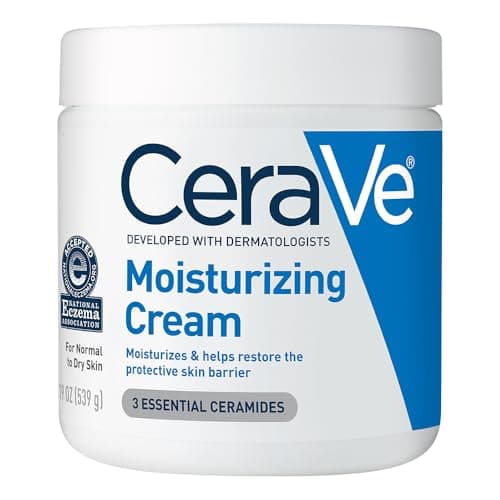
CeraVe CeraVe Moisturizing Cream

Most people, most of the time

CeraVe Moisturizing Cream

The default answer to "what ceramide cream should I buy" — three ceramides, a huge tub, and a cost-per-ounce nothing else here touches.

Ceramides 1, 3, 6-II
8.8
$18.96Amazon

$1.00/oz

02
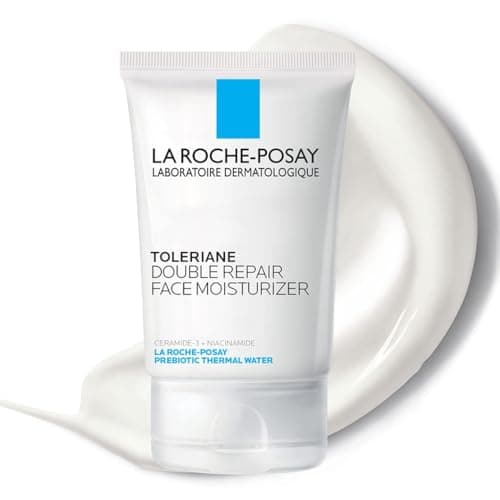
La Roche-Posay La Roche-Posay Toleriane Double Repair Face Moisturizer

Sensitive skin that reacts to everything

La Roche-Posay Toleriane Double Repair Face Moisturizer

The dermatologist-shelf default: ceramide-3, niacinamide, and prebiotic thermal water in an oil-free gel-cream that suits almost everyone.

Ceramide-3 (NP)
8.2
$24.99Amazon

$7.39/oz

03
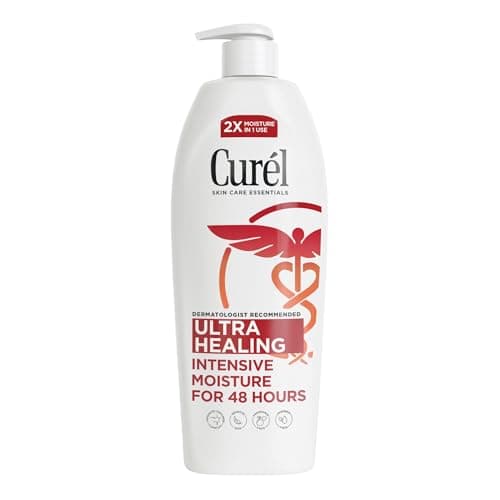
Curel Curel Ultra Healing Lotion

Best-value ceramide body lotion

Curel Ultra Healing Lotion

Curel is a ceramide-technology brand, and this is its workhorse: a 20 oz bottle of ceramide-complex body lotion for pocket change per ounce.

Ceramide complex (Curel)
8.2
$12.77Amazon

$0.64/oz

#ad · Live prices and cost-per-ounce from the Amazon Product API, as of October 23, 2026. Where we have no verified live price, we show none — a gap beats a number that has rotted.

In detail

The picks, in full

01
CeraVe CeraVe Moisturizing Cream

Most people, most of the time

CeraVe Moisturizing Cream

Ceramides: Ceramides 1, 3, 6-II

19 oz tubFragrance-freeCeramides 1·3·6-IIMVE delivery
8.8/10

The default answer to "what ceramide cream should I buy" — three ceramides, a huge tub, and a cost-per-ounce nothing else here touches.

Ceramide profile
9
Barrier support
9
Suitability
9
Formulation
7
Value
10

Pros

  • Lists three of the ceramides your barrier actually uses, plus cholesterol and phytosphingosine
  • The 19 oz tub makes the cost-per-ounce the lowest of any pick on the site
  • Fragrance-free, non-comedogenic, and boring in the best way — nothing in it fights reactive skin

Cons

  • The tub is unhygienic to finger-dip and too stiff to pump
  • Thick enough that oily skin will find it heavy for daytime under makeup

Don't buy this if…

…you want something that sinks in fast for daytime wear under makeup. This is a rich cream — reach for the Daily Moisturizing Lotion or a serum for mornings.

$18.96View on Amazon

≈ $1.00/oz

Price as of October 23, 2026. Prices change — Amazon's is the one that counts.

#ad · we may earn a commission from this link to CeraVe Moisturizing Cream

Read our full CeraVe Moisturizing Cream review →
02
La Roche-Posay La Roche-Posay Toleriane Double Repair Face Moisturizer

Sensitive skin that reacts to everything

La Roche-Posay Toleriane Double Repair Face Moisturizer

Ceramides: Ceramide-3 (NP)

3.38 ozNiacinamideCeramide-3Oil-free · fragrance-free
8.2/10

The dermatologist-shelf default: ceramide-3, niacinamide, and prebiotic thermal water in an oil-free gel-cream that suits almost everyone.

Ceramide profile
7
Barrier support
8
Suitability
10
Formulation
9
Value
7

Pros

  • Pairs ceramide-3 with niacinamide and glycerin — a genuinely well-rounded barrier formula
  • Oil-free gel-cream texture works across oily, normal, and mildly dry skin
  • Fragrance-free and among the best-tolerated moisturizers for reactive skin

Cons

  • Only lists a single ceramide type, where the CeraVes disclose three
  • Costs noticeably more per ounce than the drugstore three-ceramide picks

Don't buy this if…

…your skin is very dry and you want maximum cushion. The gel-cream is light — a richer barrier cream will serve deep dryness better.

$24.99View on Amazon

≈ $7.39/oz

Price as of October 23, 2026. Prices change — Amazon's is the one that counts.

#ad · we may earn a commission from this link to La Roche-Posay Toleriane Double Repair Face Moisturizer

Read our full La Roche-Posay Toleriane Double Repair Face Moisturizer review →
03
Curel Curel Ultra Healing Lotion

Best-value ceramide body lotion

Curel Ultra Healing Lotion

Ceramides: Ceramide complex (Curel)

20 oz pumpCeramide complexFragrance-freeFor extra-dry skin
8.2/10

Curel is a ceramide-technology brand, and this is its workhorse: a 20 oz bottle of ceramide-complex body lotion for pocket change per ounce.

Ceramide profile
7
Barrier support
7
Suitability
9
Formulation
8
Value
10

Pros

  • Built around Curel's ceramide technology at a body-scale price almost nothing beats
  • Fragrance-free and formulated for extra-dry, sensitive skin
  • Twenty-ounce pump lasts, and the cost-per-ounce is among the lowest on the site

Cons

  • Curel discloses a ceramide complex rather than naming specific types
  • Light body-lotion texture, not a heavy occlusive for the worst cracking

Don't buy this if…

…you need heavy occlusion for badly cracked skin. This is a daily body lotion — for severe dryness a thicker balm or urea cream will hold longer.

$12.77View on Amazon

≈ $0.64/oz

Price as of October 23, 2026. Prices change — Amazon's is the one that counts.

#ad · we may earn a commission from this link to Curel Ultra Healing Lotion

Read our full Curel Ultra Healing Lotion review →

Why ceramides are the low-risk end of the shelf

A moisturizer is not a drug delivery system. Its emollients, occlusives and lipids are formulated to sit in and on the stratum corneum, and the StatPearls reference on how moisturizers work describes a mechanism that is entirely superficial: hold water, slow its loss, smooth the surface. Ceramides are additionally a molecule class the skin already contains in quantity. Neither of those facts constitutes a safety study, and we are not going to pretend otherwise — but it is why the ingredient people worry about in this category is almost never the one that warrants it.

What postpartum skin actually needs

Simplify, and apply more often. The routine that works in this period is three or four steps rather than eight: a gentle cleanser, a ceramide moisturizer, sunscreen in the morning, and a hand cream kept wherever you change nappies. The American Academy of Dermatology's dry-skin guidance is the short version of the rest: lukewarm showers rather than hot, moisturizer within minutes of towelling off, and fewer products rather than more. If your routine has grown past the point of being realistic, the pruning exercise is in how to simplify your skincare routine.

Hands deserve a specific mention. Washing them twenty times a day strips the barrier faster than almost anything else people do to themselves, and hand skin is where new parents most often end up with cracks. Our ranking for that is best ceramide hand cream for dry, cracked hands.

The ingredients worth asking your doctor about

Not ceramides. The conversations worth having are about retinoids, high-strength exfoliating acids, hydroquinone, and any prescription topical you were using before. The same goes for oral supplements, which are a different question from anything you put on your skin — our view on those is in do oral ceramide supplements work. And if you were using an acne active before the birth, the pairing question is covered in ceramides and benzoyl peroxide and ceramides and azelaic acid— both pages are about tolerance rather than lactation, so take the safety half of the question to a clinician.

Which of the three picks we would use

The CeraVe tub if your skin is dry and you want one jar for face, hands and everything else: three disclosed ceramides, cholesterol, fragrance-free, and the cheapest per ounce here, which matters when you are using a lot of it. The La Roche-Posay Toleriane Double Repair if your face has turned reactive since the birth and you want the most reliably tolerated option — it is oil-free and sits flat under sunscreen, which the tub does not. The Curel pump for everything from the neck down, because 20 oz of fragrance-free lotion with a one-handed pump is the format this stage of life is built for. All three are fragrance-free and none contains an active you would need to think about.

One thing we will not do on this page is tell you a product is “safe for breastfeeding” as though that were a certification. It is not; there is no such mark, and any site using that phrasing is making it up. What we can tell you is exactly what each formula discloses, which is in the table above, and that none of the three contains fragrance or a retinoid.
How we picked

We do not run a testing lab

Everyone in this category claims a lab and a testing count. We do not have one, and we will not pretend to. What we do instead: read every INCI list and record the actual ceramide types each formula discloses, note whether it pairs them with cholesterol and fatty acids, and compute the cost-per-ounce from the live price — then score each product against a published rubric. The scores are judgments from that documented research, not measurements we took. Where a claim comes from the manufacturer, we say so and cite it in Sources.

Frequently asked

Questions people actually ask

Are ceramides safe to use while breastfeeding?

We are not aware of a reason ceramides specifically would be a concern — they are skin-identical lipids in a leave-on product designed to stay in the outer skin layer, not an active with systemic intent. The ingredients that genuinely warrant a conversation with your doctor are retinoids, high-strength acids, hydroquinone and prescription topicals. We review products; for a decision about your own treatment, ask a clinician.

Can my ceramide moisturizer get onto the baby?

Yes, by contact — a nursing infant spends a lot of time with its face against your chest, neck and arms. That is the main practical reason to use fragrance-free products while nursing, and to keep any treatment product off the nipple and areola entirely. A plain fragrance-free emollient is the low-risk choice for exactly this reason.

Is this different from the pregnancy answer?

Slightly. Pregnancy guidance is about what reaches a fetus through your own circulation; lactation adds two routes — transfer into milk, and direct skin contact with the baby. For a superficial emollient both are minimal, but the contact route is why fragrance and treatment products near the feeding area matter more now than before. Our pregnancy page is are ceramides safe during pregnancy.

My skin got much worse after the birth. Is that normal?

Common, yes. Sleep deprivation, constant hand-washing, hormonal change and dehydration all degrade barrier function, and the result is the tight, flaky, newly-reactive skin people describe. A simplified routine built around a ceramide moisturizer is the standard response. The repair timeline is in how long it takes to repair a skin barrier.

Keep reading

Show your work

Sources