Skip to content
Ceramide Club

Hub 06 · Compare

CeraVe vs Eucerin

Two big-tub drugstore barrier creams that solve slightly different problems — one leads on disclosed ceramides, the other adds urea to smooth genuinely rough skin.

By Stephen V.Updated July 31, 2026

#ad Ceramide Club is reader-supported. If you buy through our links we may earn a commission, at no cost to you — it never changes our verdict. How this works.

This is a matchup of two of the best value-for-money barrier creams on the drugstore shelf, and the honest answer is that they are not quite competing for the same job. CeraVe Moisturizing Cream leads on disclosed ceramides — it lists three of the ones your barrier actually uses — and has the lowest cost-per-ounce on the site. Eucerin Advanced Repair Cream pairs a single ceramide with urea, which does something ceramides alone cannot: it softens and smooths rough, scaly skin. Pick by the problem you are solving.

Both come in a large tub at a friendly per-ounce price, both are fragrance-free, and both are workhorses you can use head to toe. The decision comes down to whether your priority is the most disclosed ceramides (CeraVe) or active smoothing of rough patches on feet, elbows, and shins (Eucerin). Here is the split.

CeraVe Moisturizing CreamEucerin Advanced Repair Cream
CeramidesThree disclosed (1, 3, 6-II) plus cholesterol.Ceramide-3 (NP), a single disclosed type.
Hero extraHyaluronic acid + MVE time-release delivery.Urea — hydrates and gently smooths rough skin.
Best forEveryday face-and-body barrier support.Rough, scaly, very dry body skin.
CaveatRich for oily skin in daytime.Urea can sting cracked or broken skin.

Where CeraVe wins

CeraVe wins on ceramide disclosure and value. It names three ceramides and adds cholesterol, a partner the classic barrier-lipid-ratio research says matters, where Eucerin discloses one. For plain barrier maintenance — keeping a normal-to-dry or sensitive barrier calm and well-supplied — CeraVe is the more complete ceramide formula and the lower cost-per-ounce, and it anchors our ceramide moisturizers roundup. If you just want the foolproof default that most people should own, this is it; the full write-up is in the CeraVe Moisturizing Cream review.

Where Eucerin wins

Eucerin wins when your skin is not just dry but rough — the sandpapery, flaky texture on heels, elbows, shins, and hands that a pure barrier cream never quite fixes. Urea is a humectant that also gently loosens built-up dead skin, so it smooths as it hydrates, an effect the reference on how moisturizers work places in the humectant family. The ceramide-3 supports the barrier while the urea does the smoothing. It is our go-to idea for genuinely rough body skin, and the same thinking drives the keratosis pilaris picks. The one caution: urea can sting where skin is cracked or broken, so heal the worst spots with a plain balm first.

So which should you buy?

Buy CeraVe if you want the most disclosed ceramides per dollar and a do-everything barrier cream for face and body — it is the safer default for most people. Buy Eucerin if your real complaint is rough, scaly, stubbornly textured dry skin that stays rough no matter how much plain cream you use; the urea is the difference-maker there. Plenty of people keep both: CeraVe for the face and everyday, Eucerin for the rough patches. Neither is a wrong buy — they are two honest drugstore barrier creams built around slightly different chemistry. Both sit in the wider moisturizer and body lotion lineups.
The short answer

At a glance

#ProductCeramidesScorePrice
01
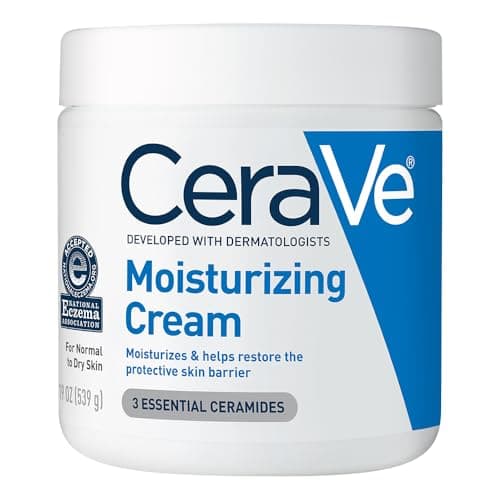
CeraVe CeraVe Moisturizing Cream

Most people, most of the time

CeraVe Moisturizing Cream

The default answer to "what ceramide cream should I buy" — three ceramides, a huge tub, and a cost-per-ounce nothing else here touches.

Ceramides 1, 3, 6-II
8.8
$18.96Amazon

$1.00/oz

02
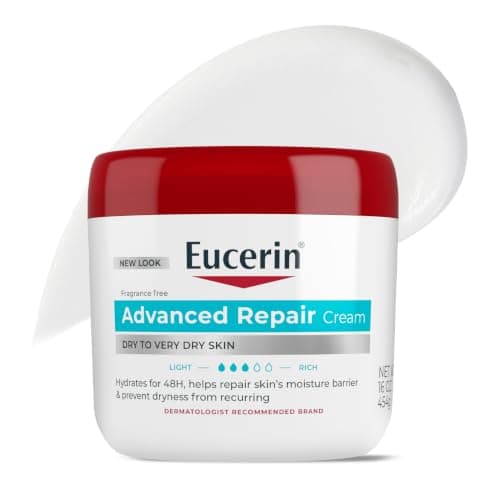
Eucerin Eucerin Advanced Repair Cream

Rough, very dry body skin

Eucerin Advanced Repair Cream

Ceramide-3 plus urea in a 16 oz jar — the pick for genuinely rough, dry body skin, because urea does what humectants alone cannot.

Ceramide-3 (NP) + urea
8.0
$14.19Amazon

$0.89/oz

#ad · Live prices and cost-per-ounce from the Amazon Product API, as of Jul 31, 2026. Where we have no verified live price, we show none — a gap beats a number that has rotted.

In detail

The picks, in full

01
CeraVe CeraVe Moisturizing Cream

Most people, most of the time

CeraVe Moisturizing Cream

Ceramides: Ceramides 1, 3, 6-II

19 oz tubFragrance-freeCeramides 1·3·6-IIMVE delivery
8.8/10

The default answer to "what ceramide cream should I buy" — three ceramides, a huge tub, and a cost-per-ounce nothing else here touches.

Ceramide profile
9
Barrier support
9
Suitability
9
Formulation
7
Value
10

Pros

  • Lists three of the ceramides your barrier actually uses, plus cholesterol and phytosphingosine
  • The 19 oz tub makes the cost-per-ounce the lowest of any pick on the site
  • Fragrance-free, non-comedogenic, and boring in the best way — nothing in it fights reactive skin

Cons

  • The tub is unhygienic to finger-dip and too stiff to pump
  • Thick enough that oily skin will find it heavy for daytime under makeup

Don't buy this if…

you want something that sinks in fast for daytime wear under makeup. This is a rich cream — reach for the Daily Moisturizing Lotion or a serum for mornings.

$18.96View on Amazon

$20.497% off$1.00/oz

Price as of Jul 31, 2026. Prices change — Amazon's is the one that counts.

#ad · we may earn a commission from this link to CeraVe Moisturizing Cream

Read our full CeraVe Moisturizing Cream review →
02
Eucerin Eucerin Advanced Repair Cream

Rough, very dry body skin

Eucerin Advanced Repair Cream

Ceramides: Ceramide-3 (NP) + urea

16 oz jarCeramide-3 + ureaFragrance-freeTriple-complex
8.0/10

Ceramide-3 plus urea in a 16 oz jar — the pick for genuinely rough, dry body skin, because urea does what humectants alone cannot.

Ceramide profile
7
Barrier support
8
Suitability
8
Formulation
8
Value
9

Pros

  • Urea both hydrates and gently smooths rough, scaly skin — a real advantage for feet, elbows, and shins
  • Ceramide-3 in the formula supports the barrier while the urea does the smoothing
  • Large jar at a low cost-per-ounce

Cons

  • Urea can sting on cracked or broken skin
  • The jar format is less hygienic than a pump for a body product

Don't buy this if…

you have open cracks or actively broken skin. Urea can sting there — reach for a plain fragrance-free barrier balm until it heals, then switch back.

$14.19View on Amazon

$15.7910% off$0.89/oz

Price as of Jul 31, 2026. Prices change — Amazon's is the one that counts.

#ad · we may earn a commission from this link to Eucerin Advanced Repair Cream

Read our full Eucerin Advanced Repair Cream review →

How we picked

We do not run a testing lab

Everyone in this category claims a lab and a testing count. We do not have one, and we will not pretend to. What we do instead: read every INCI list and record the actual ceramide types each formula discloses, note whether it pairs them with cholesterol and fatty acids, and compute the cost-per-ounce from the live price — then score each product against a published rubric. The scores are judgments from that documented research, not measurements we took. Where a claim comes from the manufacturer, we say so and cite it in Sources.

Frequently asked

Questions people actually ask

Is CeraVe or Eucerin better for the skin barrier?

For pure barrier support, CeraVe edges it: it discloses three ceramides plus cholesterol where Eucerin lists one. Eucerin's advantage is the urea, which smooths rough, scaly skin in a way ceramides alone do not. Choose by whether your priority is ceramides or smoothing.

What does the urea in Eucerin do?

Urea is a humectant that draws water into the skin and, at the levels used here, gently loosens rough, built-up dead skin so the surface feels smoother. It is why Eucerin suits heels, elbows, and shins. It can sting on cracked skin, so let broken areas heal first.

Can I use both CeraVe and Eucerin?

Yes, and many people do — CeraVe as the everyday face-and-body barrier cream, Eucerin reserved for rough, textured patches. They are complementary rather than redundant.

Keep reading

Show your work

Sources