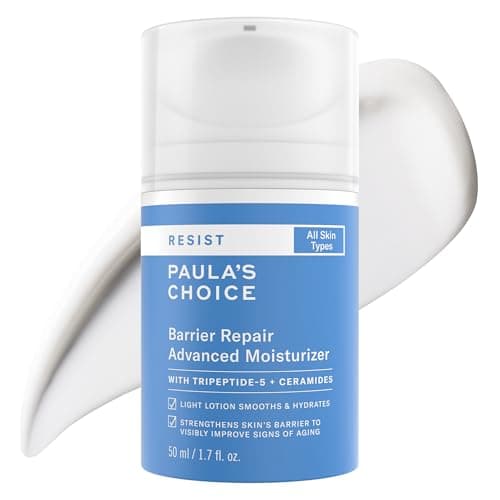
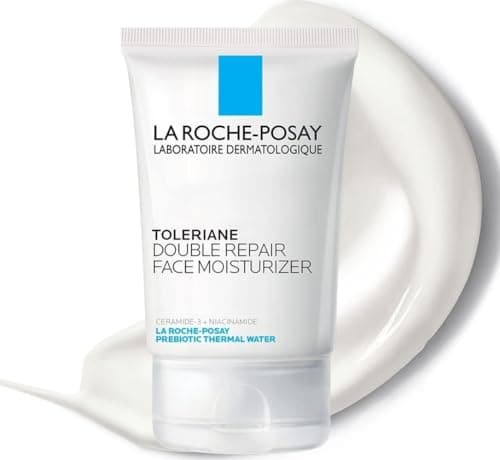
These are two of the most-recommended sensitive-skin ceramide moisturizers, and they sit at different price tiers, so the real question is how much the step up buys. La Roche-Posay Toleriane Double Repair pairs ceramide-3 with niacinamide and prebiotic thermal water in an oil-free gel-cream that is among the best-tolerated moisturizers for reactive skin — a near-universal fit across oily, normal, and mildly dry skin, at an affordable derm-shelf price. Paula's Choice RESIST Barrier Repair answers with five named ceramide types, cholesterol and palmitoyl tripeptide-5 in a fragrance-free cream, at a clear tier up on price. So the split is everyday tolerance and value against a much deeper ceramide list.
Both are ceramide moisturizers built for calm skin — ceramides being the barrier lipids Cleveland Clinic's overview of what ceramides do describes — each with a well-chosen supporting cast. Here is how they compare.
| La Roche-Posay Toleriane | Paula's Choice Barrier Repair |
|---|
| Ceramides / lipids | Ceramide-3 (NP) + niacinamide. | Five named ceramides + cholesterol. |
| Price tier | More affordable derm-shelf. | Premium. |
| Texture | Oil-free gel-cream — light, versatile. | Light cream; squalane and shea in support. |
| Best for | Sensitive skin that reacts to everything. | Sensitive skin wanting the fullest ceramide list. |
Where La Roche-Posay wins
Toleriane wins on tolerance and value. It pairs ceramide-3 with niacinamide and glycerin — a genuinely well-rounded barrier combination we cover in ceramides vs niacinamide, and one that niacinamide's documented role in stratum corneum hydration and structure supports — in an oil-free gel-cream that works across oily, normal, and mildly dry skin and is among the best-tolerated moisturizers for skin that reacts to everything, which is why it anchors our sensitive-skin picks. It also undercuts the Paula's Choice substantially on price, so it is the easier everyday default. The honest catches, from the formula's own limits: it lists a single ceramide type where Paula's Choice names five, and the light gel-cream is not enough cushion for very dry skin. Even so, for a gentle moisturizer that will almost certainly suit you and costs far less, it is the safer bet. The full write-up is in the La Roche-Posay Toleriane review.
Where Paula's Choice wins
Paula's Choice wins on the depth of the ceramide list. Five named types against one is the largest ceramide gap in any matchup on this site, and it pairs them with cholesterol — the partner the classic research on the ratios of barrier lipids says the wall rebuilds best with, a theme we expand in ceramides vs cholesterol. Palmitoyl tripeptide-5 adds a firmness angle Toleriane does not attempt, and squalane and shea butter give more feed than a light gel-cream manages without turning greasy, which is why it appears in our aging-skin picks. It is also niacinamide-free, which matters if that ingredient is one you avoid. The trade-off is the price: a premium cost-per-ounce for a small 1.7 oz tube. The full write-up is in the Paula's Choice Barrier Repair review.
So which should you buy?
Buy La Roche-Posay Toleriane if you want the safest, most versatile sensitive-skin pick at a friendlier price — a gentle, oil-free ceramide gel-cream that suits almost any skin and is hard to react to. Buy Paula's Choice Barrier Repair if your skin is sensitive but drier or more mature, you want five named ceramides with cholesterol rather than one, and you are happy to pay a tier up for it — or if you are specifically avoiding niacinamide. In short: everyday tolerance and value (Toleriane) versus a far deeper ceramide list (Paula's Choice). If squeezing the most value is the priority, note that our budget picks go cheaper still. Both appear in the full moisturizers roundup.