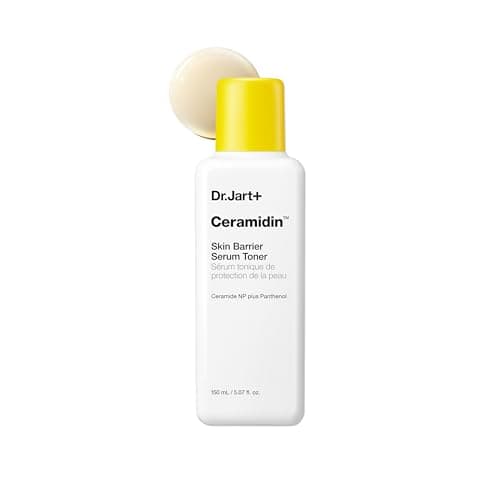
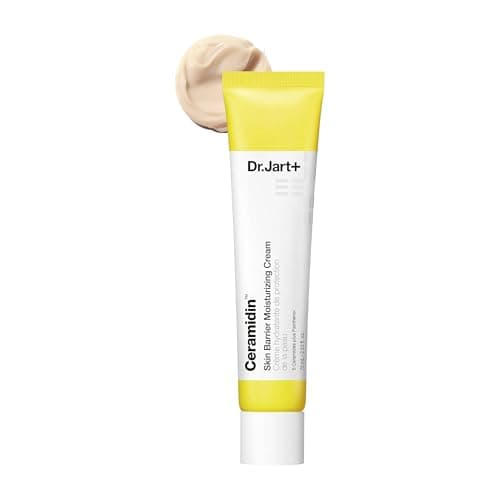
Here is the honest framing up front: these two are not really rivals. The Dr.Jart+ Ceramidin Cream and the Ceramidin Serum share the same five-ceramide complex and are designed to layer together, so this is less a versus and more a question of which format your skin needs — or whether you want both. The cream is the rich, cushiony one that does the heavy barrier lifting; the serum is a milky, watery layer that spreads ceramides under a moisturizer without adding weight. A serum will not out-repair the cream on its own, and the cream is the pick if you only buy one thing.
Where they genuinely differ is texture and role. If your skin is dry and you want one product that cushions and seals, the cream is the answer. If your skin is oilier, or you already have a moisturizer you love and just want to add ceramides underneath, the serum is the lighter layer. Here is how they line up.
| Dr.Jart+ Ceramidin Cream | Dr.Jart+ Ceramidin Serum |
|---|
| Ceramides | The same five-ceramide complex — one of the broadest ceramide profiles on the site. |
| Texture | Rich, cushiony; settles fast. Adds panthenol. | Milky, watery; layers cleanly under a moisturizer. |
| Best for | Dry skin wanting one-and-done cushion. | Oily skin, or layering ceramides without weight. |
| Caveat | Premium per ounce; richer than oily skin needs. | Too light to fix dry skin on its own. |
Where the Cream wins
The cream wins whenever repair and cushion are the priority. It carries the disclosed five-ceramide complex — one of the broadest ceramide profiles on the site — in a rich, cushiony texture that seals the barrier and settles fast, with panthenol for extra soothing. Because those ceramides sit in an occlusive-leaning base, the cream holds moisture in better than a thin serum can, which is what the classic barrier-lipid research rewards for a struggling barrier. If you only buy one product from the line, buy the cream — it is the more complete repair step, and the full write-up is in the Ceramidin Cream review. The catch is price and richness: it is premium per ounce and more than oily or acne-prone skin usually wants.
Where the Serum wins
The serum wins on weight and layering. It delivers the same five-ceramide complex in a milky, watery texture that spreads easily and disappears under a moisturizer or sunscreen — one of the few genuine ceramide serums worth the shelf space. For oily and combination skin that finds the cream too rich, or for anyone who already has a moisturizer they like and just wants ceramides underneath, the serum is the smarter layer, and its generous bottle keeps the cost-per-ounce reasonable for the format. It leads our ceramide serums roundup, and the full write-up is in the Ceramidin Serum review. The honest limit: a serum this light will not out-repair a proper cream, so on dry or compromised skin it is a partner, not a solo fix.
So which should you buy?
If you buy one, buy the cream — it does more of the barrier work and suits the dry skin most people who shop this line have. Reach for the serum instead if your skin is oily or combination and the cream feels like too much, or if you want to add ceramides under an existing moisturizer. The genuinely best answer for very dry skin, though, is both: serum first as a lightweight ceramide layer, then the cream on top to seal it. They are complementary steps from one family, not competitors — see how format changes the job in our cream vs lotion comparison.