Two things need separating before anything useful can be said here. Ceramides do not lighten skin, fade dark marks, or change your pigment in any direction — they are structural lipids, not tyrosinase inhibitors, and any product claiming otherwise is misrepresenting them. What ceramides do is prevent and repair barrier irritation. That turns out to matter a great deal in deeper skin tones, because the mechanism that produces the marks people are actually trying to treat is inflammation, and the most reliable way to avoid a dark mark is to avoid the inflammation that caused it.
Post-inflammatory hyperpigmentation is the technical name. The 2024 systematic review of treatment in skin of colour describes it as acquired hypermelanosis following inflammation or injury, more prominent and more enduring in darker skin tones — and reports a lack of robust efficacy across all the treatment modalities studied. That second finding is the one that should change your shopping. If treating existing marks is genuinely difficult, then the expected value of not getting them is extremely high, and barrier care is the cheapest form of prevention available. The earlier clinical review by Davis and Callender makes the same point from the other direction: treatment starts with managing the underlying inflammatory condition, and caution is needed because the treatments themselves can irritate and worsen the pigmentation.
What to look for, given that
- Fragrance-free, non-comedogenic, and genuinely gentle. Every avoided irritation is an avoided mark. This is the single highest-value filter on this page, and it is why all three picks below are fragrance-free.
- Niacinamide, where you tolerate it. It has barrier benefits documented in the work on niacinamide and stratum corneum hydration, and it is also one of the better-evidenced topicals for pigmentation specifically — a rare ingredient that helps on both halves of this problem.
- A texture that will not make you stop. Prevention only works if it is daily. If a rich cream feels heavy on your skin, a thin oil-free lotion that you use every night beats a premium cream you abandon.
- Soothing ingredients if you are reactive. Centella, panthenol and colloidal oatmeal reduce the visible inflammation that precedes a mark. The evidence for centella is summarised in the review of its pharmacological effects on skin.
- Daily sunscreen, which is not optional here.UV deepens existing marks and prolongs them. No barrier routine compensates for skipping it — see ceramides and sunscreen.
Does ceramide lighten skin?
No. Ceramides have no lightening, brightening or depigmenting action, and we would be inventing a claim if we said otherwise. They are one of the three lipid classes the skin barrier is assembled from, as the research on optimal ratios of topical stratum corneum lipids sets out, and their mechanism is entirely structural. If a product is marketed as a ceramide brightening cream, the brightening is coming from something else in the formula — often niacinamide, vitamin C or an acid — and you should price it on that ingredient rather than on the ceramides.
The indirect route is real, though, and it is the reason this page exists. Dark marks follow inflammation. Inflammation follows barrier disruption. A ceramide moisturizer interrupts that chain at the first link, which is both cheaper and more reliable than treating the last one.
Where barrier damage most often comes from
In practice, the marks people want gone were usually caused by something they did on purpose. The common culprits:
- Over-exfoliation. Acids and scrubs used too often, or stacked. The recovery protocol is in how to repair over-exfoliated skin.
- Retinoid irritation.Worth pushing through slowly, with a ceramide layer on top rather than a reduced dose of moisturizer — see ceramides and retinol together.
- Picking at breakouts. Mechanical trauma, which the systematic review above lists among the exogenous triggers. The ceramide product will not help here; not picking will.
- Acne itself. The inflammatory lesion is the trigger, so treating the acne is treating the pigmentation. The barrier-support side of an acne routine is on best ceramide serums for acne-prone skin.
- Harsh cleansing.If your skin feels tight after washing, that is information — see skin tightness after cleansing.
What we would actually buy
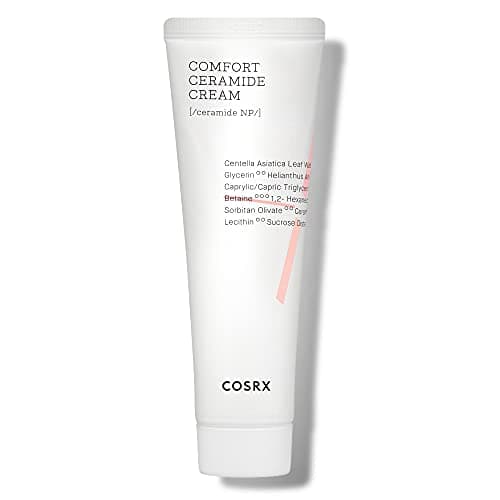
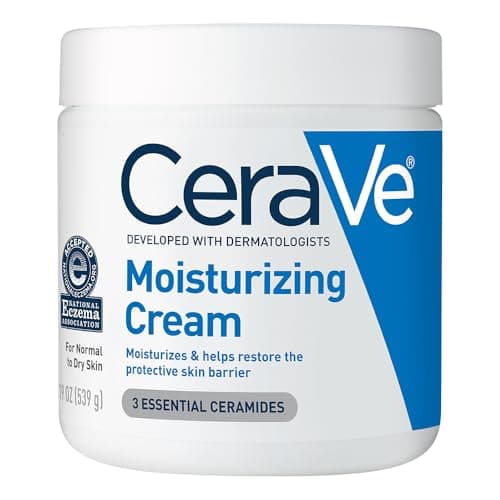
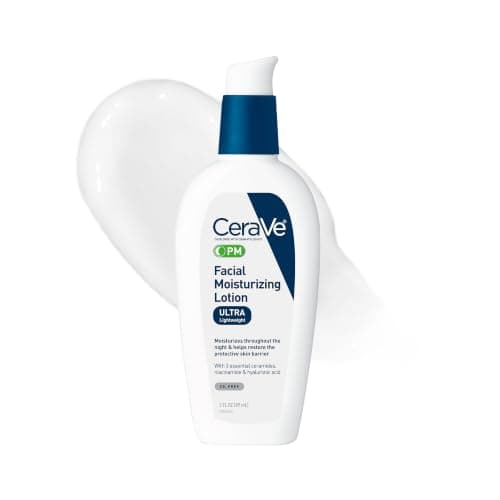
The CeraVe PM Facial Moisturizing Lotion is the pick we would reach for first: it is oil-free, fragrance-free, non-comedogenic, it carries three disclosed ceramides and niacinamide together, and it is thin enough to layer under or over an acne active without adding weight. That combination — barrier lipids plus niacinamide plus a texture that does not discourage daily use — is as close as this category gets to a product aimed at the actual problem. The COSRX Balancium is the pick if redness and visible irritation are your pattern, for the centella alongside the ceramide NP, and its matte finish suits combination skin. The 19 oz CeraVe tub is the one to buy if your skin is dry rather than oily, or if you want one jar for face and body at the lowest cost per ounce on the site.
What none of them will do is fade a mark you already have. For that, the reviews cited above are clear that the evidence across all modalities is weaker than the marketing suggests, and that it is a conversation for a dermatologist — particularly because some of the standard treatments can irritate and deepen pigmentation in deeper skin tones. Our contribution is the prevention half, and it is the half you can act on tonight.
Nothing on this page is about skin tone as a product category
We do not rank products by skin tone, because formulas are not formulated by skin tone and doing so would be inventing a distinction. What differs is the consequence of getting it wrong: the same irritation that leaves a transient pink patch on one person leaves a mark that lasts months on another. That is a reason to weight gentleness more heavily in the ranking, which is exactly what this page does, and it is the whole of the honest claim. Everything else — the ceramide types, the cost-per-ounce, the texture — is assessed the same way as on the main ceramide moisturizer ranking.