Skip to content
Ceramide Club

Hub 06 · Compare

Slugging vs a Ceramide Cream

One seals, the other restocks. Slugging is a technique with a real mechanism and real limits; a ceramide cream is the daily job. Here is the honest head-to-head, including who should not slug at all.

By Stephen V.Updated September 6, 2026

#ad Ceramide Club is reader-supported. If you buy through our links we may earn a commission, at no cost to you — it never changes our verdict. How this works.

These two get compared as if they were competing products, and they are not the same kind of thing at all. Slugging is a technique: you finish your routine and add a thin layer of an occlusive like petrolatum on top, which physically slows water leaving your skin overnight. A ceramide cream is a daily product that restocks the barrier lipids your skin uses to hold water in on its own. One is a lid; the other is what is in the jar. If you only do one of them, do the cream — it is the thing that changes how your skin behaves without the layer on top. But slugging is genuinely useful in the right situation, and this page is the honest head-to-head: what each one does, who each one suits, and when doing both is the right call.

If you already know you want to slug and want the method, that is in slugging with ceramides. The ingredient-level comparison is in ceramides vs petrolatum.

The short answer

At a glance

#ProductCeramidesScorePrice
01
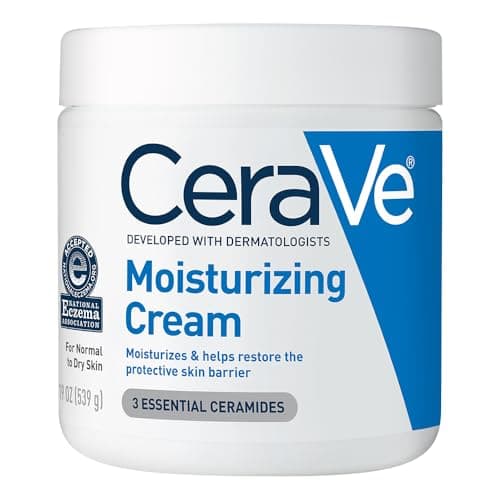
CeraVe CeraVe Moisturizing Cream

Most people, most of the time

CeraVe Moisturizing Cream

The default answer to "what ceramide cream should I buy" — three ceramides, a huge tub, and a cost-per-ounce nothing else here touches.

Ceramides 1, 3, 6-II
8.8
$18.96Amazon

$1.00/oz

02
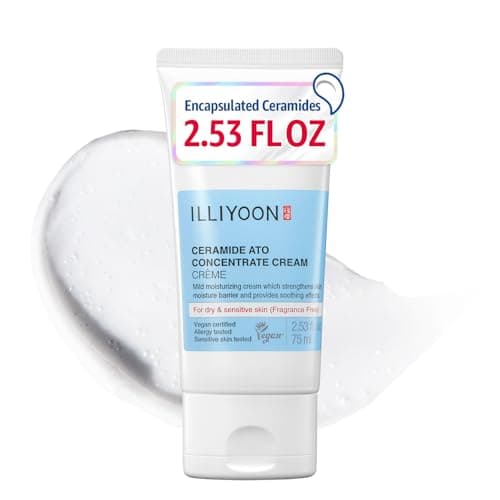
Illiyoon Illiyoon Ceramide Ato Concentrate Cream

Best value in a rich ceramide cream

Illiyoon Ceramide Ato Concentrate Cream

Korea's best-selling barrier cream, and it is easy to see why: a serious ceramide concentrate at a price that shames the Western premium tier.

Ceramide NP (Ato concentrate)
8.6
$17.99Amazon

$7.11/oz

03
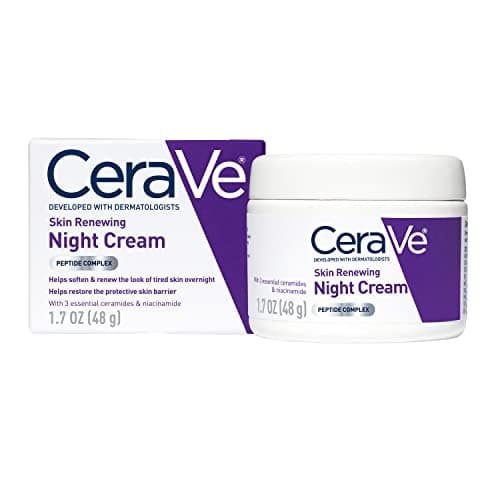
CeraVe CeraVe Skin Renewing Night Cream

Overnight barrier + early aging concerns

CeraVe Skin Renewing Night Cream

CeraVe's ceramide blend plus a peptide complex, in a richer night texture. The affordable barrier-and-aging overnight pick.

Ceramides 1, 3, 6-II
7.6
$15.44Amazon

$9.08/oz

#ad · Live prices and cost-per-ounce from the Amazon Product API, as of Sep 6, 2026. Where we have no verified live price, we show none — a gap beats a number that has rotted.

In detail

The picks, in full

01
CeraVe CeraVe Moisturizing Cream

Most people, most of the time

CeraVe Moisturizing Cream

Ceramides: Ceramides 1, 3, 6-II

19 oz tubFragrance-freeCeramides 1·3·6-IIMVE delivery
8.8/10

The default answer to "what ceramide cream should I buy" — three ceramides, a huge tub, and a cost-per-ounce nothing else here touches.

Ceramide profile
9
Barrier support
9
Suitability
9
Formulation
7
Value
10

Pros

  • Lists three of the ceramides your barrier actually uses, plus cholesterol and phytosphingosine
  • The 19 oz tub makes the cost-per-ounce the lowest of any pick on the site
  • Fragrance-free, non-comedogenic, and boring in the best way — nothing in it fights reactive skin

Cons

  • The tub is unhygienic to finger-dip and too stiff to pump
  • Thick enough that oily skin will find it heavy for daytime under makeup

Don't buy this if…

you want something that sinks in fast for daytime wear under makeup. This is a rich cream — reach for the Daily Moisturizing Lotion or a serum for mornings.

$18.96View on Amazon

$1.00/oz

Price as of Sep 6, 2026. Prices change — Amazon's is the one that counts.

#ad · we may earn a commission from this link to CeraVe Moisturizing Cream

Read our full CeraVe Moisturizing Cream review →
02
Illiyoon Illiyoon Ceramide Ato Concentrate Cream

Best value in a rich ceramide cream

Illiyoon Ceramide Ato Concentrate Cream

Ceramides: Ceramide NP (Ato concentrate)

2.53 ozCeramide concentratePanthenolVegan
8.6/10

Korea's best-selling barrier cream, and it is easy to see why: a serious ceramide concentrate at a price that shames the Western premium tier.

Ceramide profile
8
Barrier support
9
Suitability
9
Formulation
8
Value
9

Pros

  • A concentrated ceramide formula at a fraction of what the Western barrier creams charge
  • Gentle enough that the brand markets it for infants and sensitive skin
  • Fast-absorbing for a cream this repairing — no heavy residue

Cons

  • The tube is small, so restocking is frequent for full-face-and-body users
  • Distribution is patchier than the drugstore staples; availability can wobble

Don't buy this if…

you need a single giant tub for whole-body use. This is a concentrated face-and-patch cream in a modest tube — for large areas, a big-tub body cream is the more economical buy.

$17.99View on Amazon

$18.995% off$7.11/oz

Price as of Sep 6, 2026. Prices change — Amazon's is the one that counts.

#ad · we may earn a commission from this link to Illiyoon Ceramide Ato Concentrate Cream

Read our full Illiyoon Ceramide Ato Concentrate Cream review →
03
CeraVe CeraVe Skin Renewing Night Cream

Overnight barrier + early aging concerns

CeraVe Skin Renewing Night Cream

Ceramides: Ceramides 1, 3, 6-II

1.7 oz jarPeptide complexCeramides 1·3·6-IIHyaluronic acid
7.6/10

CeraVe's ceramide blend plus a peptide complex, in a richer night texture. The affordable barrier-and-aging overnight pick.

Ceramide profile
8
Barrier support
8
Suitability
8
Formulation
8
Value
6

Pros

  • Adds a peptide complex to the familiar ceramide base without a big price jump
  • Rich enough for overnight use but not heavy or greasy
  • A sensible first step into anti-aging that does not compromise the barrier

Cons

  • Small jar — the cost-per-ounce is the highest of the CeraVe range
  • Peptide claims are modest; do not expect retinol-level renewal

Don't buy this if…

you want a serious anti-aging active. This is a barrier-first night cream with a peptide bonus, not a retinoid — pair it with a separate treatment if renewal is the goal.

$15.44View on Amazon

$21.9930% off$9.08/oz

Price as of Sep 6, 2026. Prices change — Amazon's is the one that counts.

#ad · we may earn a commission from this link to CeraVe Skin Renewing Night Cream

Read our full CeraVe Skin Renewing Night Cream review →

What each one actually does

Slugging puts an occlusive film over everything. Occlusives are one of the three mechanisms a moisturizer uses, alongside humectants and emollients, as described in the reference on how moisturizers work. The film slows evaporation dramatically for as long as it is there. It adds nothing to your skin; it just stops what is there from leaving.

A ceramide creamdelivers the barrier lipids described in Cleveland Clinic's overview of what ceramides do, alongside humectants and a lighter degree of occlusion. Over weeks, that is what changes how well your skin holds its own water when there is no film on top of it.

Which one to choose

  • Choose the cream if you are choosing one. It works every day, on face and body, under makeup and sunscreen, and it addresses the cause rather than the symptom.
  • Add slugging for bad nights. A flaking, wind-burned, over-exfoliated week is exactly when an occlusive lid on top of your usual cream earns its place.
  • Do both in deep winter, on the driest areas. Cheeks, around the nose, hands. Not necessarily your whole face.

Who should not slug

Acne-prone and congestion-prone skin should be cautious — sealing a heavy film over an already-oily face overnight is not for everyone, and the honest answer is to try it on a small area first. The same applies if you use overnight actives: sealing a retinoid or acid under an occlusive can increase how much of it your skin gets, which usually means more irritation rather than better results. And if you are prone to fungal-type congestion, an occlusive layer is a reasonable thing to be wary of — DermNet's overview of malassezia folliculitis is background worth reading before you seal anything in nightly.

The cost comparison

Slugging is close to free: a tub of plain petrolatum is one of the cheapest things in a pharmacy and lasts an extremely long time. That is a genuine point in its favour and we are not going to pretend otherwise. What it does not do is replace the cream underneath — sealing bare skin keeps water in for the night and leaves the barrier no better stocked in the morning. The sensible spend is a large ceramide cream at a low cost-per-ounce, with an occlusive kept in the cupboard for bad weeks. Our picks below are ranked on disclosed ceramide types and live cost-per-ounce, which is the same test we apply everywhere.

How to do both properly

  1. Cleanse gently and blot — leave skin slightly damp.
  2. Apply your ceramide cream while it is still damp, generously.
  3. Wait a couple of minutes so the cream is not wet — see how long to wait between skincare steps.
  4. Apply a thin layer of occlusive over the top. Thin. It is a lid, not a mask.
  5. Wash it off in the morning and moisturize as normal.

The verdict

The ceramide cream is the daily job and the one that changes your skin's behaviour. Slugging is a good occasional tool with a real mechanism, near-zero cost and a genuine list of people it does not suit. Doing both on the worst nights of winter is a better routine than either alone — and doing only the slugging is the version that leaves you back where you started as soon as you stop. If skin stays cracked, itchy or inflamed through either approach, that is a dermatologist question rather than a technique question.
How we picked

We do not run a testing lab

Everyone in this category claims a lab and a testing count. We do not have one, and we will not pretend to. What we do instead: read every INCI list and record the actual ceramide types each formula discloses, note whether it pairs them with cholesterol and fatty acids, and compute the cost-per-ounce from the live price — then score each product against a published rubric. The scores are judgments from that documented research, not measurements we took. Where a claim comes from the manufacturer, we say so and cite it in Sources.

Frequently asked

Questions people actually ask

Is slugging better than using a moisturizer?

No — they do different jobs. Slugging seals water in behind an occlusive film; a ceramide moisturizer restocks the lipids your skin uses to hold water in on its own. If you only do one, the moisturizer is the one that changes how your skin behaves.

Can I slug without a moisturizer underneath?

You can, but it is the weaker version. Sealing bare skin holds in the water that is there overnight and leaves the barrier no better supplied in the morning. The cream underneath is what makes the technique worth doing.

Who should avoid slugging?

Anyone acne-prone or congestion-prone should try a small area first, and nobody should seal an overnight retinoid or acid under an occlusive without expecting more irritation. If your skin is oily and easily congested, a good ceramide cream on its own is the safer routine.

Keep reading

Show your work

Sources