Skip to content
Ceramide Club

Hub 05 · Ceramides 101

Do Ceramides Help With Dark Spots?

No - ceramides are not a brightening ingredient and do not act on pigment. The useful answer is indirect: a barrier that is intact is what makes the actives that DO fade dark spots usable at all.

By Stephen V.Updated October 5, 2026

#ad Ceramide Club is reader-supported. If you buy through our links we may earn a commission, at no cost to you — it never changes our verdict. How this works.

No. Ceramides are the lipids that sit between your skin cells and hold water in; pigment is made by melanocytes several layers below, and a barrier lipid has no mechanism for acting on it. Any product promising that a ceramide cream will fade dark spots is relying on you not asking how. What is true, and genuinely useful, is indirect: almost everything that doesfade pigment — vitamin C, retinoids, azelaic acid, exfoliating acids — is irritating, and irritated skin both tolerates less of it and makes more pigment in response. A healthy barrier is the precondition for a pigment routine working at all.

There is one more honest mechanism worth naming. Post-inflammatory hyperpigmentation — the flat brown or red marks left behind after a spot heals — is driven by inflammation. Skin with a compromised barrier is more inflamed and more reactive, so it tends to mark more and for longer. Keeping the barrier in good shape reduces the raw material for new marks. It does not remove the marks you already have.

What ceramides can and cannot contribute

  • Cannot: lighten existing pigment, melasma, sun spots or post-acne marks. There is no pathway.
  • Can: let you use vitamin C, a retinoid or an acid consistently instead of in painful two-week bursts.
  • Can: reduce the inflammation that generates new post-acne marking.
  • Can: improve how even your skin looks in the short term, because dehydrated skin reads as dull and patchy regardless of pigment.
  • Cannot: replace sunscreen, which is the single most important product in any dark-spot routine. Unprotected sun exposure undoes pigment work faster than anything else adds to it.

What to look for if dark spots are your concern

Since the ceramide product is the supporting act here, pick it for tolerance and for whatever useful extras it happens to carry:

  • Niacinamide in the formula is the one real bonus. It is the only ingredient that routinely shares a bottle with ceramides and has its own evidence base on tone, alongside the work on niacinamide and stratum corneum hydration. Two of the three picks below carry it.
  • Fragrance-free, and tolerant. You are going to be layering an active underneath it; the moisturizer should not contribute irritation of its own.
  • Texture that sits flat under sunscreen. If the barrier step makes your SPF pill, you will skip the SPF, and the SPF is the part that matters.
  • Not a brightening claim on the carton.A ceramide cream sold on “glow” or “radiance” is usually charging more for the same lipids.

The short answer

At a glance

#ProductCeramidesScorePrice
01
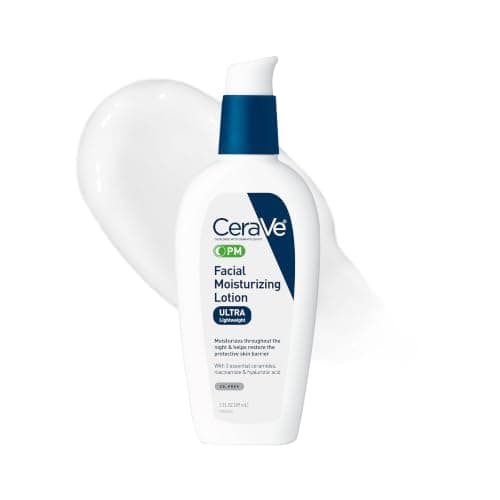
CeraVe CeraVe PM Facial Moisturizing Lotion

Oily / acne-prone skin and layering

CeraVe PM Facial Moisturizing Lotion

An ultralight ceramide-plus-niacinamide lotion that layers under anything. Cult-favorite for oily and acne-prone skin for good reason.

Ceramides 1, 3, 6-II
8.0
$13.62Amazon

$4.54/oz

02
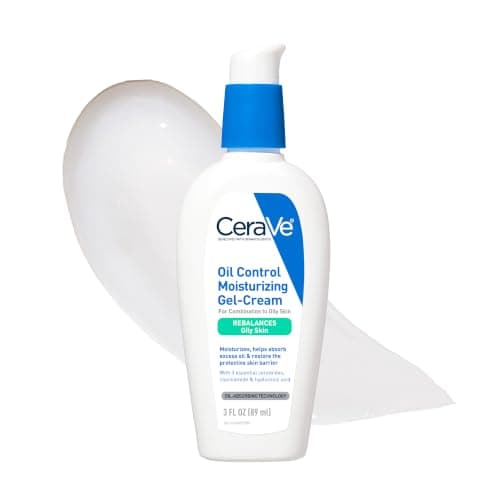
CeraVe CeraVe Oil Control Gel-Cream

Oily skin that wants a cream, not a lotion

CeraVe Oil Control Gel-Cream

The only ceramide moisturizer we track that was designed for oily skin from the start — three ceramides plus cholesterol in an oil-free gel-cream that dries down genuinely matte.

Ceramides NP, AP, EOP + cholesterol
7.6
$15.19Amazon

$8.94/oz

03
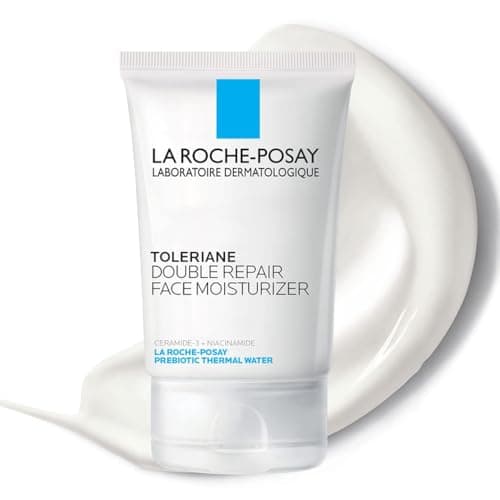
La Roche-Posay La Roche-Posay Toleriane Double Repair Face Moisturizer

Sensitive skin that reacts to everything

La Roche-Posay Toleriane Double Repair Face Moisturizer

The dermatologist-shelf default: ceramide-3, niacinamide, and prebiotic thermal water in an oil-free gel-cream that suits almost everyone.

Ceramide-3 (NP)
8.2
$24.99Amazon

$7.39/oz

#ad · Live prices and cost-per-ounce from the Amazon Product API, as of October 5, 2026. Where we have no verified live price, we show none — a gap beats a number that has rotted.

In detail

The picks, in full

01
CeraVe CeraVe PM Facial Moisturizing Lotion

Oily / acne-prone skin and layering

CeraVe PM Facial Moisturizing Lotion

Ceramides: Ceramides 1, 3, 6-II

3 oz pumpNiacinamideCeramides 1·3·6-IIOil-free
8.0/10

An ultralight ceramide-plus-niacinamide lotion that layers under anything. Cult-favorite for oily and acne-prone skin for good reason.

Ceramide profile
8
Barrier support
7
Suitability
9
Formulation
9
Value
7

Pros

  • Genuinely weightless — one of the few ceramide lotions oily skin actually enjoys
  • Niacinamide alongside the ceramides is a sensible pairing for barrier and oil balance
  • Layers cleanly under other products despite the PM name; plenty of people use it morning too

Cons

  • The small bottle makes the cost-per-ounce worse than the body-size CeraVes
  • Too light on its own for dry skin in winter

Don't buy this if…

…you have dry or mature skin looking for cushion. This is deliberately thin — it is a layering lotion, not a rich night cream.

$13.62View on Amazon

$19.9932% off≈ $4.54/oz

Price as of October 5, 2026. Prices change — Amazon's is the one that counts.

#ad · we may earn a commission from this link to CeraVe PM Facial Moisturizing Lotion

Read our full CeraVe PM Facial Moisturizing Lotion review →
02
CeraVe CeraVe Oil Control Gel-Cream

Oily skin that wants a cream, not a lotion

CeraVe Oil Control Gel-Cream

Ceramides: Ceramides NP, AP, EOP + cholesterol

1.7 oz tubeCeramides NP·AP·EOPNiacinamide + hyaluronic acidMatte, oil-free
7.6/10

The only ceramide moisturizer we track that was designed for oily skin from the start — three ceramides plus cholesterol in an oil-free gel-cream that dries down genuinely matte.

Ceramide profile
8
Barrier support
7
Suitability
9
Formulation
8
Value
6

Pros

  • Discloses three ceramides (NP, AP, EOP) and pairs them with cholesterol and phytosphingosine — a fuller barrier profile than most light textures manage
  • Dries down to a real matte finish rather than a dewy one, which is the specific thing oily skin wants from a cream
  • Fragrance-free, oil-free and labeled non-comedogenic, so it sits comfortably over an acne routine

Cons

  • The 1.7 oz tube gives it a much worse cost-per-ounce than CeraVe's big tubs and lotions
  • The mattifying effect comes from silica-type powders and is a cosmetic finish, not oil control — it does not reduce how much oil you make
  • Too light to carry dry skin or a hard winter on its own

Don't buy this if…

…your skin is dry, or only shiny in the T-zone. A gel-cream built to mattify the whole face is the wrong tool for skin that mostly needs cushion — and for combination skin, a lighter base plus a richer dab on the dry zones works better.

$15.19View on Amazon

$19.9924% off≈ $8.94/oz

Price as of October 5, 2026. Prices change — Amazon's is the one that counts.

#ad · we may earn a commission from this link to CeraVe Oil Control Gel-Cream

03
La Roche-Posay La Roche-Posay Toleriane Double Repair Face Moisturizer

Sensitive skin that reacts to everything

La Roche-Posay Toleriane Double Repair Face Moisturizer

Ceramides: Ceramide-3 (NP)

3.38 ozNiacinamideCeramide-3Oil-free · fragrance-free
8.2/10

The dermatologist-shelf default: ceramide-3, niacinamide, and prebiotic thermal water in an oil-free gel-cream that suits almost everyone.

Ceramide profile
7
Barrier support
8
Suitability
10
Formulation
9
Value
7

Pros

  • Pairs ceramide-3 with niacinamide and glycerin — a genuinely well-rounded barrier formula
  • Oil-free gel-cream texture works across oily, normal, and mildly dry skin
  • Fragrance-free and among the best-tolerated moisturizers for reactive skin

Cons

  • Only lists a single ceramide type, where the CeraVes disclose three
  • Costs noticeably more per ounce than the drugstore three-ceramide picks

Don't buy this if…

…your skin is very dry and you want maximum cushion. The gel-cream is light — a richer barrier cream will serve deep dryness better.

$24.99View on Amazon

≈ $7.39/oz

Price as of October 5, 2026. Prices change — Amazon's is the one that counts.

#ad · we may earn a commission from this link to La Roche-Posay Toleriane Double Repair Face Moisturizer

Read our full La Roche-Posay Toleriane Double Repair Face Moisturizer review →

The routine that actually addresses dark spots

  1. Sunscreen every morning. First, last and most important. Everything else on this list is wasted without it.
  2. One pigment active, introduced slowly.Vitamin C in the morning or a retinoid at night — not both at full strength from day one.
  3. A ceramide moisturizer over the active. This is the step that keeps the active usable. Order is in where ceramides go in your routine.
  4. Months, not weeks. Pigment turns over slowly; a routine judged at four weeks will look like a failure even when it is working.

The layering specifics for the two most common actives are in ceramides and vitamin C and ceramides and retinol together, and the azelaic acid route — often the gentlest option for post-acne marks — is in ceramides and azelaic acid.

Why dehydrated skin looks blotchier than it is

There is a version of this question where ceramides do change what you see, and it is worth separating out because it is the reason people report that a barrier cream “evened out” their skin. Dehydrated skin scatters light unevenly: the surface is rougher, the flaking is patchy, and the redness underneath shows through more. The result reads as blotchy tone even when the pigment has not changed at all. Restore the water content and the surface smooths, light reflects more evenly, and the same face looks more uniform within a couple of weeks. That is a genuine cosmetic improvement, which is why we mention it — and it is categorically not pigment correction, which is why we are labelling it carefully rather than letting it stand in for one. If your “dark spots” are actually patchy redness and rough texture, this is the mechanism that will help you, and the diagnosis is on ceramides for dehydrated skin.

Why over-treating makes pigment worse

This is the trap, and it is worth spelling out because it is so common. Frustration with slow progress leads to more acid, more retinoid, more frequency. That inflames the skin. Inflamed skin produces more pigment, so the spots darken, so the treatment escalates again. Breaking that loop means dropping the active frequency and rebuilding the barrier, which feels like going backwards and is not. The symptoms that mean you are in it are listed in signs of a damaged skin barrier.

What the ceramide picks are for

All three products above are ranked for one job: being the tolerant, fragrance-free layer that goes over a pigment active without adding problems. Two of them include niacinamide, which is the only tone-relevant ingredient that reliably shares a formula with ceramides. None of them is a brightening product, and the one that costs the most here is not the one most likely to help — it is simply the gentlest. If you want the broader comparison of where ceramides sit against the actives people buy for tone, that is ceramide serum vs vitamin C serum.

When to get a professional opinion

Melasma, spots that change shape or colour, a single new dark lesion, or pigment that has not budged after six months of a consistent routine with daily sunscreen are all reasons to see a dermatologist rather than buy another product. Pigment is the area of skincare where the gap between over-the-counter and prescription options is widest.
How we picked

We do not run a testing lab

Everyone in this category claims a lab and a testing count. We do not have one, and we will not pretend to. What we do instead: read every INCI list and record the actual ceramide types each formula discloses, note whether it pairs them with cholesterol and fatty acids, and compute the cost-per-ounce from the live price — then score each product against a published rubric. The scores are judgments from that documented research, not measurements we took. Where a claim comes from the manufacturer, we say so and cite it in Sources.

Frequently asked

Questions people actually ask

Do ceramides fade dark spots?

No. Ceramides are barrier lipids with no mechanism for acting on melanin. What they do is keep the barrier intact enough that you can actually tolerate the vitamin C, retinoid or acid that does the fading.

Will a ceramide moisturizer brighten my skin?

It can make skin look more even in the short term, because dehydrated skin reads as dull and patchy. That is a hydration effect rather than a brightening one, and it does not change pigment.

Do ceramides help post-acne marks?

Indirectly. Post-inflammatory marks are driven by inflammation, and a well-supported barrier is less inflamed and less reactive, so it tends to mark less going forward. Existing marks fade on their own schedule, faster with sunscreen and a pigment active.

What ingredient should I use for dark spots?

Sunscreen first, then one pigment active — vitamin C, a retinoid, azelaic acid or an exfoliating acid — introduced slowly, with a ceramide moisturizer over it to keep it tolerable. We do not stock pigment actives, so we are not going to recommend specific ones.

Keep reading

Show your work

Sources