This matchup gets framed as a brand rivalry and it is not really one. Eucerin and La Roche-Posay sit on the same pharmacy shelf with similar clinical styling, but their strengths barely overlap: Eucerin's best ceramide products are large, cheap, urea-containing body creams, and La Roche-Posay's are small, elegant, exquisitely tolerated face products. If you are choosing between them for one purpose, the purpose decides the brand almost entirely, and the interesting part of the comparison is where each one is weaker than its reputation suggests.
On the ceramide question specifically, neither brand is a disclosure leader. Both of the Eucerin picks here name a single ceramide — ceramide-3, which is ceramide NP — and the La Roche-Posay face moisturizer names the same one. The Lipikar balm, which is the brand's best-selling body product and the one most often recommended for eczema-prone skin, is not ceramide-led at all. That matters because the barrier-repair research these brands trade on, including the work on optimal ratios of topical stratum corneum lipids, is about ceramides delivered alongside cholesterol and fatty acids. Neither brand publishes that full trio. If a deep disclosed ceramide list is what you are shopping for, the honest answer is that both of these lose to a 19 oz CeraVe tub on ceramide count and to Skinfix on the trio.
Pick in ten seconds
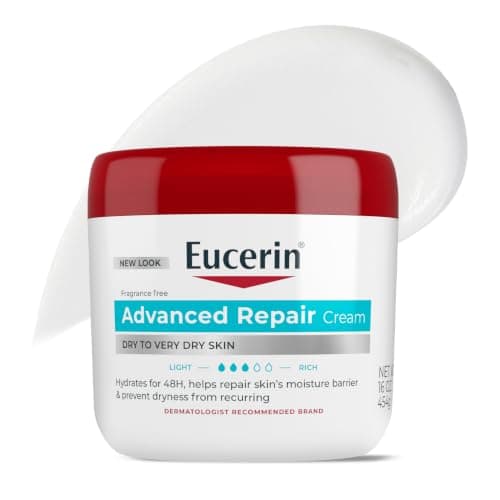
- Rough, scaly, very dry body skin — Eucerin. The Advanced Repair Cream, for the urea.
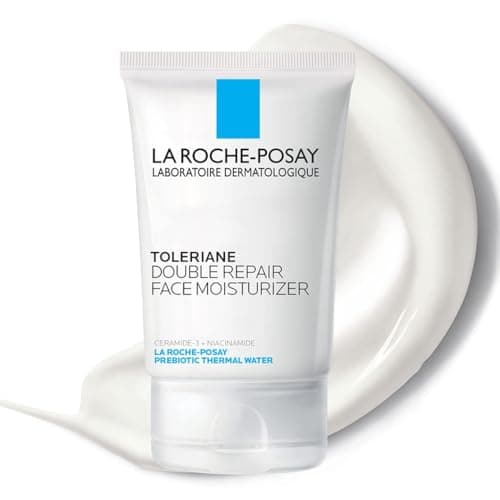
- Sensitive, reactive face — La Roche-Posay. The Toleriane Double Repair, for tolerance and the niacinamide.
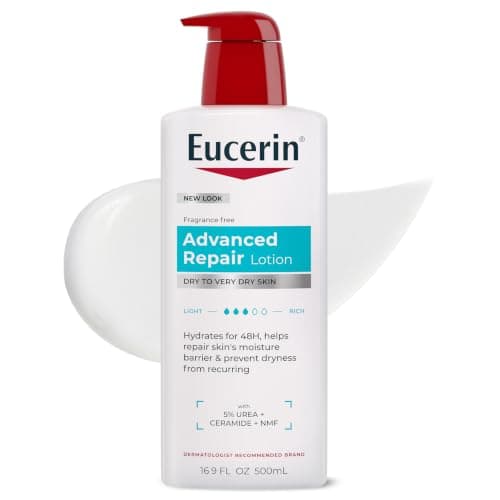
- Daily whole-body maintenance — Eucerin. The Advanced Repair Lotion in the pump.
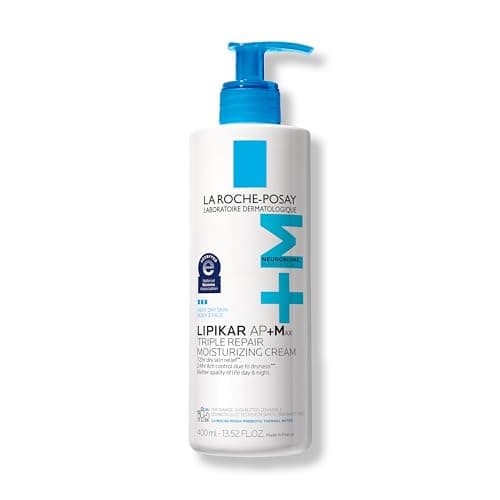
- Itchy, eczema-prone body skin — La Roche-Posay's Lipikar Balm AP+M, provided you accept it is a shea-and- niacinamide balm rather than a ceramide product.
- Cracked or broken skin anywhere— not the Eucerin urea picks. Urea stings on open skin; the Lipikar is the gentler choice until it closes.
Where Eucerin wins
Urea.This is the real differentiator and it is not a marketing claim — urea is both a humectant and a keratolytic, which means it pulls water in and helps shed the compacted keratin that makes shins, heels and elbows look scaly. Nothing in the La Roche-Posay range does that job. If your complaint includes the word “rough” rather than only “dry”, Eucerin has a mechanism the other brand does not.
Cost-per-ounce. A 16 oz jar and a 16.9 oz pump against a 3.38 oz face tube and a 13.5 oz balm. For a product you spread over a whole adult body twice a day in winter, that gap decides whether you use enough of it. The per-ounce figures under the prices above are computed from the live price and the listed size, so you can see the margin rather than take our word for it.
Where La Roche-Posay wins
Tolerance on a reactive face. The Toleriane Double Repair is one of the few moisturizers we would hand to someone who reacts to everything: oil-free, fragrance-free, non-comedogenic, and formulated around prebiotic thermal water. It also pairs its ceramide-3 with niacinamide, and the published work on niacinamide and stratum corneum hydration is why that combination keeps appearing in barrier formulas.
Texture on the face. The gel-cream finish sits flat under sunscreen and makeup. The Eucerin creams are body products and feel like it; using one on your face is not harmful, but you will not enjoy it, and the urea versions are a poor idea near the eyes.
Itch. The Lipikar balm is genuinely excellent for itchy, eczema-prone body skin, which is why dermatologists recommend it as often as they do. Our criticism of it is narrow and specific: it is not a ceramide product. The lipid deficit documented in ceramide abnormalities in atopic dermatitis is the argument for ceramides in eczema-prone skin, and Lipikar addresses the symptom through other ingredients instead.
The spec comparison that matters
- Disclosed ceramide types— a draw at one each, except the Lipikar, which discloses none. Both brands lose this category to CeraVe's three.
- The full barrier trio — neither. Only Skinfix publishes ceramides with cholesterol and fatty acids together.
- Fragrance-free— all four picks here. A genuine point in both brands' favour.
- Keratolytic action— Eucerin only, via urea.
- Face-appropriate texture— La Roche-Posay only.
- Cost-per-ounce— Eucerin, comfortably.
If you can only buy one
Buy for the body, and buy Eucerin. Most people's actual dry-skin problem is below the jawline — shins, forearms, hands, heels — and that is where the urea-and- ceramide combination and the big jar earn their keep. A face can be covered adequately by a cheaper drugstore ceramide moisturizer; a body cannot be covered adequately by a 3.38 oz tube at any price. The exception is a face that reacts to things, in which case reverse it: pay for the Toleriane, and use whatever fragrance-free lotion is cheapest on your body.
The verdict
Eucerin for the body, La Roche-Posay for a sensitive face, and neither if your shopping criterion is the deepest disclosed ceramide list — that is a CeraVe, Dr.Jart+ or Skinfix question, ranked on which ceramide brands publish their types. The two brands are priced and formulated for different shelves, and the common mistake is buying the premium face product first when the dry patches are all on your legs. Related matchups, if one of these is only half your shortlist: CeraVe vs Eucerin, CeraVe vs La Roche-Posay and Skinfix vs La Roche-Posay, which tests the same tolerance argument against the most complete lipid formula we track.