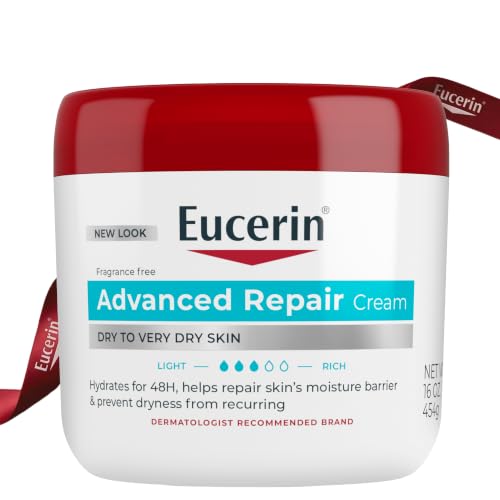
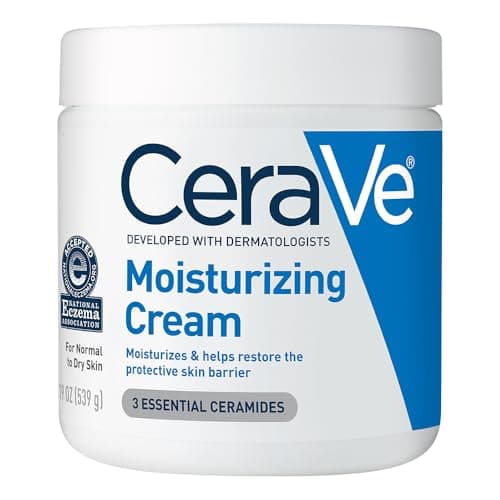
The best ceramide cream for psoriasis-prone skin is CeraVe Moisturizing Cream — fragrance-free, three disclosed ceramides plus cholesterol, in a tub big enough to use properly — for anyone who wants a plain heavy barrier cream with nothing in it to react to. The budget pick is Eucerin Advanced Repair Cream, which adds urea to soften thick scale and costs the least per ounce here. Read the caveat with that one: urea is genuinely useful on built-up plaque and genuinely stings cracked, broken skin.
Be clear about what a moisturizer is doing in psoriasis care, because the category sells it dishonestly. Psoriasis is an immune-driven condition — DermNet's overview of psoriasis is the plain-English version — and no cream on this page treats it. What emollients do is reduce the dryness, tightness and scaling that ride along with plaque, keep skin comfortable between flares, and make topical treatments easier to tolerate. That is a real job, which is why dermatologists keep recommending them, and it is also the whole job. If you have plaques you have not had looked at, see a clinician before you spend anything here.
What actually decides the ranking
Psoriasis-prone skin changes the criteria we normally use. Three things move:
- Occlusion load comes first, not texture elegance. The thing that helps scaling and tightness is a formula that physically slows water loss for hours. The StatPearls overview of moisturizers is the clearest short account of how humectants, emollients and occlusives split the work. Heavier wins here, which is the opposite of how we rank daily face lotions.
- Fragrance and essential oils are disqualifying, not a demerit. Plaque skin has a compromised barrier and the last thing it needs is an avoidable irritant. Everything on this list is fragrance-free except where noted.
- Keratolytics get ranked honestly, both ways. Urea and salicylic acid soften and lift scale, and they are the reason two picks here are on the list at all. They also sting on fissured or actively inflamed skin. We rank them with that split stated instead of pretending it does not exist.
Scale, plaque and fissures are three different problems
A single product rarely covers all three, and knowing which you are treating stops you buying the wrong one.
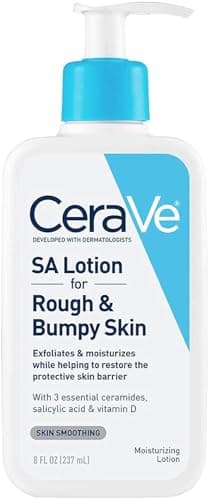
- Thick, built-up scale (commonly shins, elbows, knees, scalp margin) responds to a keratolytic plus heavy occlusion. That is the Eucerin (urea) and CeraVe SA (salicylic acid) case. Use them on intact skin only, and stop if they burn.
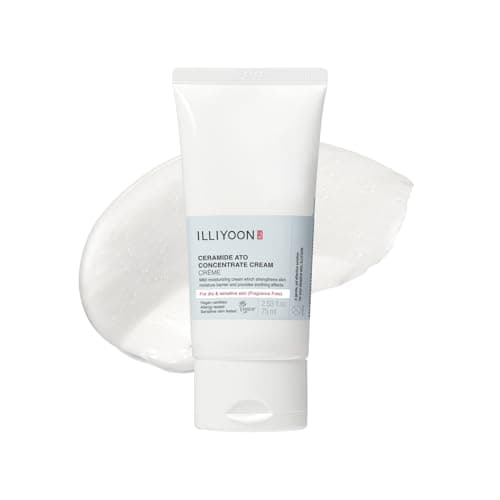
- Dry, tight, itchy plaque-adjacent skin wants a plain barrier cream with no actives at all — the CeraVe tub, Illiyoon, or the Lipikar balm for very large areas.
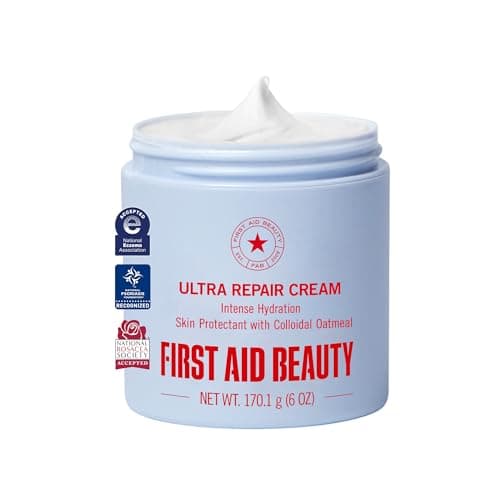
- Cracked or fissured skin wants the gentlest, most occlusive thing you own and nothing else. Take urea and salicylic acid off the table entirely until it has closed; First Aid Beauty Ultra Repair, with colloidal oatmeal rather than an acid, is the comfort pick.
Elbows, knees and shins get the most plaque and the least attention, and the body-scale version of this problem is ranked on the best ceramide lotions for elbows and knees. For skin that is scaling rather than plaquing, our flaky and peeling skin guide covers the non-psoriasis causes worth ruling out.
Specs, side by side
Every row read off the live listing and the published INCI. The keratolytic column is the one to read twice.
| Pick | Best for | Size | Ceramides disclosed | Keratolytic |
|---|
| CeraVe Moisturizing Cream | Plain heavy barrier cream, large areas — top pick | 19 oz | 1, 3, 6-II + cholesterol | None |
| Eucerin Advanced Repair Cream | Thick scale on shins, elbows, knees — budget pick | 16 oz | Ceramide-3 (NP) | Urea |
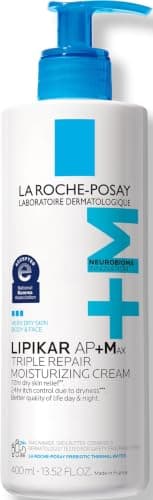
| La Roche-Posay Lipikar Balm AP+M | Whole-body coverage, itch-prone skin | 13.5 oz | Not ceramide-led (niacinamide, shea) | None |
| First Aid Beauty Ultra Repair Cream | Cracked, stinging, fissure-prone patches | 6 oz | Ceramide-3 (NP) | None (colloidal oatmeal) |
| Illiyoon Ceramide Ato Concentrate Cream | A ceramide concentrate for smaller areas | 2.53 oz | Ceramide NP (Ato concentrate) | None |
| CeraVe SA Lotion for Rough & Bumpy Skin | Rough, scaling body skin on intact areas | 8 oz | Ceramides 1, 3, 6-II | Salicylic acid |
How to use these alongside a treatment plan
Two practical notes that make the difference between a cream helping and a cream being pointless.
Apply far more than feels normal, far more often
The single most common mistake is treating an emollient like a face moisturizer — a thin layer, once a day. For plaque-prone skin the useful dose is generous and repeated, which is why we rank the big tubs and jars above the elegant small ones. A 19 oz tub you use freely beats a 1.7 oz jar you ration. The American Academy of Dermatology's dry-skin guidance — apply to slightly damp skin, immediately after washing — applies here and costs nothing.
Order matters if you have a prescription topical
If a clinician has given you a topical steroid, vitamin D analogue or anything else, follow their sequencing instructions rather than ours; some are meant to go on first, some after the emollient, and some want a gap. Where you have no instruction, applying the emollient and waiting a few minutes before the treatment is the conventional default — but ask, since the point of the prescription is that it reaches the skin.
What to skip
- Fragranced “psoriasis relief” creams. The relief claim is marketing; the fragrance is a real irritant on compromised skin.
- Coal-tar or acid products chosen without advice. They have genuine uses and genuine downsides. This is the part of the shelf where a clinician earns their fee.
- Urea or salicylic acid on broken skin. Both are on this list for intact, scaling areas. On a fissure they sting, and stinging makes people stop moisturizing altogether — which is the worst outcome available.
- Hot, long showers. They feel wonderful and leave skin tighter than they found it; our hot showers and the barrier page covers the trade-off.