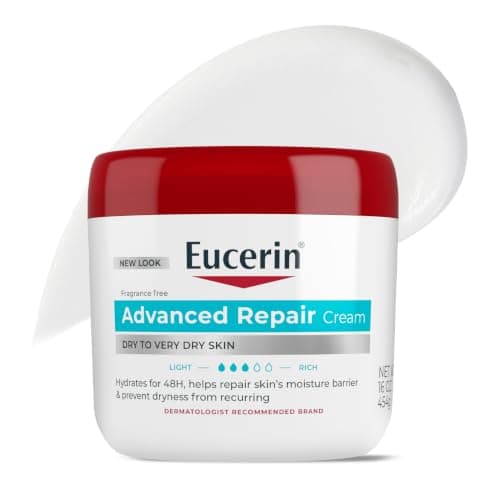
Elbows and knees are stubborn for a reason. The skin there is thick, folds and rubs against everything all day, and carries fewer oil glands than most of the body, so it goes rough, dry, and ashy faster and holds onto that roughness longer. A plain body lotion often is not enough on its own — these areas usually want two things at once: richer barrier care to hydrate and support the skin, and a gentle smoother, like urea or a mild exfoliating acid, to soften the thickened surface so moisture can actually work. The picks here pair those jobs honestly, and they are ranked on the two things that decide any barrier product: the ceramide types they disclose and their cost-per-ounce. One honest note up front — rough elbows and knees take patience. This is weeks of consistent care, not an overnight fix.
The strategy is a richer ceramide layer to hold water and support the barrier, plus, where the skin is thick and rough, a smoother that gently loosens the buildup. The same thick-skin problem shows up on the feet, so the approach overlaps; if the roughness is really small bumps rather than dry patches, that is closer to keratosis pilaris; and for all-over body dryness the broader roundup is our best ceramide body lotions for dry skin. The full range lives on the ceramide body lotion hub. Our top pick for genuinely rough patches is the Eucerin Advanced Repair Cream, with ceramide-3 and urea — the full write-up is in our Eucerin Advanced Repair Cream review.
Why elbows and knees stay rough
The skin over the elbows and knees is some of the thickest on the body, it flexes and rubs constantly, and it has relatively few oil glands to keep itself supple. That combination means it loses water easily, builds up a rough, scaly surface, and resists ordinary moisturizer that cannot penetrate the thickened top layer. Dermatologists' general advice for dry skin — moisturize right after bathing while skin is still damp, use fragrance-free products, and be consistent — is summarized in the American Academy of Dermatology's dry-skin tips, and it applies doubly here. The ceramides in these picks restock the barrier lipids this low-oil skin runs short on.
Barrier care plus a gentle smoother (urea or acid)
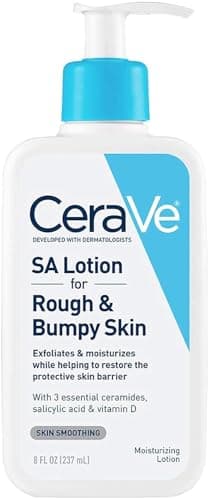
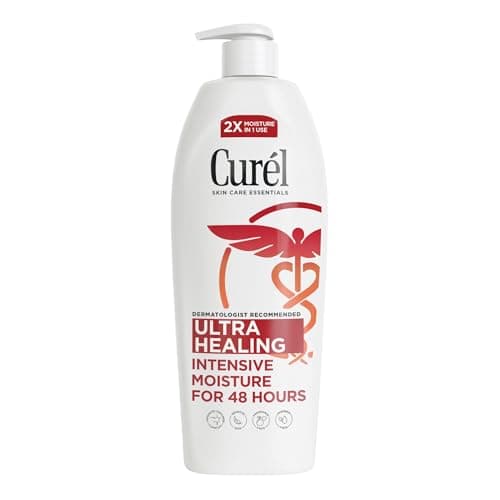
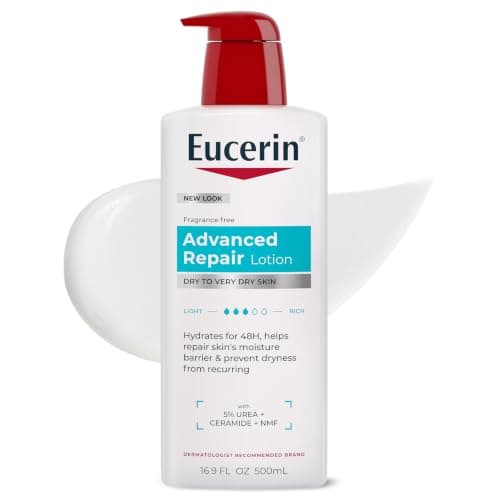
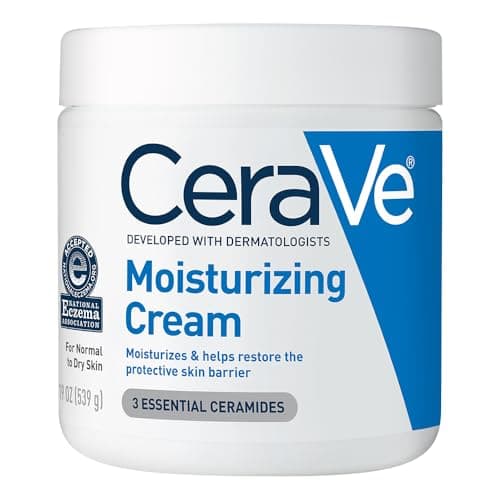
The move that actually works on thick rough patches is to combine barrier hydration with a mild smoother. Urea does both jobs at once — at the levels used in body creams it is a humectant that draws in water and gently loosens rough, scaly buildup — which is why the Eucerin Advanced Repair Cream, with ceramide-3 plus urea, leads this list, and the lighter Eucerin Advanced Repair Lotion carries the same idea for everyday maintenance. A mild exfoliating acid is the other route: the CeraVe SA Lotion pairs salicylic and lactic acid with three ceramides, so it smooths without stripping the barrier. Underneath all of it is the basic moisturizer logic — humectants, emollients, and occlusives working together, as the reference on how moisturizers work describes. For a pure occlusive layer with no smoother, the rich CeraVe Moisturizing Cream seals over the top, and the Curel Ultra Healing lotion is the best-value ceramide body lotion for covering large areas.
The honest caveat: go easy on cracked or broken skin
This is the part worth reading twice. Urea and exfoliating acids are helpful on rough, intact skin, but they can sting or burn on skin that is cracked, split, or actively broken. If your elbows or knees have open cracks, pause the urea and acid picks and use a plain, fragrance-free barrier layer — the CeraVe Moisturizing Cream is a good choice — until the skin has closed and calmed, then reintroduce the smoother slowly. And to be clear: this page does not diagnose or treat anything. Skin that will not heal, keeps cracking, bleeds, is painful, or spreads is a matter for a doctor or dermatologist, not a product roundup.
If it is more like keratosis pilaris
If what you are seeing is small rough bumps — often on the backs of the arms and the thighs, and sometimes around the knees — rather than dry, flaky patches, that pattern is closer to keratosis pilaris, sometimes called “chicken skin.” DermNet's overview of keratosis pilaris explains why it happens and why gentle exfoliation plus consistent moisturizing tends to help manage its appearance. The on-target pick there is the CeraVe SA Lotion, and the dedicated roundup is our best ceramide lotions for keratosis pilaris. As above, this supports and hydrates the skin barrier; it does not diagnose or treat a skin condition.
Patience and consistency beat intensity
Thick, rough skin does not turn smooth overnight, and trying to force it with harsher exfoliation usually irritates more than it helps. The reliable approach is gentle and daily: apply your chosen cream to damp skin right after a shower, when it absorbs best, and keep at it for a few weeks before judging results. A richer cream at night and a lighter lotion by day is a sensible rhythm. The broader method for rebuilding rough, compromised skin is in how to build a barrier-repair routine. Slow and consistent wins this one.
Why value matters for body-scale use
Elbows and knees are small, but if the same roughness runs down the shins or across large areas, you go through product quickly — so cost-per-ounce matters more here than on a face cream. We compute it live on every pick, which is why a big-bottle value lotion like the Curel Ultra Healing earns its place for whole-limb coverage, while the smaller urea and acid creams are worth spot-applying to the roughest patches. Buy the format that fits the area you are treating, and keep the value pick for the large stuff.