Legs are the body part where generic moisturizer advice falls apart, for two reasons that have nothing to do with each other. First, shins carry fewer sebaceous glands than almost anywhere else on the body, so they start with less surface lipid and dry out faster — the scaly, cracked-tile look on a shin in February is the clearest visible example of barrier failure most people ever see on themselves. Second, legs are the area most people drag a razor across, which removes stratum corneum along with hair. Put those together and you have skin with the least natural protection being mechanically exfoliated every few days. The ranking above is built around that combination rather than around general dryness.
The mechanism is the same one Cleveland Clinic sets out in its overview of what ceramides do for skin: replace the lipids, slow the water loss, and the flaking and itch follow. What is specific to legs is the dosing. This is a large surface area, it needs a visible layer, and it needs it twice a day in winter — which makes cost-per-ounce a clinical variable rather than a nicety, because people ration expensive creams and rationed emollient does not work. That is why a 20 oz pump outranks technically stronger formulas here.
Pick in ten seconds
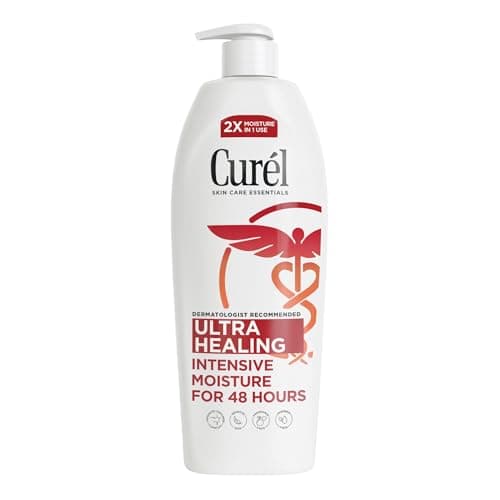
- Everyday dry, itchy legs — the Curel Ultra Healing Lotion. Fragrance-free ceramide complex, 20 oz, cheapest per ounce here.
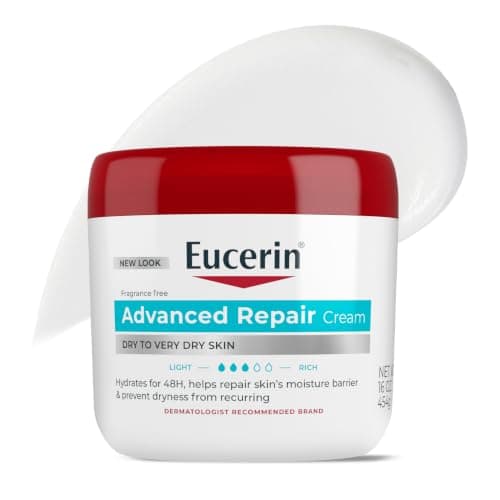
- Scaly, rough, visibly flaking shins — the Eucerin Advanced Repair Cream. Ceramide-3 plus urea; the urea is the part that smooths.
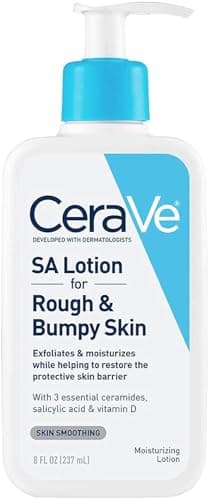
- Bumpy thighs or the backs of your legs — the CeraVe SA Lotion, which exfoliates gently while keeping the three-ceramide blend. Not a daily all-over lotion.
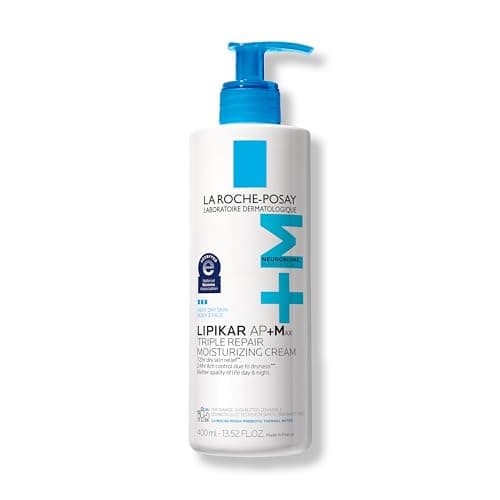
- Eczema-prone, itchy legs that react to things — the La Roche-Posay Lipikar Balm AP+M, with the honest caveat that it leans on niacinamide and shea rather than a disclosed ceramide blend.
- Open cracks or broken skin on your shins— skip the urea pick entirely. It stings there. Use a plain emollient until it closes.
What to look for in a leg moisturizer
- Volume, in a format you can use one-handed. Two legs twice a day is a lot of product. A pump bottle you can work in the time it takes to towel off beats a jar you have to put down and finger-dip.
- Urea if the skin is scaly, nothing if it is cracked. Urea both hydrates and softens the compacted keratin that makes a shin look tiled, which plain humectants cannot do. It also stings broken skin. That single fact decides which of the top two picks is right for you.
- Fragrance-free, because legs itch. Itchy skin is more reactive skin, and fragrance is the avoidable irritant. Three of the four picks here are fragrance-free.
- Exfoliating acids only for bumps, and only on intact skin.The SA lotion is excellent for keratosis pilaris on thighs and upper arms. On a shin that is already flaking because the barrier is shot, it is the wrong tool — repair first.
- Disclosed ceramide types, where the brand publishes them. Curel discloses a ceramide complex without naming types; Eucerin names ceramide-3; the CeraVe SA lotion names three. We report what each brand publishes, which is why the column reads differently down the table.
Shaving is half the problem
A razor is a mechanical exfoliant. It removes the outermost layer of stratum corneum along with the hair, which is exactly the layer the ceramides live in, and that is why legs sting when you moisturize right after shaving and itch a day later. The fixes are unglamorous: shave at the end of the shower when the hair is softened, go with a sharp blade and fewer passes, skip anything fragranced immediately afterwards, and apply the emollient once the skin has calmed rather than onto freshly abraded skin. The full version, including which products to avoid on the day, is in ceramides and shaving.
Winter itch on the shins
Seasonal leg itch is barrier failure driven by low humidity, and it is usually the first thing to appear when indoor heating comes on. The American Academy of Dermatology's dry-skin guidance is the short list of what actually helps: shorter and cooler showers, moisturizer within minutes of towelling off, and more of it than feels necessary. The rest of the seasonal playbook is on best ceramide body lotion for winter and in how to winterize your skincare routine. If the humidity in your house is the root cause, there is a number worth hitting — see the best humidity level for skin.
Bumps, eczema or just dryness?
Three different problems that all present as “my legs are bad”, with three different answers. Small rough bumps around hair follicles on thighs and upper arms are keratosis pilaris, and DermNet's overview of keratosis pilaris explains why exfoliation plus barrier support is the approach — ranked separately on the keratosis pilaris page. Itchy, inflamed, sometimes weeping patches behind the knees are more likely eczema, which is its own ranking and often needs a prescription alongside the emollient. Plain flaky tightness across the shins is simple barrier dryness, and that is what this page is for.
What we would actually buy
The Curel, in the 20 oz pump, and a second bottle before the first runs out. It is fragrance-free, it is built around the brand's ceramide technology, and it costs little enough per ounce that you will use the amount legs actually need instead of the amount that feels economical. Add the Eucerin Advanced Repair Cream for the shins specifically if they are scaly rather than just dry — it is worth owning both and using the urea cream as a spot treatment on the worst twelve inches. Keep the SA Lotion for bumpy thighs on days you have not shaved. And treat the Lipikar honestly: it is a very good itch balm, it is not a ceramide showcase, and if ceramides specifically are what you came for, the first two picks are the ones delivering them.