01
Keratosis pilaris and rough, bumpy skin
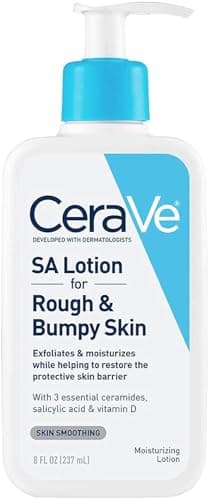
CeraVe SA Lotion for Rough & Bumpy Skin
Ceramides: Ceramides 1, 3, 6-II + salicylic/lactic acid
8 oz pumpSalicylic + lactic acidCeramides 1·3·6-IIFragrance-free
7.4/10
Three ceramides plus salicylic and lactic acid — the barrier-safe way to smooth keratosis pilaris ("chicken skin") without stripping.
- Ceramide profile
- 8
- Barrier support
- 7
- Suitability
- 6
- Formulation
- 8
- Value
- 8
Pros
- Combines gentle chemical exfoliation with the three-ceramide barrier blend, so smoothing does not come at the barrier's expense
- Genuinely effective on keratosis pilaris on arms and thighs
- Fragrance-free and a fair cost-per-ounce
Cons
- The exfoliating acids can be too much for sensitive or already-compromised skin
- Not a plain moisturizer — this is a treatment lotion with a specific job
Don't buy this if…
…your skin is sensitized or your barrier is currently damaged. Exfoliating acids on a broken barrier make things worse — repair first with a plain ceramide cream, then introduce this.
$14.99View on Amazon
Read our full CeraVe SA Lotion for Rough & Bumpy Skin review →$19.9925% off≈ $1.87/oz
Price as of October 31, 2026. Prices change — Amazon's is the one that counts.
#ad · we may earn a commission from this link to CeraVe SA Lotion for Rough & Bumpy Skin