Eczema below the neck is the same problem as eczema on the face — a barrier that leaks water and lets irritants in — only spread across the biggest surface you own. That scale is the whole story of this page. Your arms, legs, torso, and hands are where most atopic dermatitis actually lives, where you get through the most product, and therefore where the boring questions of fragrance and cost-per-ounce matter far more than any hero ingredient on the front of the bottle.
The reason ceramides belong in that conversation is not marketing. Eczema-prone skin is measurably short on ceramides — a well-documented feature of the barrier abnormalities in atopic dermatitis — so a body lotion that replaces those lipids is speaking directly to the deficit. It will not cure eczema, and nothing on this page pretends to. What a good ceramide body lotion does is make flares shorter, less itchy, and less frequent, and make the skin calm enough to tolerate whatever your dermatologist has prescribed. Treat these as the daily foundation under a medical plan, not a replacement for one.
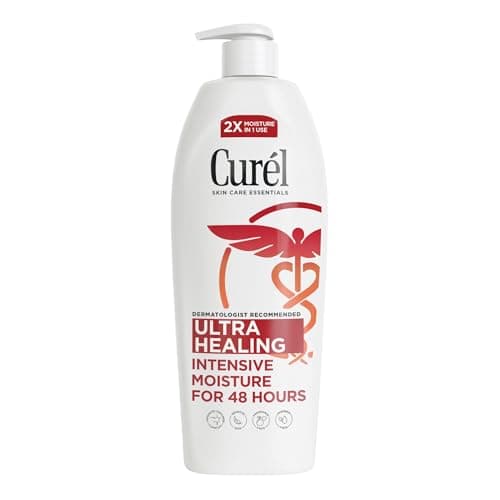
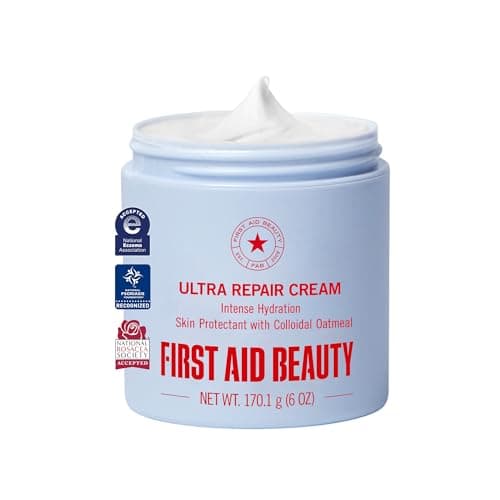
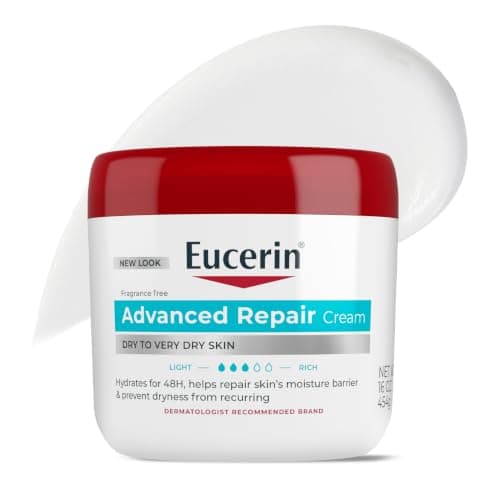
The other half of the choice is subtraction. Fragrance — including the essential oils that get marketed as gentle — is the single most common avoidable trigger for an eczema flare, so every pick here is fragrance-free, full stop. Beyond that, the picks split by job: a bottomless value tub for slathering everywhere, a fragrance-free pump lotion for daily maintenance, a colloidal-oatmeal cream for the itch, and a urea cream for the thick, rough, lichenified patches that plain moisturizer never quite smooths. If your eczema is mostly on the face, the lighter face moisturizers for eczema and the richer ceramide creams for eczema are the pages to start in; this one is built for everything below the jaw.
How to choose a ceramide body lotion for eczema-prone skin
Eczema narrows the field in a specific way: the barrier needs rebuilding across a large area, the formula cannot trip a flare, and you have to be able to afford using a lot of it. Here is what actually matters, roughly in order.
Fragrance-free is the non-negotiable
Start every decision here. Fragrance is the ingredient most likely to set off eczema, and it buys the skin nothing — so it is the first thing to rule out, ahead of ceramide count and everything else. Two label traps are worth knowing. First, “unscented” is not the same as “fragrance-free”: an unscented product can contain a masking fragrance to hide the smell of the base. Look for the words fragrance-free. Second, “natural” essential oils are still fragrance and still trigger flares. Every pick on this page is fragrance-free for exactly this reason.
Ceramides, and ideally the barrier trio
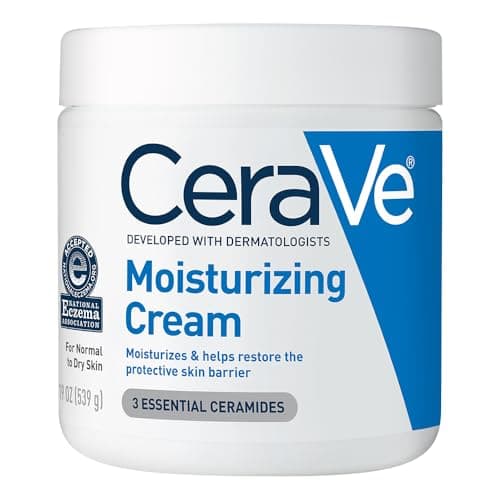
Because eczema runs on a ceramide-depleted barrier, the ceramide side of the formula matters as much here as anywhere on the site. A lotion that discloses several ceramides — CeraVe's trio of 1, 3, and 6-II — gives the skin more of what it is missing than one with a token single ceramide. Better still is a formula that pairs ceramides with the cholesterol and fatty acids the barrier assembles them with, in roughly the ratio the skin uses. Cleveland Clinic's primer on ceramides is a good plain-English backgrounder, and our guide to how ceramides repair the barrier goes deeper on why the lipids, not the label, are what heals the skin.
A soothing partner for the itch
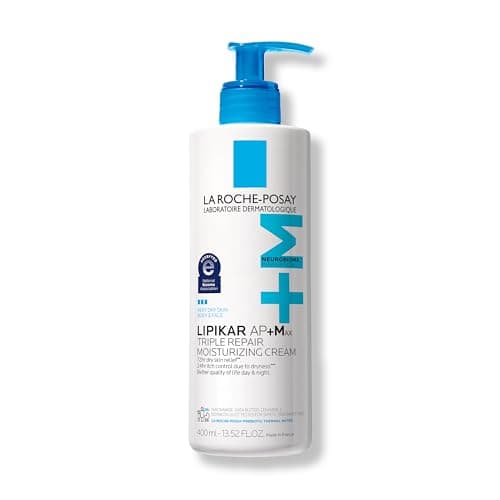
Ceramides rebuild the wall; a calming co-star takes the edge off while it heals. The two worth looking for on a body product are colloidal oatmeal — a long-standing over-the-counter skin protectant that genuinely helps itch, and the ingredient First Aid Beauty's cream is built around — and niacinamide, which supports the barrier and even nudges the skin to make more of its own ceramides (it is a big part of why the La Roche-Posay Lipikar balm is so well-liked for eczema-prone skin). Neither is a cure, but each earns its place next to the ceramides.
Be careful with urea and acids on broken skin
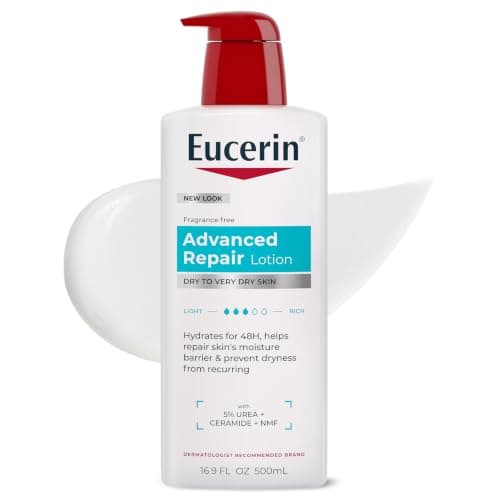
Urea is genuinely useful for the thick, rough, scaly patches eczema leaves on elbows, shins, and knees — it hydrates and gently smooths in a way plain emollients cannot, which is why the Eucerin Advanced Repair cream is on this list. But urea, like the salicylic and lactic acids in exfoliating body lotions, can sting badly on cracked, weeping, or actively broken skin. The rule of thumb: use the plain fragrance-free barrier picks while skin is raw, and bring in the urea cream once the surface has closed and you are dealing with roughness rather than an open flare.
Cost-per-ounce, because you use so much
On the body, value is not a nicety — it is the difference between applying enough and rationing. Eczema care rewards generous, twice-daily application over a large area, so a formula that costs three times as much per ounce is one you will quietly under-use. That is why a 19 oz CeraVe tub and a 20 oz Curel pump sit at the top of this list: they deliver real barrier lipids at a per-ounce cost the premium jars cannot approach, and the cost-per-ounce we compute live on every pick shows exactly how big that gap is. Spend the saved money on a second bottle for the bathroom and one for the bag.
The habit that beats the product: soak and seal
More than which lotion you buy, whenyou apply it decides how well it works. The method dermatologists call “soak and seal” is the highest-return habit in body eczema care: bathe or shower in lukewarm (not hot) water, pat the skin until it is just barely damp rather than fully dry, and apply your ceramide lotion within about three minutes, while the skin is still holding water. You are trapping that moisture against the skin instead of letting it evaporate off a stripped barrier. A cheap lotion applied this way outperforms a luxury one applied to bone-dry skin an hour later. Reapply after hand-washing and again before bed.
What a body lotion can and cannot do
Set expectations honestly. A ceramide body lotion manages the barrier: it reduces the dryness, tightness, and itch that ride along with eczema, shortens flares, and makes prescription treatments easier to tolerate. It does not treat the underlying inflammation — that is the job of the topical steroids, calcineurin inhibitors, or newer non-steroidal prescriptions a clinician provides. If your eczema is widespread, weeping, infected, or simply not improving, that is a doctor's visit, not a different moisturizer. The right lotion is the daily layer that makes everything else work better, and that is a real and worthwhile job.
If the eczema-prone skin in question belongs to a child, the filter tightens rather than relaxes — smaller body, same formula spread over proportionally more of it. The children's picks are ranked separately on the best ceramide creams for kids, which explains why the urea-containing body creams are excluded there.