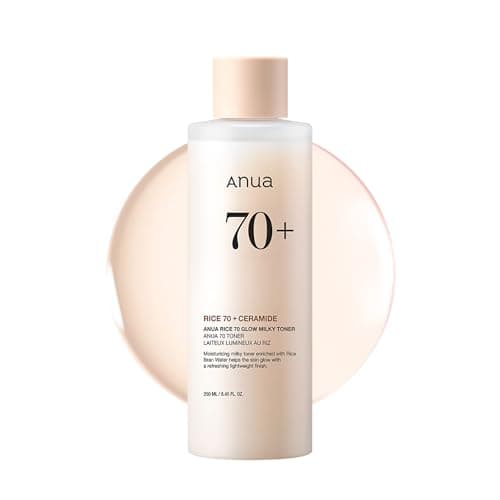
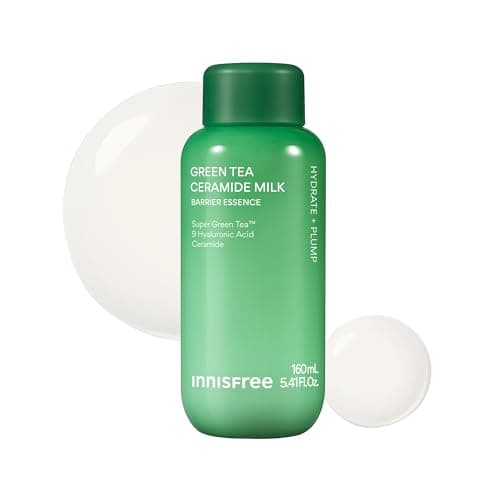
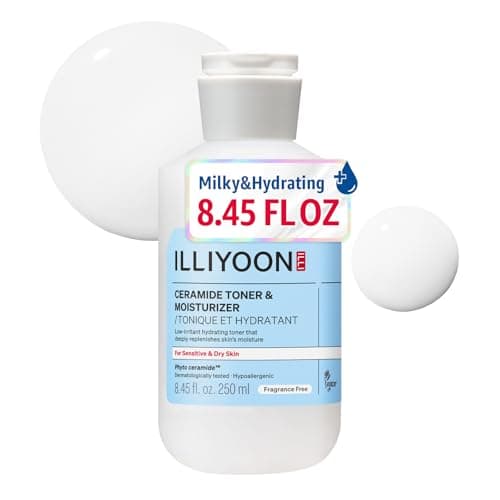
The best ceramide toner is Illiyoon Ceramide Ato Moisturizing Milky Toner— fragrance-free, milky rather than watery, from a dedicated barrier line. The budget pick is Anua Rice 70 Glow Milky Toner, which is cheaper both on the sticker and per ounce and is also fragrance-free. If you want the toner step to replace a hydrating serum outright, that is innisfree Green Tea Ceramide Milk Barrier Essence, which carries nine hyaluronic acid weights and niacinamide.
Start with the thing that decides whether you should buy one at all. A toner is a dilute format by design.You are buying eight ounces of something for roughly what one ounce of serum costs, and the arithmetic of that is not free: the ceramide content per application is lower than a serum’s, and none of the three listings here quantifies it. So if you are buying one product to repair a damaged barrier, a toner is the wrong purchase and a cream is the right one. What a toner is good at is volume— a hydrating layer you can apply generously, over a large area, every day, without thinking about how much is left in the bottle.
That is a real job. A barrier routine fails much more often from under-application than from a weak formula, and the format that gets used generously is the format that is cheap by the ounce. Our do you need a toner with ceramides guide answers the step-order question, and ceramide serum vs toner puts the two formats side by side. This page is the shopping half of both.
Why there are only three picks on this page
Because three is how many products we track that are honestly this format. We could have padded the list with serums and ampoules and called the page a six-pick roundup, and a lot of pages about “ceramide toners” do exactly that. The problem with it is that a 1 oz serum and an 8.45 fl oz toner are not alternatives to each other — they are different steps at different concentrations, and ranking them together tells you nothing about either. If you want the serum shelf, it is the best ceramide serums; if you want the ampoule format, that is the best ceramide ampoules.
One definitional note, because it affects the third pick. The innisfree product is sold as a milk barrier essencerather than a toner. In practice it occupies exactly the same step — a large bottle of milky hydration applied after cleansing, before a cream — and K-beauty labelling draws the toner/essence line inconsistently, so we rank it here and say what it is called rather than quietly relabelling it.
The three, side by side
| Pick | Best for | Fragrance | Ceramides disclosed | Size |
|---|
| Illiyoon Ceramide Ato Milky Toner | Dry or reactive skin, generous daily use — top pick | Fragrance-free | Ceramides (types not disclosed; Ato line) | 8.45 fl oz |
| Anua Rice 70 Glow Milky Toner | The lowest cost per ounce — budget pick | Fragrance-free | Ceramides (types not disclosed) | 8.45 fl oz |
| innisfree Green Tea Ceramide Milk Barrier Essence | Replacing a hydrating serum with a bigger bottle | Dewy, glow-marketed | Green tea ceramide (type not disclosed) | 160 ml (5.41 fl oz) |
None of the three names its ceramide types, and that is the finding
On this site, the single most useful signal on a label is whether a brand publishes whichceramides it used. “Ceramide NP, AP and EOP” in an ingredient list is a formulation decision; “ceramides” on the front of a bottle is a marketing one. Not one of the three toners above names a type. That is not a reason to avoid the format — it is a reason to know what you are buying. In the toner category the ceramide is almost always a supporting ingredient in a hydration formula, and the hydration is what you are paying for.
Which means the honest ranking criteria here are not the ones we use on the cream shelf. They are: is it fragrance-free (two of three are, and that decides the top two places), does it leave something behind (milky beats watery on dry skin, because a watery toner flash-evaporates and can leave skin tighter than before), and what does it cost per ounce (the whole point of the format). Disclosure is the fourth criterion rather than the first, because nothing here passes it. How to read a ceramide ingredient label shows you how to check this yourself on any bottle.
Where a toner goes, and what has to come after it
After cleansing, onto damp skin, before anything thicker. The order of a barrier routine is thinnest to thickest and a milky toner is near the front of it — what order to apply skincare products has the full sequence. Then the part people skip: something has to go over the top.A toner is mostly water, and water applied to skin leaves again unless something holds it there. On dry skin, a toner without a cream over it is a net loss — which is why skin can feel drier after moisturizing than before.
The pairing we would actually buy: the Illiyoon toner and the Illiyoon Ceramide Ato Concentrate Cream from the same line, or the Anua toner under any of the drugstore creams on the under-$25 ranking. Both come to less than the price of one premium jar and the toner is the part you can use without rationing.
The “7 skin method” question
The reason a lot of people search for a big bottle of milky toner is the layering technique — several thin applications of the same toner in a row instead of one. It works roughly as advertised for hydration: repeated thin layers of a humectant-rich liquid hold more water in the outer layer than one heavy application does. It does nothing extra for lipids, because seven layers of a product with very little ceramide in it is still very little ceramide. So use the technique if you like how it feels, buy the biggest fragrance-free bottle you can for it, and keep the actual barrier repair in the cream step.
What to ignore on a ceramide toner label
- “Glow” as a mechanism. It describes a dewy finish, which is a texture decision, not a barrier claim. Two of these three are glow-marketed and it tells you how they look at 10am, nothing more.
- Front-of-bottle percentages on the headline botanical.“70% rice water” is a dilution statement about the base, not a ceramide concentration.
- “2-in-1 toner and essence”. Usually means the brand could not decide, and in practice it means neither concentrated nor exfoliating. Not a problem, just not a feature.
- “Unscented” where you wanted fragrance-free. They are different claims, and on a product you apply by the handful the difference is worth checking.
The honest bottom line
Buy a ceramide toner as the cheap, generous hydration layer in a routine that already has a ceramide cream in it. Buy the fragrance-free one. Expect it to make your skin feel comfortable and your routine feel pleasant, and expect the measurable barrier work to come from the step after it. If you only have money for one product, spend it on a cream and come back for the toner later.