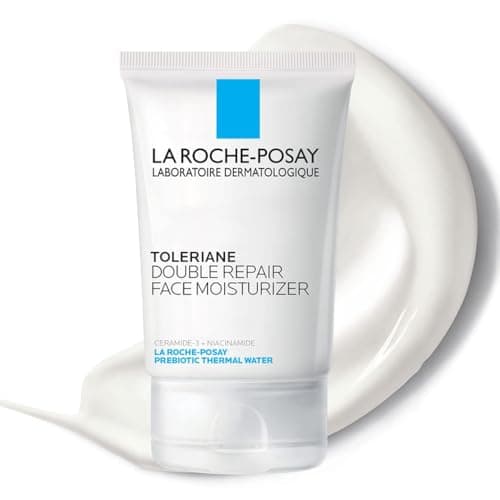
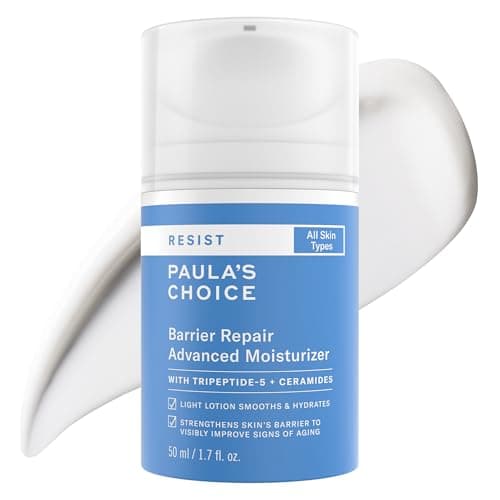
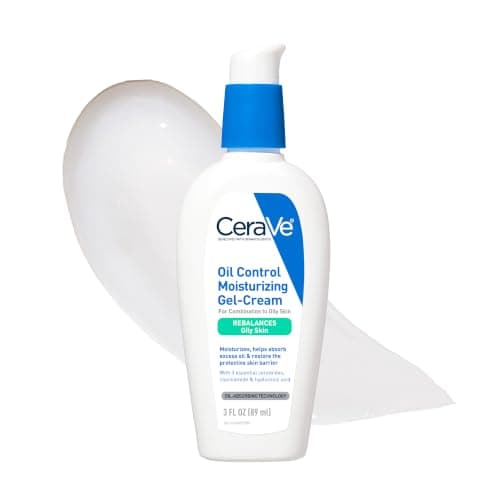
Almost every barrier cream on the market is designed around dry skin, which is why oily skin tries one, hates the greasy film, and concludes that ceramides are not for it. The conclusion is wrong but the complaint is fair: texture is the whole problem. The picks below are the ceramide creams that actually work on an oily face — oil-free, fast-absorbing, and in two cases genuinely matte at dry-down rather than dewy. Our lead pick is the CeraVe Oil Control Gel-Cream, the one formula we track that was built for oily skin from the start: three disclosed ceramides plus cholesterol, niacinamide, and a mattifying finish. As always, every pick is ranked on the ceramide types it discloses and its live cost-per-ounce, and every price on this page is pulled fresh rather than typed once and left to rot.
One thing to settle first, because it decides which page you want. If you are happy with the lightest possible texture, the lotion tier is cheaper and thinner, and it is ranked separately in our guide to the best ceramide moisturizer for oily skin. This page is for the cream question: you want the cushion and staying power of a cream and you need one that will not leave you shiny by lunchtime. For the widest view of light textures across every skin type, see best gel-cream ceramide moisturizers, and the format argument itself is settled in cream vs lotion vs serum vs balm.
How we picked, and what disqualified a cream
The criteria came before the products, and three of them did most of the work. First, disclosed ceramide types: a cream has to name the ceramides it contains — NP, AP, EOP, or the 1/3/6-II naming — because “contains ceramides” with no types listed tells you nothing about quantity or quality. Second, finish: we required oil-free formulas that dry down without slip, and we weighted a genuinely matte dry-down above a dewy one, because that is the specific disqualifier oily skin applies to every cream it tries. Third, live cost-per-ounce, computed from today's price rather than asserted — which is where several otherwise-good premium creams lose badly. Anything that was fragranced, or whose ingredient list read as a rich occlusive balm, did not make the page regardless of how well it is reviewed elsewhere: a heavy balm is a fine product and the wrong product here.
Why oily skin needs ceramides at all
Sebum and barrier lipids are two different substances, and having plenty of the first tells you nothing about the second. Sebum is an oil that sits on the surface. Ceramides are structural lipids inside the barrier that hold water in — the seal described in Cleveland Clinic's overview of what ceramides do. Oily skin can be, and frequently is, short on those lipids: over-washing, astringent toners, and acne actives all deplete them. The result is skin that reads as shiny on top and feels tight underneath, and skipping moisturizer to fight the shine tends to make it worse rather than better. The longer version of that argument is in do you need ceramides if you have oily skin.
What “oil control” in a moisturizer actually means
It means a cosmetic finish, not less oil. The mattifying effect in a gel-cream comes from absorbent powders — silica and starch-type ingredients — that soak up surface shine and scatter light so skin looks flatter. That is a real and useful effect, and it is also entirely superficial: nothing in a moisturizer at any price changes how much sebum your skin produces. Anyone selling you a moisturizer on an oil-reduction promise is overreaching, and we would rather tell you that than let a matte finish do the arguing. Where niacinamide appears alongside the ceramides — as it does in three of the picks here — it is worth having on the barrier evidence, which reports better stratum corneum hydration and structure in the published research on niacinamide, rather than on any oil-control claim.
Cream, gel-cream, or lotion — the honest hierarchy
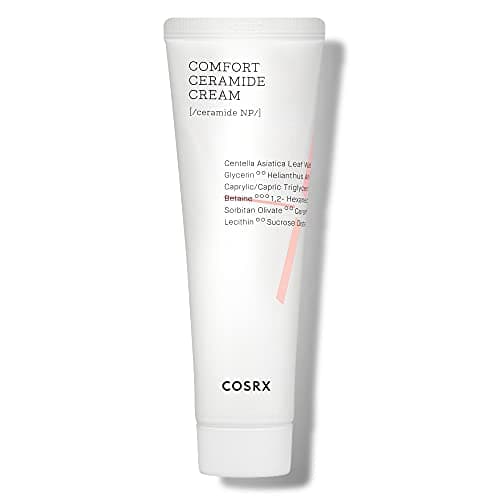
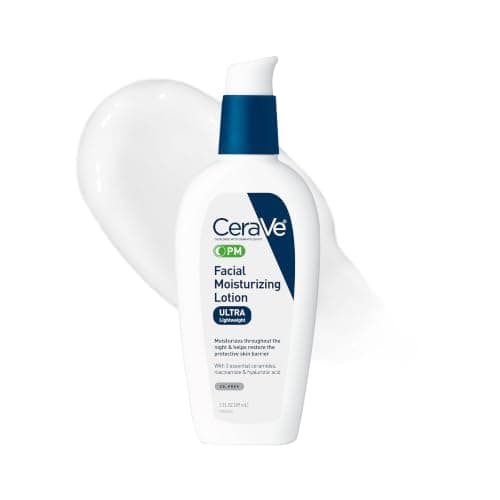
A gel-cream is the sweet spot for most oily skin: it has enough body to feel like a moisturizer and enough water in the base to disappear in seconds. A matte balm like the COSRX sits a step richer and suits combination skin that hates slip but wants comfort. A lotion is thinner than either and is the cheapest route to the same ceramides, which is why the CeraVe PM lotion is on this page at all despite not technically being a cream. If you have never worked out where you sit on that scale, buy the cheapest option on this page first and move up only if it leaves you tight. The full format comparison is in cream vs lotion vs serum vs balm.
Non-comedogenic is a claim, not a guarantee
Every pick here is labeled non-comedogenic, and that label is genuinely useful as a filter. It is not a promise about your face. There is no standardized test behind the term, formulas differ, and skin differs more — which is why the sensible move with any new cream is a patch test and a fortnight of watching rather than a full-face commitment on night one. If you break out after starting a moisturizer, the two pages that untangle what happened are do ceramides clog pores and can a moisturizer cause breakouts. If your congestion is the small, uniform, itchy kind, malassezia-driven folliculitis is a different problem with a different shopping list — DermNet's overview of malassezia folliculitis is the background, and our fungal-acne-safe picks are the practical answer.
The small-tube trap
Products aimed at oily skin come in small tubes, and small tubes hide bad value. Our lead pick is a good example of the trade: it is the best-designed formula here for the brief, and on cost-per-ounce it is beaten comfortably by a plain CeraVe lotion that discloses the same three ceramides. That is not a reason to avoid it — a cream you enjoy using twice a day beats a cheaper one you skip — but it is a reason to look at the cost-per-ounce column before the sticker price. We compute that figure live on every pick precisely because the sticker price on a 1.7 oz tube and on a 19 oz tub are not comparable numbers, and the difference is where most skincare overspending happens.
Layering a cream over an acne routine
This is the main job a ceramide cream does for oily skin, and it is worth getting the order right. Apply your active — a retinoid, benzoyl peroxide, or an acid — to clean, dry skin, let it absorb, then put the cream over the top. That layer is what makes an acne routine survivable past week three, when the peeling and stinging usually arrive and people quit. The specifics are in ceramides and benzoyl peroxide and ceramides and retinol together, and if you want the whole routine written out at this price level, that is the drugstore oily-skin routine. One caution: a matte, mattifying gel-cream over a peeling active can look powdery. On weeks when your skin is flaking, switch to the plainer lotion until it settles.
When to skip the cream entirely
Two cases, and we would rather say them than sell you a jar. If your skin is oily but comfortable — no tightness, no flaking, no active-induced peeling — a ceramide serum plus sunscreen in the morning is a complete routine and you do not need a cream on top. And if you are combination rather than uniformly oily, a mattifying cream over your whole face is the wrong tool: you will flatten the T-zone and dry out the cheeks. The two-zone approach in the drugstore combination-skin routine handles that far better and costs less.
The honest limit
Everything on this page is cosmetic barrier support. A ceramide cream hydrates skin, helps it hold its own water, and makes an acne routine considerably more tolerable — it does not treat acne, and it does not diagnose or treat any skin condition. If your breakouts are persistent, painful, cystic, or leaving marks, that belongs with a doctor or dermatologist, who has treatments that genuinely work on it. No moisturizer is a substitute for that conversation, and no amount of matte finish changes it.