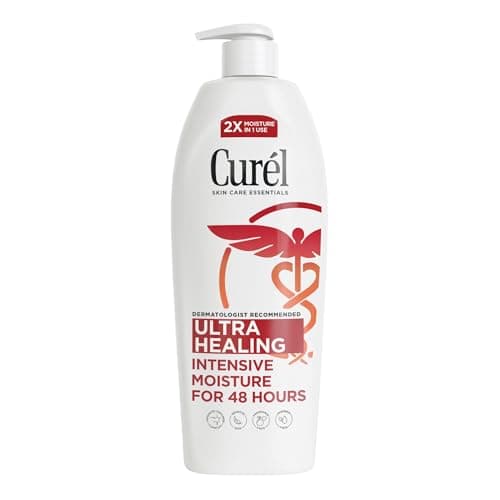
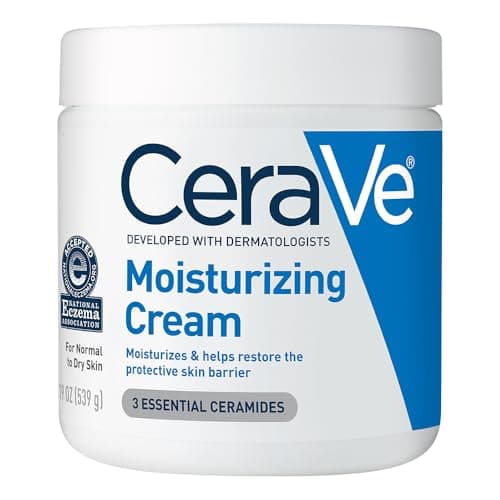
The best Cetaphil Moisturizing Cream alternative is CeraVe Moisturizing Cream— the same kind of big fragrance-free tub for roughly the same money, but with its ceramides named instead of implied. If what you want is a genuinely lower running cost, it is Curel Ultra Healing Lotion, the one pick here that undercuts the original per ounce. If the jar felt too heavy on your face, skip to Illiyoon or La Roche-Posay Toleriane.
First, the part most “alternatives” pages skip: what the original is actually known for, so you know what you are giving up. Every one of these is on its own listing — it is fragrance-free, non-comedogenic, non-greasy, sold for very dry, sensitive skin on both face and body, and it comes in a 16 oz tub at a cost-per-ounce almost nothing in skincare touches. It has been the default recommendation for reactive skin for decades for a good reason: there is very little in it to react to.
What it does not do is publish a ceramide. We checked its ingredient list against five separate retailer and database listings, and they agree on the shape of the formula — water, glycerin and petrolatum lead, followed by dicaprylyl ether, dimethicone, glyceryl stearate and cetyl alcohol, with niacinamide and panthenol further down. None of them names a ceramide. That is not a flaw; glycerin draws water in and petrolatum stops it leaving, which is a legitimate and very effective way to build a moisturizer. It just means the jar is doing the occlusive half of barrier care and leaving the lipid-replacement half alone. If you came looking for an alternative because you wanted the lipids too, that instinct is sound.
One thing worth knowing before you switch, because it catches people out: the Cetaphil jar contains niacinamide. If your reason for leaving is that something in it made you flush, niacinamide is a more likely culprit than the base, and two of the picks below are niacinamide-free — the full shortlist is on the best ceramide products without niacinamide.
People leave this jar for four reasons, and they want four different products:
What each alternative matches it on
| Alternative | Best for | Matches the original on | Gives up | Ceramides disclosed |
|---|
| CeraVe Moisturizing Cream | Wanting the lipids named — top alternative | Fragrance-free, non-comedogenic, big face-and-body tub | Texture — it is thicker; a shade more per ounce | 1, 3, 6-II + cholesterol |
| Curel Ultra Healing Lotion | A lower running cost — budget pick | Fragrance-free, sensitive-skin framing, 20 oz | No ceramide type named; a lotion, not a cream | Ceramide complex (type not published) |
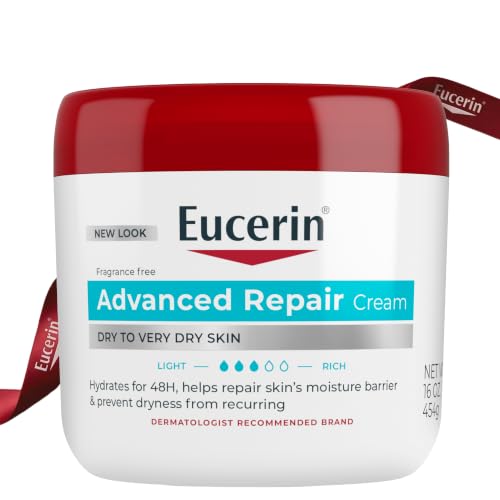
| Eucerin Advanced Repair Cream | Rough, scaly, sandpapery skin | Fragrance-free, 16 oz jar, low cost-per-ounce | Urea stings cracked or freshly shaved skin | Ceramide-3 (NP) + urea |
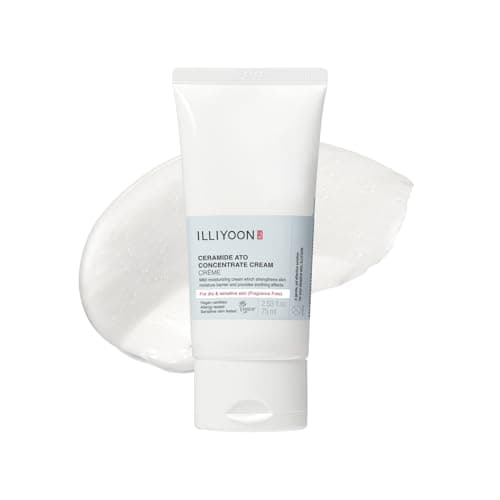
| Illiyoon Ceramide Ato Concentrate Cream | A face texture the jar could not give you | Fragrance-free, gentle enough for infant skin | Cost-per-ounce, by a wide margin; much smaller tube | Ceramide NP (Ato concentrate) |
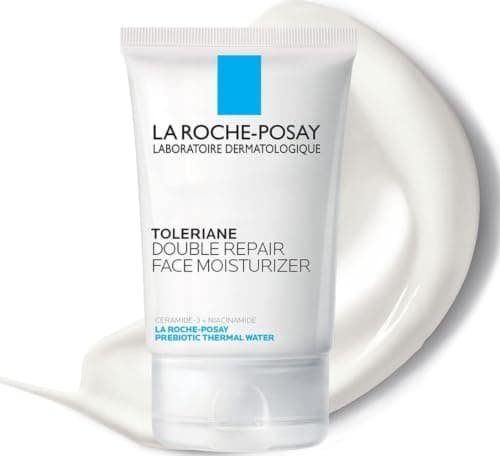
| La Roche-Posay Toleriane Double Repair | A face-only cream under makeup or sunscreen | Fragrance-free, built for reactive skin | Cost-per-ounce; 3.38 oz, so not a body option | Ceramide-3 (NP) |
What you are actually trading: occlusion for lipid replacement
It is worth understanding the swap you are making, because it decides whether any of this is worth doing. A moisturizer can work in three ways, and most work in more than one. Humectants like glycerin pull water into the outer layer of skin. Occlusiveslike petrolatum and dimethicone sit on top and slow the rate at which that water evaporates away — transepidermal water loss, the thing every barrier product is ultimately fighting. And lipid replacement supplies the actual molecules a damaged barrier is short of: ceramides, cholesterol and free fatty acids, which your skin assembles into the mortar between its outermost cells.
The Cetaphil jar is an extremely competent humectant-plus-occlusive. On a healthy barrier that is frequently all you need, and it explains why the jar has such a long record with reactive skin: the fewer active molecules in a formula, the fewer there are to react to. What it cannot do is restock a depleted barrier, because you cannot replace a lipid you did not apply. That distinction is why the barrier-lipid research keeps pointing at the ceramide-cholesterol-fatty-acid combination rather than at occlusion alone, and it is the entire argument for switching.
So the honest test is this. If your skin is simply dry and otherwise behaving, the original is doing the job and a ceramide cream is an upgrade you may not feel. If your skin is showing barrier damage— stinging with products it used to tolerate, flaking that moisturizer does not fix, tightness an hour after cleansing — then the missing half of the equation is the half the Cetaphil jar does not address, and the swap is worth making. Nothing on this page is a reason to abandon a product that is working.
Face, body, or both?
The original is sold for face and body, and that dual role is the quiet reason a lot of people end up dissatisfied with it: a cream rich enough for shins is usually too much for a face under sunscreen. If you were using one tub for everything, the cheapest good answer is to stop doing that. Keep a big-tub pick for the body — CeraVe, Curel or Eucerin, all of which cost little enough per ounce to use generously — and buy one small face-specific cream alongside it. Two products at these prices still costs less per month than most single premium jars, and it solves the texture complaint and the running-cost complaint at the same time. The body side is ranked in full on the best ceramide body lotions.
The cost-per-ounce reality check
This is the part that surprises people. The Cetaphil jar is not expensive, and switching to a “better” cream usually costs you money rather than saving it. Only two picks here are genuinely cheaper to run than the original — Curel and Eucerin Advanced Repair— and the two face-texture answers cost several times more per ounce for a fraction of the volume. We compute the cost-per-ounce live on every pick above precisely so you can see that before you buy, rather than comparing a 16 oz tub to a 2.53 oz tube on sticker price and thinking you found a bargain. If running cost is the whole question, the wider ranking is on the best ceramide cream under $50.
If you are here for a cruelty-free alternative
This is one of the most common variants of the search, so here is the honest answer rather than a convenient one. We do not certify anything, and we are not going to assign a cruelty-free badge to a product whose brand has not claimed one. What we can tell you is what the listings themselves state: the Illiyoon Ceramide Ato Concentrate Cream listing carries a Vegan Certifiedclaim, which is the strongest label claim of any pick on this page. The large pharmacy brands here — CeraVe, Eucerin, Curel, La Roche-Posay, and the original itself — do not make that claim on these listings.
Note also that vegan and cruelty-free are different claims that often get used interchangeably: vegan is about what is in the formula, cruelty-free is about how it was tested. A product can be one without being the other, and ceramides in particular are worth checking on the first point, because they can be plant-derived or synthetic. Are ceramides vegan explains how to read that off an ingredient list.
If your real complaint is that it felt greasy
Petrolatum-led creams feel the way they feel, and no amount of switching fixes that if you apply them the way you would apply a lotion. Two things help more than a new jar: use noticeably less than you think you need, and apply it to damp skin straight out of the shower, which makes an occlusive cream spread like a much lighter one. If it still feels like a film on your face at 10am, that is a genuine texture mismatch and the face-specific picks above are the answer — not a thicker cream applied more carefully. Our greasy-moisturizer troubleshooting guide runs the causes in order.
If you are switching because it “stopped working”
Usually the product did not change — the demand on it did. Cold dry indoor air, a new retinoid, harder water after a move, or a hotter shower habit all raise what your skin needs from the same cream. Why is my ceramide moisturizer not working goes through the causes, and the fix is often a heavier layer at night rather than a different tub. If your skin is actively stinging or flaking right now, start with how to repair a skin barrier instead of shopping.
Give a new cream four weeks before you judge it
One practical warning, because it causes a lot of unnecessary switching. Moving from a petrolatum-led cream to a ceramide-led one changes how your skin feels within a day and how it behaves over several weeks, and those two timelines get confused. The occlusive film you are used to is immediate and obvious; lipid replacement is slow and unglamorous, and skin that has been losing water for months does not restock overnight.
Expect the first few days to feel like a downgrade, because a cream that absorbs is doing less of the thing you could previously feel sitting there. Judge it at four weeks on the measures that matter — whether tightness after cleansing has eased, whether flaking has stopped returning, whether products that used to sting have become tolerable again — rather than on how occluded your face feels at the end of day one. How long to repair a skin barrier sets out realistic timelines, and how to tell if your skin barrier is healing lists the signs worth watching. If a new cream is actively stinging rather than simply feeling lighter, that is different information — stop and patch test.
The honest bottom line
If you can name your reason for leaving — you want the ceramides published, you want a lower running cost, you want a lighter face texture, or you want a vegan label — one of the five above is a real improvement on that specific axis, and the table says exactly what it costs you. If you cannot name the reason, the Cetaphil jar is a good product and there is no prize for replacing it; the better use of the money is a second tub for the parts of you that never get moisturized. For the straight head-to-head, we also rank CeraVe vs Cetaphil.