Skip to content
Ceramide Club

Hub 02 · Creams

Aquaphor Alternatives

An ointment seals water in. It cannot put back the lipids a worn-out barrier is short of, because there are none in it. These are the five creams we would swap it for, matched to what you were actually using it for - and the jobs we would keep the tub for.

By Stephen V.Updated November 22, 2026

#ad Ceramide Club is reader-supported. If you buy through our links we may earn a commission, at no cost to you — it never changes our verdict. How this works.

Best overall alternative

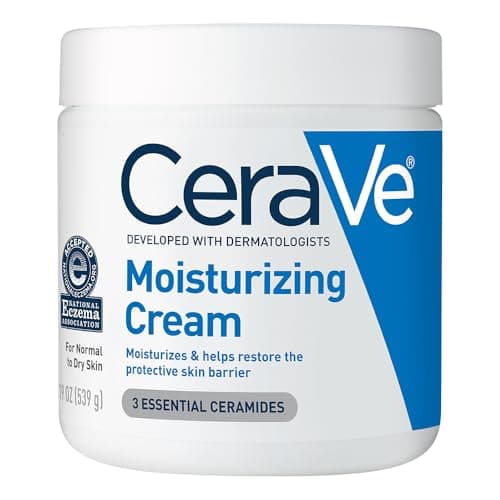
CeraVe CeraVe Moisturizing Cream

CeraVe Moisturizing Cream

8.8/10
19 oz tubFragrance-freeCeramides 1·3·6-IIMVE delivery

CeraVe Moisturizing Creamis the swap that changes the least about your routine and the most about what is in the jar. It is the same idea — one big fragrance-free tub, face and body, no fuss — except that it names three ceramides (1, 3 and 6-II) and puts cholesterol and phytosphingosine beside them, which is the lipid combination a stripped barrier is actually missing. Best for:anyone who reached for the ointment out of habit for general dryness rather than for a specific crack or burn. The honest trade: a cream is not an ointment. It absorbs, which is the point — and it also means it will not sit on a split fingertip all night the way 41% petrolatum does.

$17.80View on Amazon

$18.966% off≈ $0.94/oz

Price as of November 22, 2026. Prices change — Amazon's is the one that counts.

#ad · we may earn a commission from this link to CeraVe Moisturizing Cream

Why it wins ↓ · Full review

The best Aquaphor alternative is CeraVe Moisturizing Cream— the same one-tub-for-everything habit, with the barrier lipids published instead of absent. If you were using the tub on rough, scaly shins and elbows, go to Eucerin Advanced Repair. If you were using it on hands during the working day, go to CeraVe Therapeutic Hand Cream. Our budget pick on sticker price is the Illiyoon concentrate, and the two big tubs are the cheapest to actually run — the cost-per-ounce on every pick below is computed from the live price, so you can see which is cheaper today rather than taking our word for it.

First, the part most “alternatives” pages skip: what the original is genuinely good at, so you know what you are giving up. The brand’s own product page publishes one active ingredient — petrolatum, at 41%— and names panthenol and glycerin alongside it. It states the ointment is preservative-free and fragrance-free, and it claims to protect and relieve chapped, dry, cracked or irritated skin and lips, to soothe minor cuts, scrapes and burns, and to shield skin from the drying effects of wind and cold. It calls itself the #1 dermatologist-recommended brand for dry, cracked skin. None of that is marketing fluff: at 41% petrolatum this is one of the most effective occlusive layers you can buy without a prescription, and nothing on this page beats it at stopping water from leaving broken skin.

What it does not do is contain a ceramide. The word does not appear anywhere on that product page, and that is not an oversight on their part — an ointment is not trying to be a lipid-replacement product. It is doing the occlusive half of barrier care: slowing transepidermal water loss to near zero so the skin underneath can get on with repairing itself. The lipid-replacement half— supplying the ceramides, cholesterol and fatty acids your skin builds its own mortar out of — is a different job, and the tub was never built to do it. If that is the half you came looking for, your instinct is sound.

One limitation worth stating plainly, because it is the reason we cannot answer one popular version of this search cleanly: the brand page does not publish a full ingredient list. It publishes the active and names two supporting ingredients. So if you are leaving because of a specific ingredient sensitivity, read the carton in your hand rather than any page on the internet, including this one.

People leave this tub for four reasons, and they want four different products:

  • You want the lipids replaced, not just sealed in.The most common reason, and the reason this site exists. → CeraVe Moisturizing Cream.
  • You cannot stand the greasiness.An ointment that does not absorb is the entire mechanism, and it is also what puts it on your pillowcase and under your rings. → CeraVe Therapeutic Hand Cream for daytime, Illiyoon for the face.
  • Your skin is rough and scaly rather than cracked.Occlusion does not smooth texture; it only holds water. → Eucerin Advanced Repair Cream, with urea.
  • You want something to use over large, itchy areas.Spreading an ointment over two legs is unpleasant and expensive. → La Roche-Posay Lipikar Balm AP+M.

What each alternative matches it on

AlternativeBest forMatches the ointment onGives upCeramides disclosed
CeraVe Moisturizing CreamThe general-dryness tub habit — top alternativeFragrance-free, face and body, one big containerStaying power on a split crack overnight1, 3, 6-II + cholesterol
Eucerin Advanced Repair CreamRough, scaly, sandpapery shins and elbowsFragrance-free, big jar, very low cost-per-ounceComfort on cracked skin — urea can sting thereCeramide-3 (NP) + urea
CeraVe Therapeutic Hand CreamHands you need to keep using at workThe hand-and-knuckle job, without the slick filmOvernight occlusion; the tube is small1, 3, 6-II
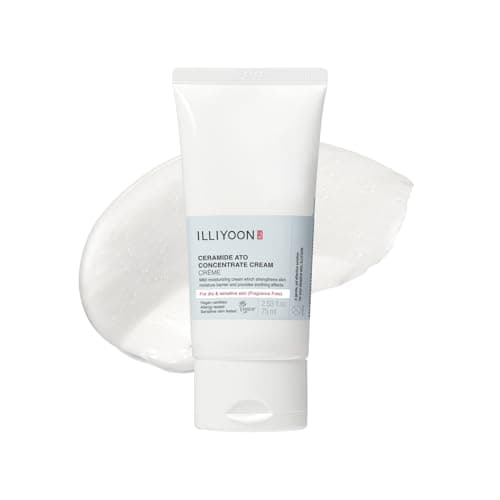
Illiyoon Ceramide Ato Concentrate CreamFaces, and the cheapest sticker here — budget pickFragrance-free; brand markets it as mild enough for infantsVolume — it is a small tube, not a body-scale tubCeramide NP (Ato concentrate)
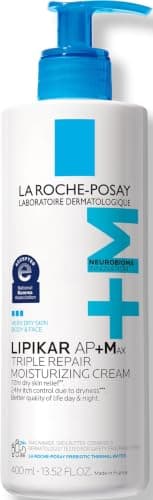
La Roche-Posay Lipikar Balm AP+MItchy, eczema-prone arms and legsRich, soothing, spreads over large areasCeramide disclosure — it is not a ceramide-led formulaNone named (niacinamide + shea)

The short answer

At a glance

#ProductCeramidesScorePrice
01
CeraVe CeraVe Moisturizing Cream

Most people, most of the time

CeraVe Moisturizing Cream

The default answer to "what ceramide cream should I buy" — three ceramides, a huge tub, and a cost-per-ounce nothing else here touches.

Ceramides 1, 3, 6-II
8.8
$17.80Amazon

$0.94/oz

02
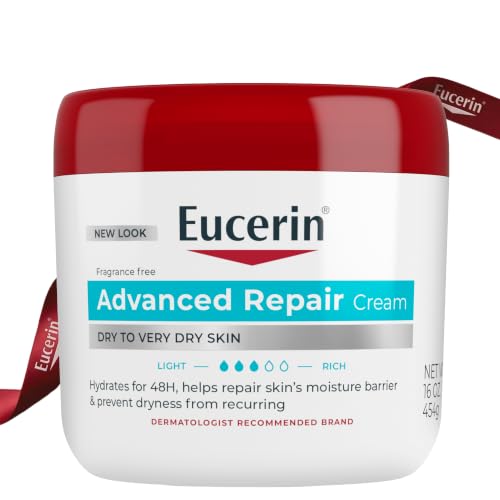
Eucerin Eucerin Advanced Repair Cream

Rough, very dry body skin

Eucerin Advanced Repair Cream

Ceramide-3 plus urea in a 16 oz jar — the pick for genuinely rough, dry body skin, because urea does what humectants alone cannot.

Ceramide-3 (NP) + urea
8.0
$15.78Amazon

$0.99/oz

03
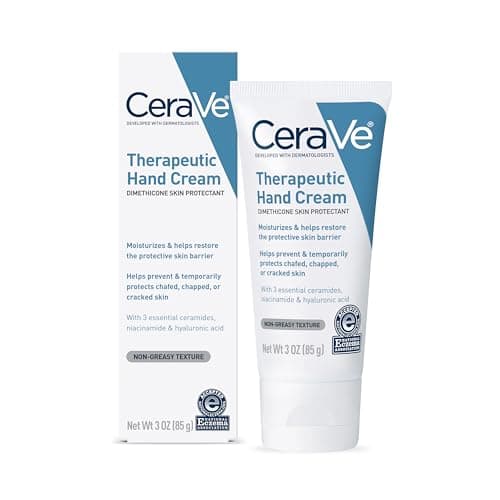
CeraVe CeraVe Therapeutic Hand Cream

Dry, frequently-washed hands

CeraVe Therapeutic Hand Cream

The same three-ceramide blend, tuned into a richer hand cream that survives frequent washing. The obvious hand pick.

Ceramides 1, 3, 6-II
8.2
$9.97Amazon

$3.32/oz

04
Illiyoon Illiyoon Ceramide Ato Concentrate Cream

Best value in a rich ceramide cream

Illiyoon Ceramide Ato Concentrate Cream

Korea's best-selling barrier cream, and it is easy to see why: a serious ceramide concentrate at a price that shames the Western premium tier.

Ceramide NP (Ato concentrate)
8.6
$9.79Amazon

$3.87/oz

05
La Roche-Posay La Roche-Posay Lipikar Balm AP+M

Eczema-prone body skin (barrier balm)

La Roche-Posay Lipikar Balm AP+M

A hugely popular eczema-prone body balm — but be honest about what it is: a niacinamide-and-shea barrier balm, not a ceramide showcase.

Not ceramide-led (niacinamide + shea + glycerin)
7.6
$21.99Amazon

$1.63/oz

#ad · Live prices and cost-per-ounce from the Amazon Product API, as of November 22, 2026. Where we have no verified live price, we show none — a gap beats a number that has rotted.

In detail

The picks, in full

01
CeraVe CeraVe Moisturizing Cream

Most people, most of the time

CeraVe Moisturizing Cream

Ceramides: Ceramides 1, 3, 6-II

19 oz tubFragrance-freeCeramides 1·3·6-IIMVE delivery
8.8/10

The default answer to "what ceramide cream should I buy" — three ceramides, a huge tub, and a cost-per-ounce nothing else here touches.

Ceramide profile
9
Barrier support
9
Suitability
9
Formulation
7
Value
10

Pros

  • Lists three of the ceramides your barrier actually uses, plus cholesterol and phytosphingosine
  • The 19 oz tub makes the cost-per-ounce the lowest of any pick on the site
  • Fragrance-free, non-comedogenic, and boring in the best way — nothing in it fights reactive skin

Cons

  • The tub is unhygienic to finger-dip and too stiff to pump
  • Thick enough that oily skin will find it heavy for daytime under makeup

Don't buy this if…

…you want something that sinks in fast for daytime wear under makeup. This is a rich cream — reach for the Daily Moisturizing Lotion or a serum for mornings.

$17.80View on Amazon

$18.966% off≈ $0.94/oz

Price as of November 22, 2026. Prices change — Amazon's is the one that counts.

#ad · we may earn a commission from this link to CeraVe Moisturizing Cream

Read our full CeraVe Moisturizing Cream review →
02
Eucerin Eucerin Advanced Repair Cream

Rough, very dry body skin

Eucerin Advanced Repair Cream

Ceramides: Ceramide-3 (NP) + urea

16 oz jarCeramide-3 + ureaFragrance-freeTriple-complex
8.0/10

Ceramide-3 plus urea in a 16 oz jar — the pick for genuinely rough, dry body skin, because urea does what humectants alone cannot.

Ceramide profile
7
Barrier support
8
Suitability
8
Formulation
8
Value
9

Pros

  • Urea both hydrates and gently smooths rough, scaly skin — a real advantage for feet, elbows, and shins
  • Ceramide-3 in the formula supports the barrier while the urea does the smoothing
  • Large jar at a low cost-per-ounce

Cons

  • Urea can sting on cracked or broken skin
  • The jar format is less hygienic than a pump for a body product

Don't buy this if…

…you have open cracks or actively broken skin. Urea can sting there — reach for a plain fragrance-free barrier balm until it heals, then switch back.

$15.78View on Amazon

≈ $0.99/oz

Price as of November 22, 2026. Prices change — Amazon's is the one that counts.

#ad · we may earn a commission from this link to Eucerin Advanced Repair Cream

Read our full Eucerin Advanced Repair Cream review →
03
CeraVe CeraVe Therapeutic Hand Cream

Dry, frequently-washed hands

CeraVe Therapeutic Hand Cream

Ceramides: Ceramides 1, 3, 6-II

3 oz tubeNiacinamideCeramides 1·3·6-IINon-greasy
8.2/10

The same three-ceramide blend, tuned into a richer hand cream that survives frequent washing. The obvious hand pick.

Ceramide profile
9
Barrier support
8
Suitability
9
Formulation
8
Value
7

Pros

  • Carries the full three-ceramide blend in a format built to reapply through the day
  • Non-greasy finish means you can use it and keep working
  • Niacinamide adds barrier support on skin that gets stripped by constant washing

Cons

  • Small tube — heavy hand-washers will restock often
  • Not occlusive enough overnight for deep cracks; layer an ointment on top for those

Don't buy this if…

…your hands are badly cracked and split. For that, layer an occlusive ointment over this at night — a light hand cream alone will not seal deep fissures.

$9.97View on Amazon

$10.999% off≈ $3.32/oz

Price as of November 22, 2026. Prices change — Amazon's is the one that counts.

#ad · we may earn a commission from this link to CeraVe Therapeutic Hand Cream

Read our full CeraVe Therapeutic Hand Cream review →
04
Illiyoon Illiyoon Ceramide Ato Concentrate Cream

Best value in a rich ceramide cream

Illiyoon Ceramide Ato Concentrate Cream

Ceramides: Ceramide NP (Ato concentrate)

2.53 ozCeramide concentratePanthenolVegan
8.6/10

Korea's best-selling barrier cream, and it is easy to see why: a serious ceramide concentrate at a price that shames the Western premium tier.

Ceramide profile
8
Barrier support
9
Suitability
9
Formulation
8
Value
9

Pros

  • A concentrated ceramide formula at a fraction of what the Western barrier creams charge
  • Gentle enough that the brand markets it for infants and sensitive skin
  • Fast-absorbing for a cream this repairing — no heavy residue

Cons

  • The tube is small, so restocking is frequent for full-face-and-body users
  • Distribution is patchier than the drugstore staples; availability can wobble

Don't buy this if…

…you need a single giant tub for whole-body use. This is a concentrated face-and-patch cream in a modest tube — for large areas, a big-tub body cream is the more economical buy.

$9.79View on Amazon

$18.9948% off≈ $3.87/oz

Price as of November 22, 2026. Prices change — Amazon's is the one that counts.

#ad · we may earn a commission from this link to Illiyoon Ceramide Ato Concentrate Cream

Read our full Illiyoon Ceramide Ato Concentrate Cream review →
05
La Roche-Posay La Roche-Posay Lipikar Balm AP+M

Eczema-prone body skin (barrier balm)

La Roche-Posay Lipikar Balm AP+M

Ceramides: Not ceramide-led (niacinamide + shea + glycerin)

400 mL / 13.5 ozNiacinamideShea butterPrebiotic water
7.6/10

A hugely popular eczema-prone body balm — but be honest about what it is: a niacinamide-and-shea barrier balm, not a ceramide showcase.

Ceramide profile
4
Barrier support
9
Suitability
9
Formulation
8
Value
8

Pros

  • A genuinely effective, well-tolerated balm for itchy, eczema-prone body skin
  • Large tube and a reasonable cost-per-ounce for a dermatologist-shelf balm
  • Niacinamide, shea, and prebiotic thermal water make a soothing, occlusive barrier layer

Cons

  • This is the honest part: Lipikar leans on shea and niacinamide, not a disclosed ceramide blend — if ceramides specifically are your goal, it is the wrong pick
  • Rich enough that it can feel heavy in warm weather

Don't buy this if…

…you specifically want ceramides. Lipikar is an excellent barrier balm, but it is not built around ceramides — for that, the Eucerin ceramide-and-urea creams or a Curel lotion are the on-target body choices.

$21.99View on Amazon

≈ $1.63/oz

Price as of November 22, 2026. Prices change — Amazon's is the one that counts.

#ad · we may earn a commission from this link to La Roche-Posay Lipikar Balm AP+M

Read our full La Roche-Posay Lipikar Balm AP+M review →

The swap you are actually making: occlusion for lipid replacement

A moisturizer can work in three ways, and the difference decides whether any of this is worth doing. Humectants such as glycerin pull water into the outer layer of skin. Occlusives such as petrolatum sit on top and slow the rate at which that water evaporates. And lipid replacementsupplies the molecules a damaged barrier is short of — ceramides, cholesterol and free fatty acids, in roughly the proportions skin uses them.

A 41% petrolatum ointment is close to the strongest occlusive available over the counter, and it contains a humectant too. What it cannot do is restock a depleted barrier, because you cannot replace a lipid you did not apply. That is why the barrier-lipid research keeps pointing at the ceramide-cholesterol-fatty-acid combination rather than at occlusion alone, and it is the entire argument for a cream over an ointment on skin that is showing barrier damage rather than simply cracked in one spot. We go through the mechanism side by side on ceramides vs petrolatum.

The jobs we would keep the tub for

This matters more than the ranking, so we are putting it above the price talk. There are jobs where a ceramide cream is the wrong tool and we are not going to pretend otherwise:

  • Deep cracks and split fingertips. A fissure needs something that stays put and keeps bending without breaking film. A cream absorbs; that is its virtue and here it is a defect.
  • Minor cuts, scrapes and burns.That is an explicit claim on the ointment’s own page, and no ceramide cream on this site makes it. Keep the tub in the first-aid drawer.
  • Chapped lips. Lip skin has no useful barrier to repair and everything you put on it gets eaten or licked off, so occlusion wins. Ceramides for chapped lips explains why.
  • Wind and cold on exposed skin.Also a stated claim, and a fair one — see ceramides for windburn.
  • Fresh tattoos and post-procedure skin. Follow whoever did the work, not a website. Our post-procedure page covers the after-the-first-week phase, which is where a ceramide cream starts to earn its place.

The honest conclusion is that most people should not fully replace the ointment. They should stop using it as an everyday moisturizer — a job it is overqualified and badly suited for — and keep it for the five jobs above.

You can also use both, and that is often the right answer

Layering a ceramide cream first and a thin film of ointment on top is a real technique with a silly name: slugging. It gives you both halves of barrier care in one step order — lipids underneath, a seal on top — and it is the cheapest upgrade available to anyone already holding both products. It is also the wrong move on acne-prone skin in the middle of a breakout, and you should not do it over an active retinoid night. Ceramides and slugging gives the method, and slugging vs a ceramide cream says which one to do if you are only going to do one.

If you are here for an option without petrolatum

This is one of the most searched versions of the question, so here is the straight answer rather than a convenient one. We cannot certify any product here as petrolatum-free from the sources we have.Several mainstream drugstore creams — including ones people switch to specifically to avoid an ointment — carry petrolatum further down their ingredient list, where it behaves very differently than it does at 41%. What we can tell you is what the listings themselves state: the Illiyoon Ceramide Ato Concentrate Cream listing carries a Vegan Certified claim, the strongest label claim of any pick on this page, and petrolatum is not a vegan-disqualifying ingredient either way. If avoiding it is the whole point of your switch, the only reliable method is reading the INCI on the carton. How to read a ceramide ingredient label walks through doing that in a shop aisle in under a minute.

The cost-per-ounce reality check

A 14 oz tub of ointment is not an expensive product, and this is the part that surprises people: switching usually costs you money. The two big fragrance-free tubs here — CeraVe and Eucerin— are the only picks in the same cost-per-ounce league, which is exactly why they are ranked one and two. The face and hand picks cost several times more per ounce for a fraction of the volume, and that is the correct trade for a face or a pair of hands but a terrible one for two legs. We compute cost-per-ounce live on every pick above precisely so you can see that before you buy instead of comparing a 19 oz tub to a 2.53 oz tube on sticker price. If the running cost is the whole question, the best ceramide creams under $50 ranks the shelf on exactly that.

Match the pick to the body part, not to the review score

The single most useful thing on this page is the table above, because “best Aquaphor alternative” is really four questions wearing one coat. Hands get washed ten times a day and need something that reapplies without making you drop things. Shins are mostly a texture problem, which is a job for urea rather than more occlusion. Faces need the smallest and most elegant thing that works, because everything else goes on top of it. And large itchy areas need volume and tolerance before anything else.

If you were genuinely using one tub for all four, the cheapest good answer is to stop doing that. A big tub for the body plus one small face cream still costs less per month than most single premium jars, and it solves the greasiness complaint and the texture complaint at the same time. The hand-specific ranking is on the best ceramide hand creams, and the body-scale options are on the best ceramide body lotions.

Give a new cream four weeks, and expect the first week to feel worse

Coming off an ointment is the most jarring switch in this whole category, because you are removing the one thing you could actually feel working. A cream that absorbs feels like a downgrade on day one by definition. Those are two different timelines getting confused: the occlusive film is immediate and obvious, while lipid replacement is slow and unglamorous, and skin that has been losing water for months does not restock overnight.

Judge it at four weeks on the measures that matter — whether tightness after cleansing has eased, whether flaking stops coming back, whether products that used to sting have become tolerable again — and not on how sealed your skin feels at bedtime. How long to repair a skin barrier sets out realistic timelines, and how to tell if your skin barrier is healing lists the signs worth watching. If a new cream stings rather than simply feeling lighter, that is different information — stop and patch test.

The honest bottom line

If you can name your reason for leaving — you want ceramides in the formula, you want something wearable in daylight, you want texture smoothing, or you want volume for large areas — one of the five picks above is a real improvement on that specific axis and the table says what it costs you. If you cannot name the reason, do not replace the tub: demote it. Buy a fragrance-free ceramide cream for everyday use and keep the ointment for cracks, lips, scrapes and January wind. That is not a compromise, it is just using two tools for two jobs.
How we picked

We do not run a testing lab

Everyone in this category claims a lab and a testing count. We do not have one, and we will not pretend to. What we do instead: read every INCI list and record the actual ceramide types each formula discloses, note whether it pairs them with cholesterol and fatty acids, and compute the cost-per-ounce from the live price — then score each product against a published rubric. The scores are judgments from that documented research, not measurements we took. Where a claim comes from the manufacturer, we say so and cite it in Sources.

Frequently asked

Questions people actually ask

What is the best alternative to Aquaphor?

CeraVe Moisturizing Cream, for the everyday-moisturizer job most people were using the tub for. It keeps the parts that made the ointment convenient — fragrance-free, usable on face and body, one big container — and adds what an ointment cannot have: three named ceramides plus cholesterol. For rough, scaly body skin the better answer is Eucerin Advanced Repair Cream, and for hands you need to keep using through the day it is CeraVe Therapeutic Hand Cream.

Does Aquaphor contain ceramides?

No. The brand’s own product page publishes petrolatum at 41% as the active ingredient and names panthenol and glycerin alongside it, and the word ceramide does not appear on that page at all. That is not a flaw — it is an occlusive skin protectant, not a lipid-replacement moisturizer. If you want ceramides in the formula, that is a reason to add or switch to a cream, and it is the reason this page exists.

Is there an Aquaphor alternative without petroleum?

Not one we are willing to certify from the sources available to us. The brand page for the original does not publish a full ingredient list, and several mainstream creams people switch to carry petrolatum lower down their own lists, where it behaves very differently than it does at 41%. The picks on this page are creams and lotions rather than petrolatum ointments, so none of them is doing the same occlusive job in the first place — but if avoiding the ingredient specifically is the point, read the INCI on the carton. How to read a ceramide ingredient label shows you how to do that quickly.

Can I use a ceramide cream and Aquaphor together?

Yes, and it is often the best answer. Apply the ceramide cream first so the lipids reach your skin, then a thin film of ointment on top to seal them in — the technique usually called slugging. Skip it over an active breakout or on a retinoid night. Ceramides and slugging covers the method, and slugging vs a ceramide cream helps if you are only going to do one of the two.

What should I use instead of Aquaphor on my face?

A small, elegant, fragrance-free ceramide cream rather than a body-scale tub — the Illiyoon Ceramide Ato Concentrate Cream is our pick here, and it is also the cheapest sticker price on the page. The reason to switch on the face specifically is practical rather than ideological: an ointment does not sit under sunscreen or makeup, and it is far heavier than facial skin needs for ordinary dryness. Save the tub for a cracked patch, and see the best ceramide creams for dry skin for the wider face ranking.

Is Aquaphor or a ceramide cream better for eczema-prone skin?

They do different halves of the same job, and most eczema-prone routines end up using both: a tolerable lipid-replacing cream daily, with an occlusive on the worst patches. For large itchy areas, La Roche-Posay Lipikar Balm AP+M is the pick on this page — with the honest caveat that it is a niacinamide-and-shea balm rather than a ceramide-led formula. Nothing here is medical advice; if your skin is broken or infected, that is a clinician question. Our best ceramide creams for eczema-prone skin page goes deeper.

Keep reading

Show your work

Sources